
Last Updated on Monday, 4 May 2026, 9:34 by Writer
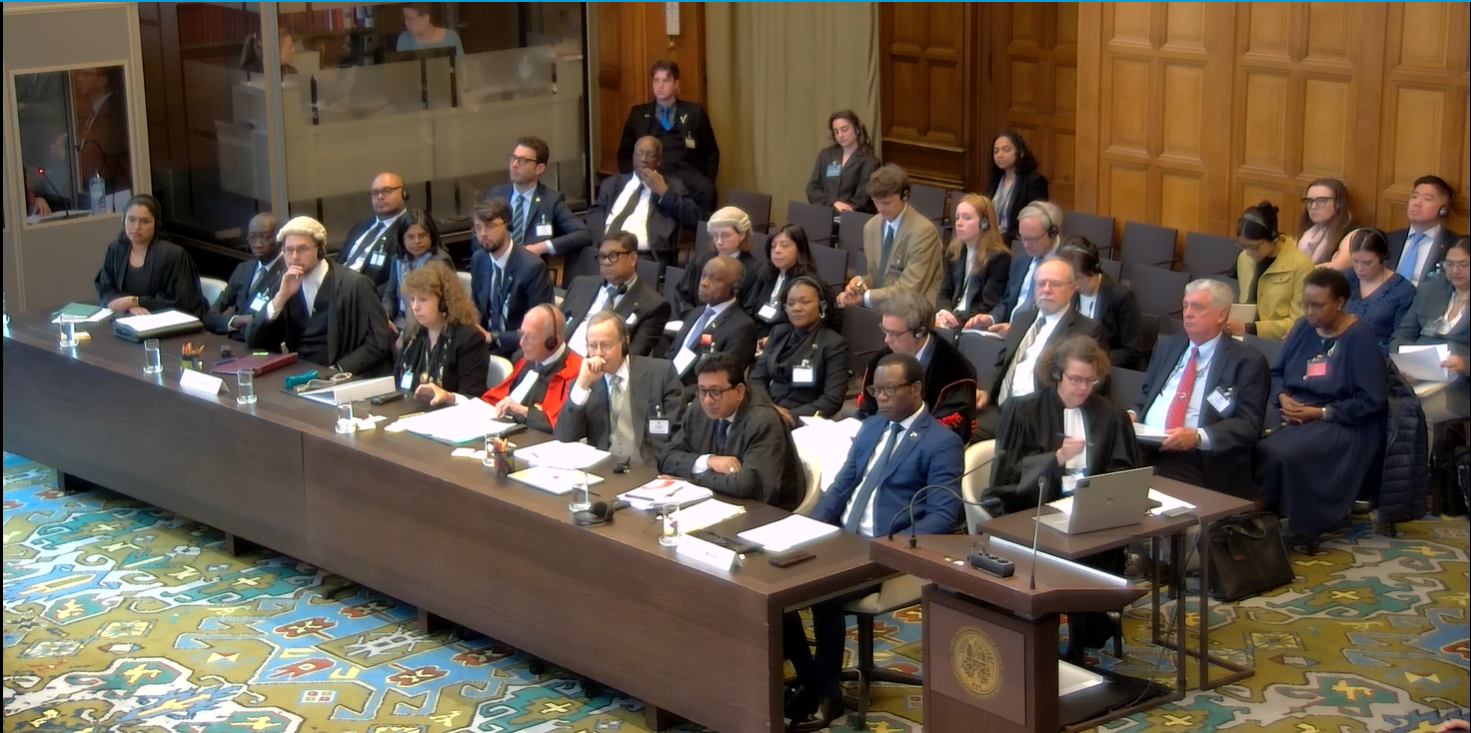
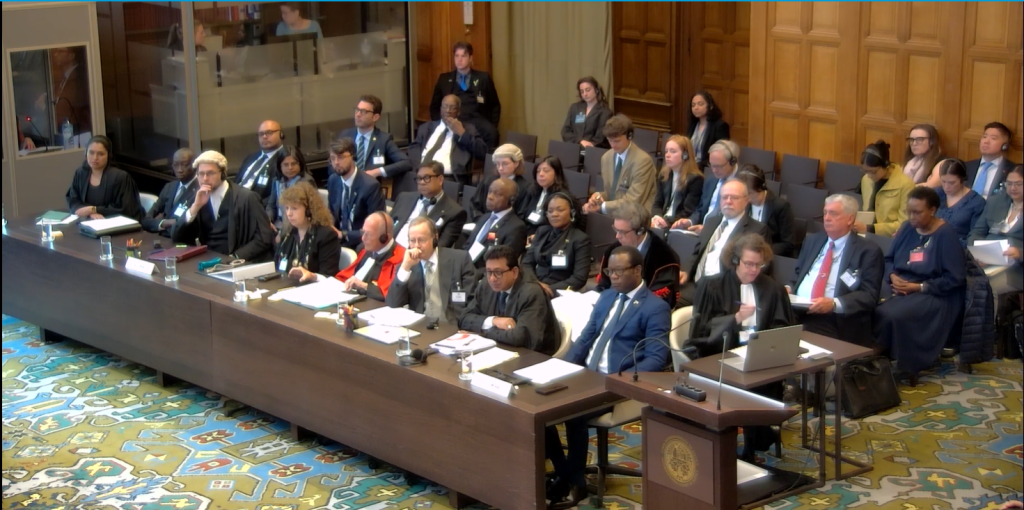
Guyana on Monday rejected Venezuela’s decades-old claims that there were irregularities in crafting the 1897 Treaty with the United Kingdom to send the boundary dispute to international arbitration and subterfuge leading to the 1899 land boundary settlement that resulted in Guyana being awarded the Essequibo Region.
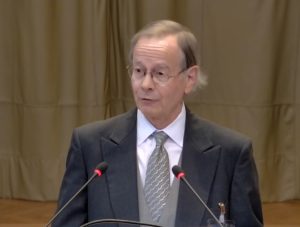
Backed up by a series of correspondence between Venezuela, the United States and the United Kingdom, Guyana’s lawyer, Paul Reichler told the panel of judges, who on Monday began hearing the merits of the case on the validity of the 1899 Arbitral Tribunal Award, that there was absolutely no basis for Venezuela’s contentions.
“The bottom line, Mr. President, is that Venezuela cannot come up with any basis, any legitimate basis whatsoever, for invalidating the 1897 treaty, or for invalidating the 1899 arbitral award on the basis of an allegedly invalid compromise,” he said.
Giving a historical perspective on the dispute, he restated that Venezuela had “accepted, respected, and complied” with the 1899 award for more that 60 years until it first formally challenged its validity in a letter to the United Nations Secretary General in 1962.
He said that at that time, and in subsequent presentations to the United Nations, Venezuela made clear that although it had changed its position on the award of 1899, it continued to regard the 1897 Treaty as a valid treaty.
Mr Reichler, who has been working for the People’s Progressive Party Civic and its administration before and after 1992, said Venezuela could not justifiably claim the US colluded with Britain or that it accepted terms that favored British interest to the prejudice of those of Venezuela.
“Mr. President, the evidence you have now seen from the contemporaneous documentary record thoroughly defeats Venezuela’s challenge to the 1897 treaty, that it was somehow negotiated behind Venezuela’s back, without involvement of its representatives, and failed to take account of its interests,” the lawyer for Guyana said.
He said the evidence makes clear that the US did not contravene Venezuela’s position on prescription which was reflected in the treaty’s final text, or on the continuing validity of the 1850 agreement.
“In both cases, the United States considered that it had fully protected Venezuela’s interest, and the contemporaneous documentary evidence shows that Venezuela agreed that it had done so,” he said.
He also deemed as “groundless” Venezuela’s argument that the 1897 Treaty was without its consent and that the treaty excluded the appointment of any Venezuelan arbitrators.
He said evidence shows that the draft treaty delivered to Caracas, the Venezuelan capital, in November 1896 addressed the appointment of our of arbitrators.
He said Article Two provided for a tribunal of five members, two to be nominated by the judges of the Supreme Court of the United States, two to be nominated by the British High Court of Justice, and the fifth to be appointed by the four so nominated, leaving open a Venezuelan appointment to the tribunal by the US justices, “a possibility of which the British were quite aware and quite uncomfortable.”
On Venezuela’s claim that it agreed to the 1897 treaty under coercion, as prohibited by Article 52 of the 1969 convention, Vienna Convention, he said that provision has no retroactive application to treaties agreed to before.
He said the argument is that this purported Anglo-American cabal not only prejudiced its interest, but constituted a fraud on Venezuela within the meaning of Article 49 of the 1969 Vienna Convention on the Law of Treaties sufficient to invalidate the Treaty on the same validations.
Mr Reichler disagreed with Venezuela that it ratified the 1897 Treaty in error, as defined by Article 48 of the Vienna Convention on the mistaken understanding that the treaty text, negotiated on its behalf by the United States, had protected its vital interests, only to find out during the arbitration two years later that it did not.
Guyana’s evidence before the court shows that at that time, the arbitration agreement had been “largely negotiated directly” by the British Ambassador to the United States, Sir Julian (later Lord) Pauncefote, and the U.S. Secretary of State, Richard Olney, on behalf of Venezuela.
“At the time, there was no objection by Venezuela,” Mr Reichler said.