
Last Updated on Monday, 4 May 2026, 16:17 by Writer
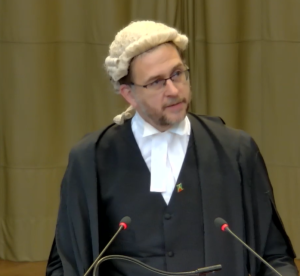
Guyana on Monday broke apart Venezuela’s decades-long reliance on a memorandum by the then Secretary to the 1899 Arbitration Tribunal Severo Mallet-Prevost that the land boundary award was the result of collusion between Russia and the United Kingdom and pressure by that tribunal’s president, Friedrich Martens.
Through one of its lawyers, Edward Craven, Guyana is also asking the ICJ to punish Venezuela for violating its order by going ahead with a referendum in December 2023 that essentially amended the constitution to include Essequibo as part of its map, registration of Guyanese in Essequibo to elect representatives in Venezuela and its establishment as a defence zone.
Saying that the ICJ orders were plainly violated, he asked the ICJ to declare that Venezuela has violated the two provisional measures orders which the Court has made.
Consequently, he said the court should order Venezuela to revoke, by means of its own choosing, each and every law, decree and other domestic Act which has been enacted or taken in violation of those provisional measures and orders, including the legislation which purports to incorporate Guyana’s sovereign territory within Venezuela, and the legislation which purports to extend Venezuela’s legislative, executive and judicial jurisdiction to that territory.
Guyana is also asking the court to order that Venezuela must withdraw and destroy the official maps that purport to depict Guyana Esequiba as part of Venezuela. “These measures are requested because Venezuela is under the obligation, by way of reparation for its breaches of the provisional measures to re-establish the situation which would in all probability have existed if those breaches had not been committed,” he said.
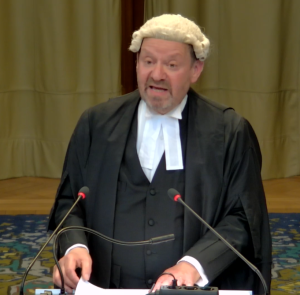
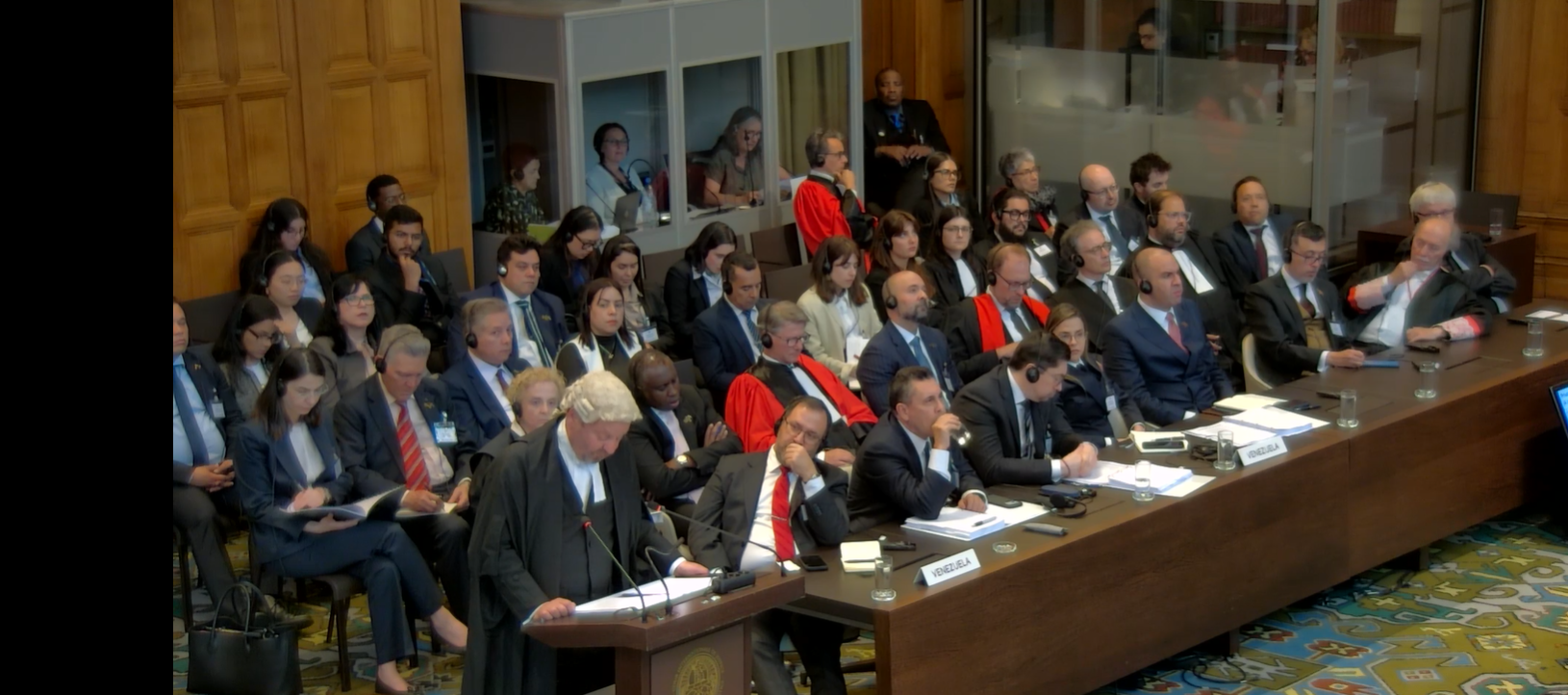
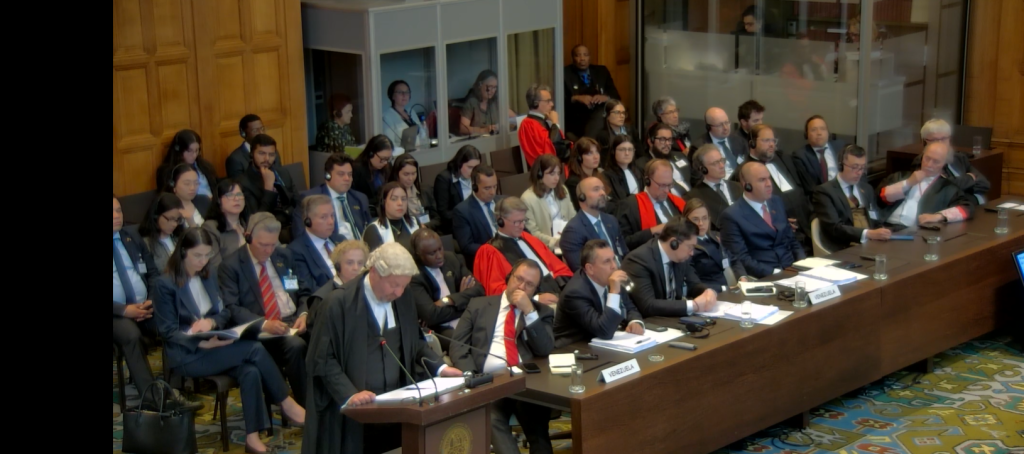
British law professor, Philippe Sands, representing Guyana at the International Court of Justice’s (ICJ) hearings on the merits of the case on the validity of the boundary award, called the purported 1944 Mallet-Prevost memorandum a “mishmash of unreliable anecdotes” that lacked any substance.
In keeping with his request, the memo was released after his death in 1948.
Then American jurist, Otto Schoenrich handed the Venezuelan government the memo one year later, forming the basis for Caracas to reopen the boundary dispute. “In the years since 1962 Venezuela has used it repeatedly to generate heat and smoke, but no light and no illumination,” Mr Sands told the court at The Hague in Brussels.
“While the allegation of a secret Anglo Russian deal is outlandish, it is also instructive for it starkly demonstrates the unreliability of the claims made in the memorandum, which by way of speculation and nothing by way of substance. It’s long on fantasy and short on facts; it lay dormant for 13 years after its publication,” the lawyer added.
He queried what Venezuela would say on Wednesday about a memorandum said to have been produced almost half a century after the conversation meetings and impressions which it purports to describe.
Mr Sands told the court that the Mallet-Prevost purported statements must take into consideration that they may not have been authored by an individual with deep allegiance to Venezuela who spent years advocating for that country’s claims to the territory in dispute, and whose loyal commitment to Venezuela had just been recognised through a prestigious national declaration.
The lawyer for Guyana told the ICJ that Venezuela has opened “a world of theater and fiction, not law, not fact. “The claim of a secret Anglo Russian deal is wholly unsupported by any evidence.”
“Mr. President, distinguished members of the court, Guyana trusts that you will deliver the final word on Venezuela’s embrace of a regional principle of magical realism. This is the stuff of a novel. It is not the stuff of a pleading before this court,” he said.
Venezuela will present its oral arguments on the merits of the case on Wednesday.