
• Contact Us
  • Advertise with us!
  • Classifieds
Sunday, May 3, 2026
  • Login
Demerara Waves Online News- Guyana
  • Home
  • News
    • Premium News
    • Politics
    • Courts
    • Crime
  • Oil & Gas
  • Business
  • Agriculture
  • Health
  • Education
  • Sport
  • Opinion
  • Podcast
  • Contribute Securely
No Result
View All Result
  • Home
  • News
    • Premium News
    • Politics
    • Courts
    • Crime
  • Oil & Gas
  • Business
  • Agriculture
  • Health
  • Education
  • Sport
  • Opinion
  • Podcast
  • Contribute Securely
No Result
View All Result
Demerara Waves Online News- Guyana
No Result
View All Result
Home Opinion

Dissolution of PetroCaribe hangs over regional economies by Natan Levy

GxMedia by GxMedia
Saturday, 6 September 2014, 12:47
in Opinion
0 0
0
Dissolution of PetroCaribe hangs over regional economies by Natan Levy

Last Updated on Saturday, 6 September 2014, 12:47 by GxMedia

Reproduced from Business News Americas (http://www.bnamericas.com )

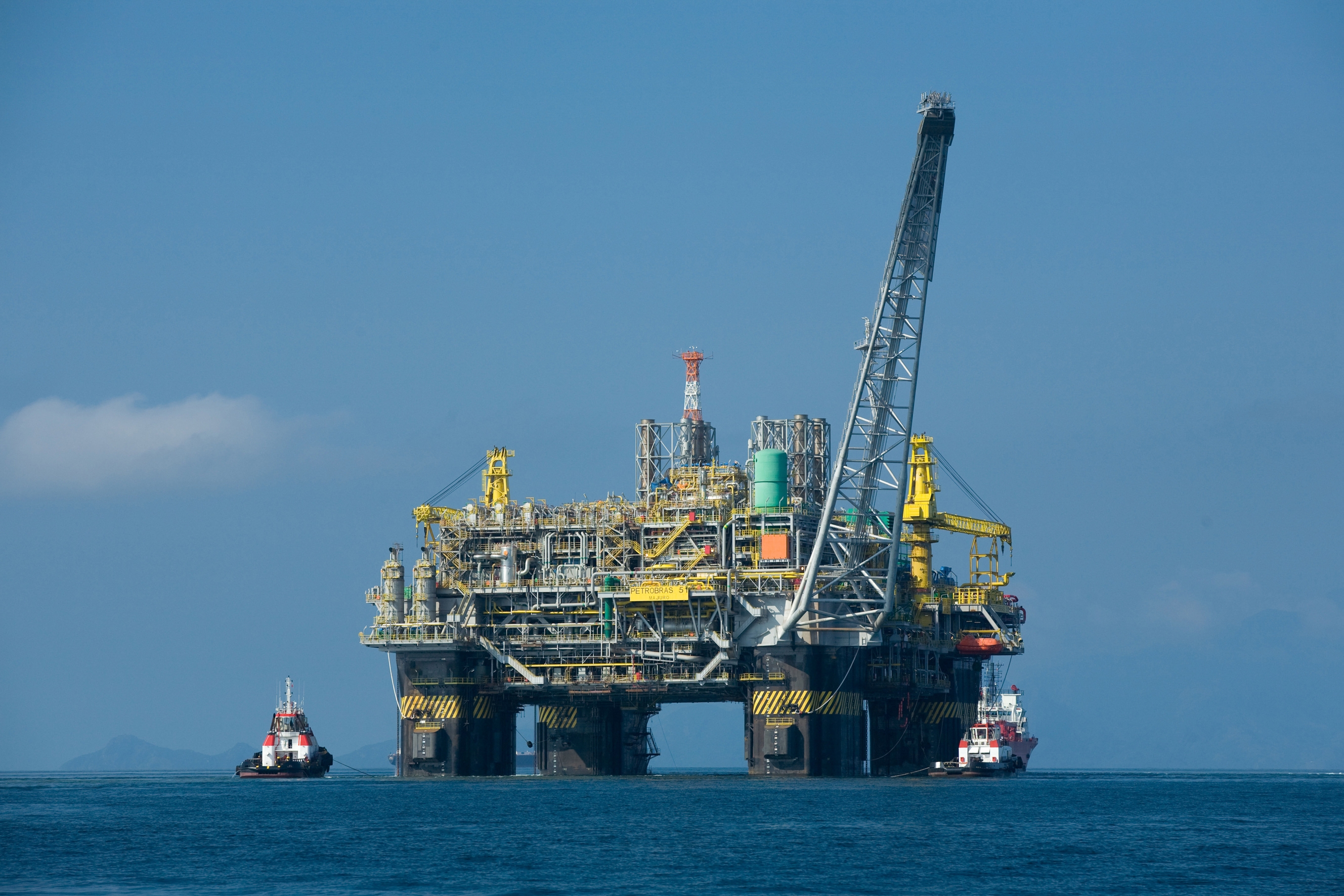
The PetroCaribe energy accord of 2005 stands at a point of significant uncertainty, according to a report from Scotiabank, posing substantial risks to Central American and Caribbean member states.

While the collapse of the agreement is not a certainty, the fiscal dependence on Venezuela created by the agreement, which provides subsidized Venezuelan gasoline, is unsustainable in the eyes of many, including the IMF and Scotiabank.
Scotiabank analyst Rory Johnson points out in a recent note the political and fundamental factors that threaten the dissolution of the energy union and the outsized impact that such a breakup could have on its member states.

With Caribbean economies, in particular, suffering disproportionally from falls in tourism since the 2008-9 global economic crisis and continued financial sector stress, the uncertainty and timing of an eventual breakup will cause concerns to governments in the region.

In the case of Guyana, Haiti, Jamaica, and most of ECCU, the financing represents as much as 4-7% of GDP per year. A sudden interruption of any of these flows, as the IMF noted in its April economic outlook, would cause severe financing difficulties.

Of the 19 member states to the agreement, 11 are Caribbean island states. According to Scotiabank, Jamaica and Haiti are most at risk, with Saint Kitts and Nevis and Antigua and Barbuda close behind.

Haiti, which imports 100% of its oil consumption from Venezuela, appears to be the most exposed. Nicaragua imports nearly 80% of its consumption with Venezuela, while Guyana receives over 40%.

Guyana has been saving a substantial part of the PetroCaribe financing as a sinking fund and actively reducing its debt with the energy union in an effort to shield itself from any future adverse impact.

The volume of oil sold to the region under various agreements (San José, Caracas, Integral Cooperation, and PetroCaribe) has stabilized at around 250,000bpd since 2009, with values rising to about US$10bn in 2012, according to the IMF.
While the financing element of these agreements accounts for only about 5% of Venezuela’s export revenue, the IMF warned in June that “given external liquidity constraints, including a continued reduction in international reserves, the authorities could choose to reduce or eliminate these schemes or switch to less generous financing conditions.”

In 2013, eight countries reported some reductions in PetroCaribe financing. The reductions serve as a timely reminder not only to the rest of the member states but also Costa Rica, which is reportedly considering joining the energy union. For El Salvador, the most recent member, this might be a moot point.

As Johnson notes, “PetroCaribe’s generous subsidies benefit recipients in the short term, yet the illusion of affordability has preserved uneconomical energy practices such as petroleum fueled electricity generation.”

Under the agreement, the percentage of payment deferred over 25 years rises with the price of oil, keeping the up-front cost of petroleum at around US$40 per barrel or about half the going market rate.

With rates so generous and maturities so long, however, “it is more useful to think of PetroCaribe as a subsidy rather than simply a loan,” said Johnson.

As such, Scotiabank notes that while alternative sources of petroleum may be available, finding similar terms in the open market would be a much greater challenge.

It is therefore imperative for the members of the energy union to consider the impact of continued political upheaval and the ongoing deterioration of Venezuela’s economy, and prepare themselves for the eventual dissolution of what seems for all intents and purposes to be an unsustainable agreement.
Share this:

  • Print (Opens in new window) Print
  • Email a link to a friend (Opens in new window) Email
  • Share on Facebook (Opens in new window) Facebook
  • Share on X (Opens in new window) X
  • Share on LinkedIn (Opens in new window) LinkedIn
  • Share on Telegram (Opens in new window) Telegram
  • Share on WhatsApp (Opens in new window) WhatsApp

Discover more from Demerara Waves Online News- Guyana

Subscribe to get the latest posts sent to your email.

Previous Post

Study finds poor coping skills lead to suicide

Next Post

GDF officer, who revealed that army loaned guns to PNC, appointed organized crime unit czar

Next Post
GDF officer, who revealed that army loaned guns to PNC, appointed organized crime unit czar

GDF officer, who revealed that army loaned guns to PNC, appointed organized crime unit czar

Recent News

OpEd: A World Press Freedom Day lunch to celebrate information control

OpEd: A World Press Freedom Day lunch to celebrate information control

Saturday, 2 May 2026, 19:31
FITUG pledges loyalty to Irfaan Ali

FITUG pledges loyalty to Irfaan Ali

Saturday, 2 May 2026, 1:46
OPINION: A Labour Day Call to Protect All Workers from Discrimination

OPINION: A Labour Day Call to Protect All Workers from Discrimination

Friday, 1 May 2026, 18:38
Food import restrictions possible under WTO rules; “We are eating ourselves to death with the imported foods we eat”- FAO official

Opposition recommends fuel subsidies, price controls to ease cost of living

Friday, 1 May 2026, 16:24
APNU, WIN appeal to unions for support to dislodge PPPC from office

APNU, WIN appeal to unions for support to dislodge PPPC from office

Friday, 1 May 2026, 14:47

Subscribe to Blog via Email

Enter your email address to subscribe to this blog and receive notifications of new posts by email.

Join 156.7K other subscribers

Demerara Waves Media Inc. is a Guyana-based digital news media company committed to delivering timely, credible, and relevant news coverage. We report on key national issues, including politics, business, crime, education, health, sports, and culture, serving readers in Guyana and abroad.

Other News and Opinion Wesbsites

  • Caribbean Political Economy
  • The View From Europe
  • Pan Caribbean Voices
  • Huffington Post
  • Caribbean Life
  • New York Daily News
  • New York Post
  • Share News
  • Caricom Headquarters
  • Association of Caribbean States
  • Organisation of Eastern Caribbean States

Recommended News Links

  • Insight Guyana
  • BBC Latin America
  • Prensa Latina
  • Mercopress
  • Inter Press Service
  • Caribbean Media Corporation
  • Al Jazeera
  • Voice of America
  • Business News Americas
  • All Africa
  • Catholic News Agency
  • Xinhaunet China News Agency
  • Home
  • News
  • Oil & Gas
  • Business
  • Agriculture
  • Health
  • Education
  • Sport
  • Opinion
  • Podcast
  • Contribute Securely

© 2026 Demerara Waves Media Inc. | A GxMedia Website Solution.

Welcome Back!

Login to your account below

Forgotten Password?

Retrieve your password

Please enter your username or email address to reset your password.

Log In
No Result
View All Result
  • Home
  • News
    • Premium News
    • Politics
    • Courts
    • Crime
  • Oil & Gas
  • Business
  • Agriculture
  • Health
  • Education
  • Sport
  • Opinion
  • Podcast
  • Contribute Securely

© 2026 Demerara Waves Media Inc. | A GxMedia Website Solution.