

Last Updated on Tuesday, 26 May 2026, 21:27 by Writer
By Dr Nigel Westmaas
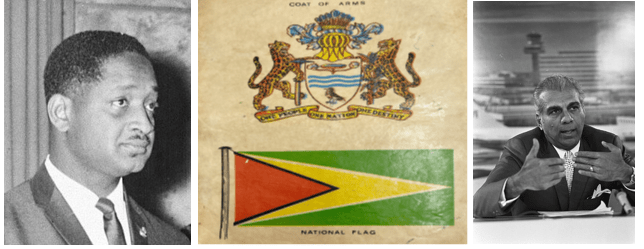
Sixty years ago, Guyana inherited the formal architecture of independence and nationhood: a flag, an anthem, borders, pledge, and a seat among sovereign states. Today it celebrates its Diamond Jubilee.
The very word “independence” carries a deeper historical and philosophical meaning than constitutional transfer alone. Derived from the Latin dependere, meaning “to hang from” or “to rely upon,” independence literally suggests the condition of “not hanging from another.” The term allegedly passed through the French indépendant before entering English political language in the seventeenth century to signify freedom from external authority. By the twentieth century, especially after World War II, independence had become the defining language of anti-colonial struggle across the Caribbean, Asia, and Africa.
Long before May 26, 1966, anti-colonial thought and activism in Guyana had developed through overlapping and, at times, competing political and cultural movements and individuals led by a range organisations and individuals. The 1763 revolution was, in a sense, Guyana’s first, albeit short-lived independence moment. Fast forward to the 20th century. Africanist movements, influenced by Marcus Garvey’s Universal Negro Improvement Association and other organizations emphasized racial pride, self-help, and dignity. Labour movements linked anti-colonial politics to struggles against foreign-owned companies and plantation exploitation. The founding document “Aims and Programme of the People’s Progressive Party” published in the year of the party’s birth in 1950 pledged “itself to the task of winning a free and independent Guiana, of building a just socialist society…” There was also an Indian National Congress of British Guiana during the era of the Indian independence struggle. After the British suspension of the Guiana government in 1953 by Britain and the landing of troops, independent India, under Prime Minister Jawaharlal Nehru, received Cheddi Jagan and Forbes Burnham, and gave them the opportunity to address Members of Parliament, and helped to elicit solidarity for colonial peoples seeking better conditions and freedom from colonialism. The middle class-led League of Coloured Peoples (LCP) had called for “Guianisation” in the 1940s and for qualified nationals to be appointed to senior positions in public service. Ghana Day became a fixture from 1957 in then British Guiana both celebrated Ghana’s independence and symbolize broader aspirations of decolonization.
In 1958, six years before independence, the colonial Government information service published a booklet titled One People, One Nation, One Destiny: Selections from Guianese History and Culture Week. The foreword was written by then Minister of Community Development and Education Brindley Benn, who was serving under the PPP led government that had won elections under the British framework in 1957. It was the first observance of a culture week and with a full deliberation on the title “one people, one nation, one destiny.” Benn’s remarks in the booklet were strikingly anti-colonial in tone. He argued that colonialism was not simply a political arrangement but a psychological condition, “a spirit that gratefully accepts a place of subordination.” Colonial society, he warned, looked elsewhere for its standards of excellence and learned to doubt its own possibilities. The terms “self reliance, and independence” also formed part of Benn’s exhortations in celebration of Culture Week.
All these currents and events converged into a general mass political movement seeking constitutional change and formal independence amid fratricidal racial violence in three distinct moments in 1962, ’63 and ’64.
Then on “Dayclean” on May 26, 1966, political independence formally arrived. Yet it was more symbolic than substantive. Foreign control over Guyanese society remained firmly intact. The imposing heights of the economy, sugar, bauxite, and banking, continued to be dominated by expatriate interests, while many of the country’s most influential institutions were still headed by foreigners. The heads of the major Christian denominations, the Vice Chancellor of the University of Guyana, senior military leadership, including the head of the Guyana Defence Force, and other key figures in governance and administration were overwhelmingly non-Guyanese. In this sense, the 27th of May did not immediately produce a fundamentally different society.
Guyana also became a nation in the height of the Cold War and there were intervention and response to different ideological positions in the nation. For example, the Forbes Burnham PNC coalition administration with the United Force at the time leaned towards the West in the immediate aftermath of independence. This lasted until around 1969 after which Guyana took a more nonaligned and eventually left of centre standing domestically and in international affairs.
The psychological wage of independence was meant to activate dignity, self-possession, and a shared sense of destiny. It was the assurance that history had turned that the people who had endured plantation brutality, indentureship, and colonial extraction would finally inherit not just territory, but meaning. The traditional celebrations will be in full swing this May 2026 as it is the Diamond Jubilee: march pasts, commemorative events, triumphant official statements, flag raising, and cultural events. Yet these will unfold amid the steady growth of an apparent one-party state. The independent press remains under pressure, trade unionism has largely withered over a longer period, Parliament has become increasingly ineffective and meets irregularly, and migration continues to be the primary avenue for young people. Meanwhile, the only vision of unity being advanced is captured in the government’s contrarian national slogan “One Guyana” which really amounts to one-dimensional Guyana. Even President Irfaan Ali appeared to acknowledge a deeper issue when, at a 5:30 a.m. meeting at State House in November 2024 with summoned government employees and ministers, he remarked that Guyana suffers from “a systemic cultural problem,” a statement that points to unresolved tensions beneath the clichés of national cohesion.
This does not negate what Guyana has endured or built over sixty years. But nationhood is not secured automatically by flags, elections, resource abundance or the passage of time. Independence is also supposed to become a psychological and cultural accomplishment as much as a constitutional one. And the cause of Guyana’s economic, political and social malaise is shared across political parties and their respective ideological and political positioning as much as from external pressures.
The country stands today in a strange situation. The formal markers of nationhood remain intact, a seat among nations, and the promise of immense wealth from oil. But beneath all this lies a quieter, more unsettling question, one that independence and later Republican status was supposed to answer: what, if anything, binds Guyana’s independence beyond the administrative fact of a state?
On the eve of Guyana’s independence in 1966, a New York Times article by Anthony Verrier posed the question: “Guyana is Free to go Where?”. Sixty years after, the question still resonates. At sixty, independence feels less like a culmination and more like a question mark that has grown sharper with time. The psychological and living contract between citizen and state remains unsettled.
For all intents and purposes Guyana is “back to the future”. Independence carried an aspirational vision: to change the lives of the people and create a sense of nationhood among the regional and international community of nations. But Guyana, outside the normal diplomatic relations between countries and peoples, is right back in the ideological and strategic orbit of Euro-American power. Sixty years later, albeit with a few decades of nonalignment and state control over the economy, the country finds itself in familiar terrain, only worse. The British are gone in substance, but colonial governors, it would appear, have been replaced by multinational executives. Colonial decrees now take the form of poorly negotiated oil contracts while colonial civil servants have given way to local political elites being shaped and trained by global systems outside of their control.
The question is whether a new petrostate, having come full circle to the geopolitical alignments that existed in 1966, can pursue a sovereign foreign policy while also fighting for and building a domestic alignment with the poor and powerless within a global and regional extractive system connected to geopolitical interests of the capitalist West?