
Last Updated on Wednesday, 27 May 2026, 21:46 by Writer
 Guyana, and Trinidad and Tobago have refused to be part of a call by the Caribbean Community (CARICOM) bloc that calls for the scrapping of United States (U.S.) plans to take military action against Cuba.
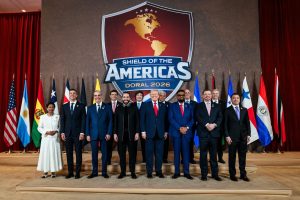
Both countries are members of the Shield of the Americas established by US President Donald Trump.
“COFCOR (Council for Foreign and Community and Relations) reaffirms the need for the preservation of the Caribbean as a Zone of Peace and expresses alarm at recent statements that suggest the possibility of military aggression against the Republic of Cuba; any such action would inflict unnecessary human suffering, impose grave material costs, and fundamentally destabilize the security architecture of the entire Caribbean region.”
COFCOR’s position comes days after United States President Donald Trump said past US presidents had considered intervening in Cuba but “it looks like I’ll be the one that does it.”
The CARICOM statement indicated Guyana and Trinidad and Tobago dissociated themselves from the foreign ministers’ stance. “The Cooperative Republic of Guyana and The Republic of Trinidad and Tobago reserve their positions on the foregoing Statement.”
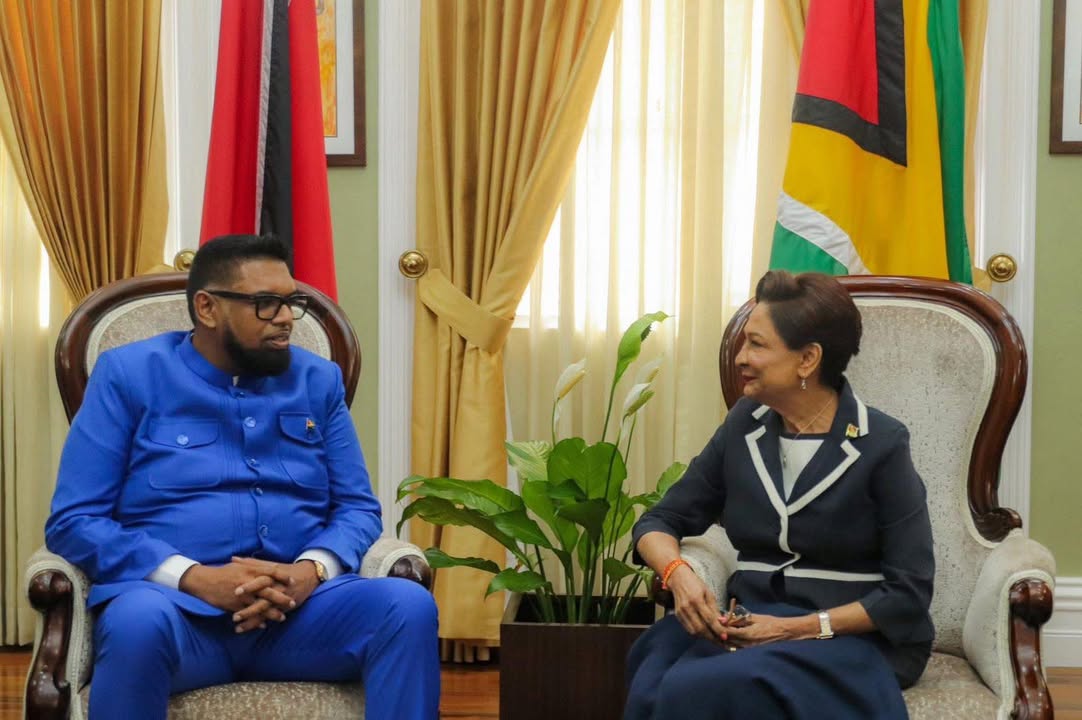
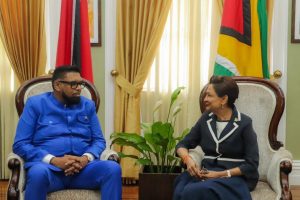
Guyana’s President Irfaan Ali and Trinidad and Tobago’s Prime Minister Kamla Persad-Bissessar were the only two CARICOM leaders who attended the Shield of the Americas conference hosted by United States (US) President, Donald Trump in Miami, Florida in May, 2026.
On the sidelines of the Shield of the Americas conference, Dr Ali had told Fox News that there must be change in Cuba.
He categorically stated that there must a “transition” that allows Cubans to benefit from prosperity and democracy.
“There must be dialogue but those changes must lead to the improvement of the people of Cuba. It must lead to better conditions for the people of Cuba, must lead to a society in which the rule of law, in which democracy, in which freedom is celebrated,” he had said.
Ms. Persad-Bissessar told the opening of the CARICOM Summit in February in St Kitts that “We were all elected by free and fair elections. And so, we cannot advocate for others to live under communism and dictatorship, but we want to live here, in our Caribbean region, under democracy and capitalism. That’s an oxymoron, it’s a contradiction. For ourselves, we want free democracy, but tell the Cuban people ‘okay, we feel sorry for you’. It can’t work.”
However, in recent months Guyana has scrapped the Cuban medical brigade programme after the US cited concerns about human trafficking and threatened to revoke the visas of government officials if they continued taking Cuban health workers under that scheme.
The foreign ministers signaled that the US should cease blocking Cuba from importing fuel, a situation that has worsened the economic and social crisis on that communist-ruled island.
“COFCOR unequivocally affirms Cuba’s sovereign right to import and receive fuel, and condemns the obstruction of energy supplies to Cuba, which has precipitated a grave humanitarian crisis,” COFCOR said. “These measures compound the trade and economic embargo imposed on Cuba for over six decades, which has had a deleterious effect on the lives and livelihoods of the Cuban people.”
The COFCOR, the second highest decision-making body after regional leaders, expressed its profound concern regarding the ongoing and intensifying economic, commercial, and financial measures imposed upon the Republic of Cuba.
The COFCOR reminded that the mounting hardships facing the Cuban people also seriously impact CARICOM nationals studying and living in Cuba, whose well-being remains a priority for the Community.
The Council of Foreign Ministers said that it is a matter of international law and in solidarity with the resolutions adopted year after year by the overwhelming majority of United Nations member states.
COFCOR reaffirmed that Cuba poses no threat to any nation, that it stands as a peaceful and cooperative member of the international community, and that the continued application of these unilateral coercive measures constitutes an unjustifiable violation of human rights, the principles of free trade, and the fundamental norms governing relations among sovereign states.
Trinidad and Tobago, and Guyana had not opposed or criticised the US’ military’s removal of President Nicolás Maduro from office and transporting him to New York for drugs and weapons and charges.