
Last Updated on Monday, 2 February 2026, 22:33 by Writer

The main opposition We Invest in Nationhood (WIN) and the People’s Progressive Party Civic (PPPC) government on Monday clashed over the amount of oil earnings that are part of the GYD$1.558 trillion budget for 2026 and what is in the package for ordinary Guyanese.
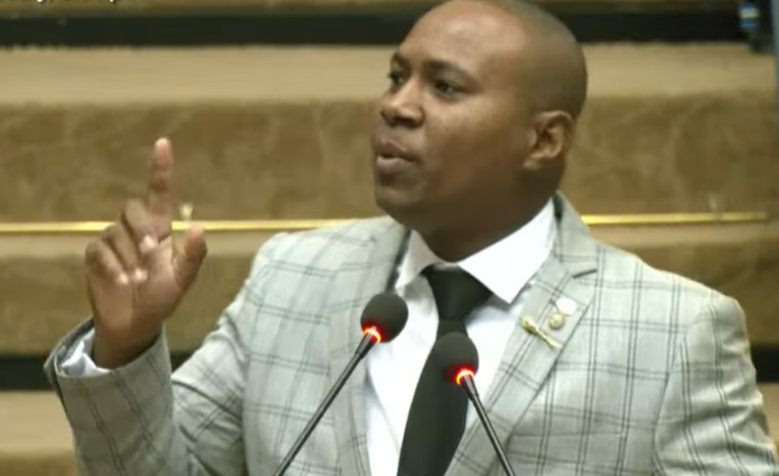
In his maiden parliamentary presentation, WIN frontbencher Dr Andre Lewis kicked off debate on the 2026 budget that was tabled in the National Assembly one week ago.
He said there was little that was in the package for ordinary people on the densely populated coastland, and interior regions.
He said the government had not devised a strategy to deal with debt management and inflation, with such a heavy emphasis on oil money at a time of falling prices. “The budget depends heavily on oil revenues at a time when global oil prices are uncertain and projected to decline. Yet there is no clear plan for how spending will be managed if revenue falls,” he said.
However, Minister of Public Works Juan Edghill said Dr Lewis did not read the estimates of expenditure or he would have realised that only GY$495 billion from the oil revenue makes up the more than a trillion dollar budget. “That’s the total amount of oil money that is financing this budget. Please rewrite your written statements and let your consultants do better,” Mr Edghill said.
Last week, the WIN posted a picture of its parliamentarians with Chartered Accountant Christopher Ram.
Dr Lewis also criticised what government labelled a “People-centred Budget”, saying that food prices were still high, transportation costs unregulated and unpredictable and less available housing.
He said while the budget focusses on Guyana as whole, its benefits were not being felt on the coastland, riverain, rural, and mining communities where residents continue to face high costs, weaker services, poor infrastructure, and limited access to opportunity. “A budget that truly puts people first ensures no community is left behind, regardless of geography,” he said.
But the public infrastructure minister retorted with the budget being a social contract of inclusion that intentionally directs resources towards the everyday needs of the working families, small businesses, farmers, public servants, and communities. “This is a well-thought-out, people-oriented, pro-poor, service-oriented, development-focused budget with an aim to achieve a united and prosperous Guyana,” he said.
Among the allocations are GY$183 billion for education, GY$161 billion for health, GY$21.6 billion for health, GY$7.9 billion for sanitation and waste management, GY$78.3 billion for children, women and the elderly, GY$7.5 billion for Amerindian development, GY$113.2 billion for agriculture and food security, GY$119.4 billion for transformational infrastructure and GY$196.1 billion for transport infrastructure.
Meanwhile, A Partnership for National Unity’s (APNU) Vinceroy Jordan told the House that the GY$5,000 increase in old age pension, GY$3,000 increase in public assistance and increase for public servants “cannot be putting people first.” He said there were no direct measures to reduce the high cost of living.
Mr Jordan said APNU proposed a 35 percent increase for public servants but government could have offered a 25 percent hike.
Additionally, he said government could have invested heavily in agriculture to bring down food prices. “Were this government serious about bringing down cost of living, every region would have had a strong developmental plan on sustainable agriculture that would have increased food production and contributed to the reduction of the price of food, ensuring food availability and security.”
For his part, the public works minister said government was investing heavily in drainage infrastructure, roads, bridges, ferries and airstrips all of which would contribute to lower cost of living. “When we build airstrips, we bring down the cost of living for the people in the area. You see, you would not know that. You will not know that because when we bring down the cost of transporting food, it means that the cost of living in the area goes down,” he said.