

Last Updated on Wednesday, 27 August 2025, 22:59 by Writer
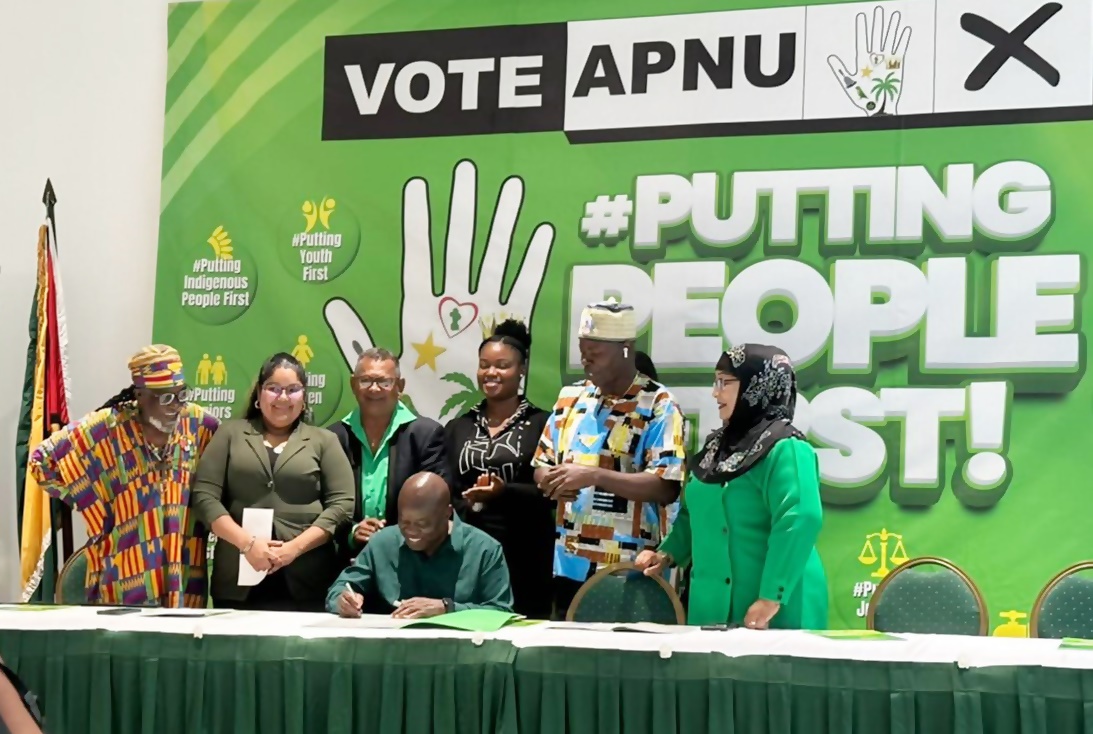
Presidential candidate for A Partnership for National Unity (APNU), Aubrey Norton Tuesday night said his party’s victory at next Monday’s general and regional elections depends heavily on getting less than 10 percent more turnout at the polls.
“I urge you to work with everyone to ensure we get maximum turnout. If we increase our turnout by five percent, the PPP is beaten hands down and so let us work to win these elections,” he told a public meeting at Mahaicony, East Coast Demerara.
Like the incumbent People’s Progressive Party Civic (PPPC), Mr Norton encouraged supporters not to be complacent but ensure that they turn out in large numbers to vote.
“On election day, we must go and bring out everyone to vote. Your vote matters,” he said, recalling that APNU had lost in area named Kumaka by one vote. “If you think your vote does not matter, you are making a mistake,” he said.
The PPPC has not publicly stated the number of votes that are needed to win the September 1 general elections, but party insiders said they were aiming for at least 34 seats. Publicly, the PPP has been talking about winning by a two-thirds majority and winning the Region 10 (Upper Demerara-Upper Berbice) and Region Four (Demerara-Mahaica) councils that are historically controlled by the People’s National Congress Reform/APNU.
The PNCR twice came to power in free and fair elections in 1964 and 2015 in coalitions with the United Force (UF) and Alliance For Change (AFC) that had commanded a fair percentage of votes. APNU and AFC failed to reach a coalition agreement.
Also, in the upcoming elections, both the PPPC and APNU have to contend with the fast emerging We Invest in Nationhood (WIN) political party that has been taking away vitally needed support if turnouts at community meetings and rallies are anything to go by.
Led by United States-sanctioned businessman Azruddin Mohamed, WIN has been attacked fiercely on the campaign trail for its integrity and the potential risk that Guyana faces if he is elected whether in government or opposition.
U.S. Ambassador to Guyana, Nicole Theriot had said that, based on other countries’ experiences where U.S.-sanctioned persons had been elected to government, U.S. businesses take measures to reduce their risks including pulling out altogether from those jurisdictions and the U.S. government becomes extremely cautious in dealing with such governments and committees that they work together.
Ms Theriot also made it clear that the U.S. was not interfering in Guyana’s elections but was merely stating the facts about the implications of someone sanctioned by the Treasury Department’s Office for Foreign Assets Control (OFAC) getting into government.