

Last Updated on Monday, 19 May 2025, 23:01 by Writer
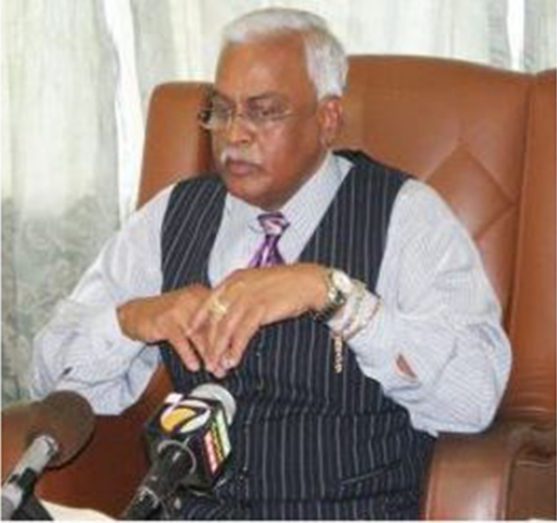
Civil society activist and author, Christopher Ram, has asked the High Court to compel Commissioner of Information (COI) Charles Ramson, Snr to provide a report by a United Kingdom-headquartered law firm on the renegotiation of the oil contract between Esso Exploration and Production Guyana Limited, now ExxonMobil Guyana, and the Guyana government in 2016 as well as related documents.
In an affidavit of service Assistant to Christopher Ram and Associates, Ammiel Garnett alleged that on May 16, 2025, she served the court documents on Mr Ramson but he refused to sign for them.
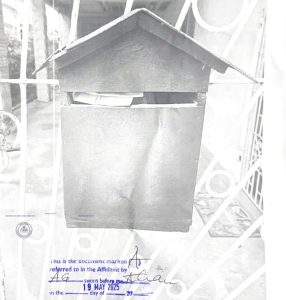
“The Commissioner of Information refused to sign receiving the served copy and instructed me to place the filed documents in his mailbox. I did so,” she said.
If Mr Ram secures declarations that the COI has failed to comply with the requirements of the Access to Information Act 2011 and that the report commissioned by the United Kingdom-headquartered law firm, Clyde & Co into the circumstances leading up to the signing of the 2016 Petroleum Agreement is an official document within the meaning of the law, he also wants a “mandamus compelling the Respondent to provide access to the complete report including all annexes”.
In court papers seen by Demerara Waves Online News, Mr Ram said that he first requested a copy of the documents from the COI on December 6, 2021 and subsequently from the Minister of Natural Resources, Vickram Bharrat, but did not receive the information.
“To date, neither the Respondent nor the Minister has provided the requested information,” Mr Ram said.
He said it was only after he dispatched a pre-action letter to Mr Ramson on April 25, that the COI responded on April 29 “indicating his intention to oppose legal proceedings.”
Mr Ram, in his affidavit to support his Fixed Date Application, listed the documents that he requested.
They are the January 2020 report by Clyde & Co and its annexes relating to their investigation into the 2016 Petroleum Agreement; the escrow letter referenced in the Bridging Deed dated June 29, 2016; details of public payments made to Clyde & Co. for the said investigation, and details of public funds expended in relation to the bridging deed and associated escrow arrangements.
“More than three years later, I am still denied access to a publicly funded ministerial report, hindering the completion of my book on Oil and Gas and affecting my constitutional rights,” Mr Ram said.
He also said that he has since written to the President of Guyana under whose office the official functions of the COI fall, to “complain about its failure to act.”
He contends that the COI’s continued refusal to discharge his statutory duty has caused personal and professional prejudice and undermines the purpose of the Access to Information Act.
Mr Ram said he believed he had what appeared to be a copy of the Clyde & Co report but he needed the annexes to authenticate the entire document.
After outlining the history of his efforts to obtain the documents, he said those events establish a sustained failure to discharge mandatory statutory functions in an unlawful manner, procedural impropriety through the imposition of extra-statutory hurdles, abuse of public office through intemperate and disparaging communications, and misfeasance and bad faith.
“The Respondent has misconstrued his duties, refused to apply the law, and substituted personal disdain and irrelevant objections for lawful reasoning. His conduct is inconsistent with the duty of neutrality and independence that attaches to his statutory office,” he said.
According to Mr Ram, he had no other option but to seek the intervention of the High Court and he could not file an appeal because that mechanism is only available where access has been refused with reasons.
He added that no such refusal, accompanied by lawful reasons, has been issued.
“Judicial review under the Judicial Review Act and section 43 of the Access to Information Act is therefore the only lawful recourse available,” Mr Ram added.
He said the High Court’s intervention was necessary to uphold the rule of law, restore the integrity of the Access to Information framework, and prevent the erosion of democratic accountability in Guyana.
In the weeks ahead of dispatching the pre-action letter and subsequent filing of the High Court action, Mr Ram had spearheaded picketing demonstrations outside the East Street, Georgetown office of the COI.