

Last Updated on Wednesday, 25 March 2026, 22:48 by Writer
By Ron Cheong
It has been reported that CARICOM governments are preparing to send humanitarian aid to Cuba following a decision announced by chairman Dr. Terrance Drew at the 50th Regular Meeting of the Conference of Heads of Government in St Kitts and Nevis from 24 to 27 February 2026. Supplies to be purchased in Mexico for transport to Cuba include powdered milk including baby formula, non-perishables such as beans, wheat flour, rice, canned goods, basic medical supplies, solar panels, batteries, and water tanks.
The long running embargo and now naval “oil blockade” has been cruel and unusual punishment against an island and its people. These actions have inflicted severe hardship and has brought near collapse to a nation simply seeking self determination. Furthermore, the suffering has been inflicted by a superpower which is now demonstrating much less moral character than the people it directs its fury against – in the name of high-minded objectives. Whatever the flaws in the Cuban system, Cuba has demonstrated resilience, cohesion, and a people-centered ethic, which the US itself increasingly lacks.
In addition to the above aggression, there has been the military strike on Venezuela without follow-through to support democracy there. There is also the war against Iran which is driving up fuel prices, increasing inflationary strain and disrupting tourism dependent economies in the region. And on top of that a chaotic whimsical regime of punitive tariffs against US friend and foe alike.
Let’s look back and place some context on what is currently amounting to the harshest ever punishment imposed on Cuba.
More than six decades after the United States imposed sweeping sanctions on Cuba, the policy has hardened into one of the longest-running economic sieges in modern history. What began as a Cold War strategy to counter Soviet influence has evolved into a dense web of financial restrictions, diplomatic pressure, and extraterritorial penalties that shape the economic life of a small Caribbean nation of 11 million people.
The historical irony of the embargo is difficult to ignore.
The original policy originated from fears that Cuba had become a Soviet outpost in the Western Hemisphere. Yet in today’s political climate, some of the same voices advocating the toughest measures against Havana express far more conciliatory attitudes toward Vladimir Putin.
Today, the question confronting Washington and the wider world is increasingly stark: Has the embargo and current naval blockade become a show of strength whose humanitarian consequences now outweigh any possible strategic purpose? Is the suffering of the people something to gloat over?
Cold War origins
The origins of conflict traces back to the Cuban Revolution, when Fidel Castro overthrew the U.S. backed government of Fulgencio Batista, an authoritarian dictatorship, and nationalized major industries, including American-owned businesses.
Washington responded with escalating sanctions, culminating in the full trade embargo imposed by John F. Kennedy in 1962. At the height of the Cold War, the justification seemed straightforward: Cuba had aligned with the Soviet Union and hosted nuclear missiles during the Cuban Missile Crisis, bringing the world to the brink of nuclear war.
But the Soviet Union disappeared more than thirty years ago. The embargo did not.
Instead, it became institutionalized through laws, making it extremely difficult to lift sanctions without congressional approval.
A sanctions system with global reach
The modern embargo extends far beyond a simple prohibition on U.S.-Cuba trade. Because the United States dominates global finance, sanctions often carry extraterritorial consequences.
Foreign banks risk penalties if they process transactions with Cuba. Shipping companies can face restrictions if they dock at Cuban ports and later attempt to enter the United States. Businesses trading with Cuba may lose access to American markets.
For a small island economy dependent on imports for food, fuel, and industrial inputs, these restrictions have profound effects.
Shortages of fuel, spare parts, and medical equipment have become chronic. Electrical grids struggle to obtain replacement components. Hospitals report difficulty acquiring certain medicines or specialized devices. The result is a fragile economic system increasingly strained by shortages and infrastructure failures.
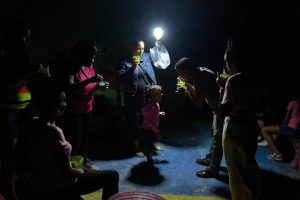
Today, with the “targeted” naval oil blockade, blackouts across the island have underscored the severity of the crisis – inability to store perishable food, disabling sensitive equipment and emergency hospital care, and decimated its absolutely critical tourism lifeblood. Sanctions have also magnified structural weaknesses by limiting access to credit, technology, and global markets.
Cuba on the brink
Cuba now faces its most serious economic emergency since the early 1990s when the collapse of Soviet aid plunged the island into deep recession.
Inflation has surged. Migration has reached historic levels, with hundreds of thousands of Cubans leaving the island. Food shortages, power outages, and crumbling infrastructure have become daily realities.
The Cuban government attributes much of the crisis to the tightening of U.S. sanctions in recent years, particularly measures that target shipping, remittances, and access to international banking systems.
Adversaries of Havana say that the government’s own centralized economic system bears responsibility for many inefficiencies. Whatever the case, it has to be acknowledged sanctions restrict the country’s capacity to recover.
The Caribbean: A region caught in the middle
The consequences of U.S.-Cuba tensions extend beyond the island itself. Across the Caribbean, governments navigate a delicate geopolitical balance between security and economic dependence on the United States and practical cooperation with Cuba.
CARICOM has historically long defended engagement with Cuba, viewing the island as an important partner in regional development.
Countries like Jamaica, Barbados, and Guyana maintained longstanding medical and educational cooperation agreements with Havana. Cuban doctors and nurses work in hospitals across the Caribbean, often filling gaps created by shortages of medical professionals.
For many small island states, these programs are not ideological statements but practical necessities. Recruiting doctors to remote or under-resourced regions is difficult, and Cuban medical missions have often provided critical support during crises – from hurricane recovery to public health emergencies.
Yet Washington has increasingly criticized these programs. Officials, including Marco Rubio, argue that the Cuban government exploits medical workers by taking a significant portion of their salaries and restricting their freedom of movement.
And the United States has imposed visa restrictions and other pressures to discourage Caribbean governments from participating in these missions.
For small states navigating economic vulnerability and climate risks, the situation presents a difficult choice: comply with the demands of the region’s largest power or risk losing access to essential healthcare personnel. The immense pressure from the US has had consequences. Jamaica is ending its medical cooperation with Cuba. And Guyana is now hiring Cuban Doctors and Nurses directly. In addition, the Guyana government, which depended on the Cuban medical program for decades and had deep fraternal and ideological kinship with Cuba in the past, has said the Cuban “Status quo cannot remain.”
The Venezuela factor
The geopolitical web surrounding Cuba also includes Venezuela. For years, the government of Hugo Chávez – and later Nicolás Maduro – supplied Cuba with subsidized oil in exchange for Cuban doctors, teachers, and technical advisers.
When Washington imposed severe sanctions on Venezuela’s energy sector, the ripple effects reached Havana. With little oil reaching the country, blackouts now sweep across the island.
The sanctions regimes that targeted Venezuela and Cuba reinforced one another, tightening economic pressure across parts of the Caribbean basin.
The paradox of Russian influence
The historical irony of the embargo is difficult to ignore.
The original policy originated from fears that Cuba had become a Soviet outpost in the Western Hemisphere. Yet in today’s political climate, some of the same voices advocating the toughest measures against Havana express far more conciliatory attitudes toward Vladimir Putin.
This contradiction raises uncomfortable questions about whether the embargo remains rooted in coherent strategic logic, or whether it has simply become a permanent fixture of domestic politics that has now taken on an even more erratic and punitive nature.
A policy at a crossroads
After more than 60 years, the embargo has, at least so far, failed to achieve its central objective: the transformation or collapse of Cuba’s political system, although Cuba may now be nearing exhaustion.
What it has definitely done is prolong an economic standoff that shapes the lives of millions of people and influences the geopolitical dynamics of the Caribbean.
Supporters argue that sanctions remain a legitimate tool for pressuring an authoritarian government. Others counter that the policy punishes ordinary citizens while entrenching political divisions.
As Cuba faces mounting economic strain and the Caribbean navigates competing pressures from larger powers, the question confronting Washington is increasingly unavoidable: Is the embargo still a strategy, or has it become a tyrannical whim using a long-gone Cold War as a front, and whose human costs now exceed any political or strategic gains?
For Cuba and its Caribbean neighbors, an equitable and humanitarian resolution of this situation may determine whether the region moves toward greater cooperation or has the current incarnation of a conflict that began more than half a century ago hang over their heads as a collective shadow of a regrettable episode in Caribbean history.
Finally, the promise of relief by CARICOM
Now, it appears that CARICOM has at last collectively decided that the community can no longer stand by while a close neighbour endures such suffering – despite potential consequences. They would have long taken humanitarian action if there had been a hurricane or flooding – the human consequences are no different.
Much of the charge seems to have been led by the small island of Barbados and their Prime Minister Mia Mottley. In the face of delays, Barbados decided to independently move forward to deliver their donated supplies.
It is hoped, that the collective CARICOM action can be expedited, and the direly needed supplies reach Cuba bringing at least some relief to the island and its people before collapse.