

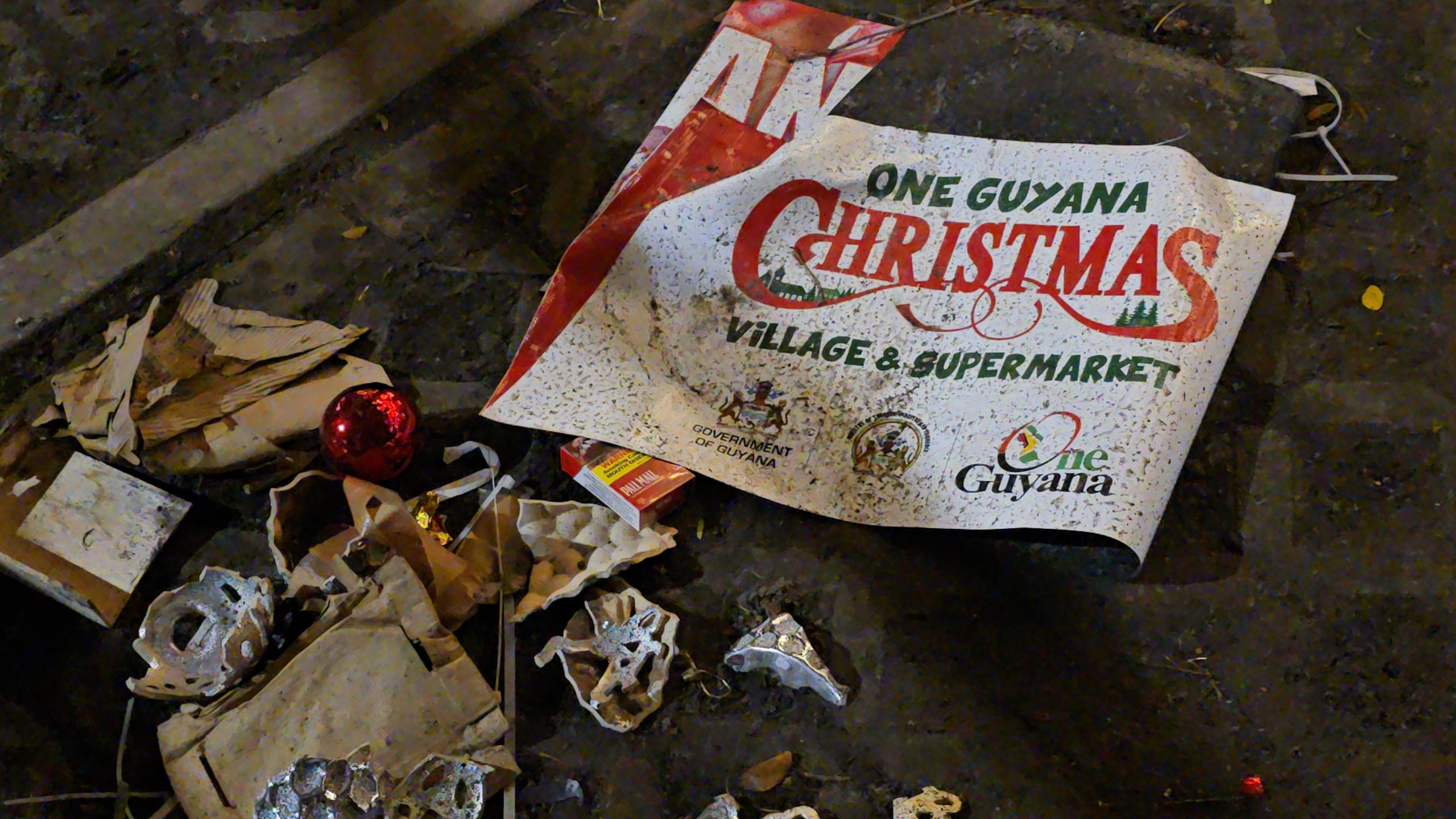
Last Updated on Monday, 5 January 2026, 20:59 by Writer
Georgetown’s solid waste management plan, if ever there was one – perhaps locked away in a cupboard, in someone’s imagination or simply not implemented – is in a deep crisis.
Amid the fireworks that rocked sections of the city and lit up the night sky, and all the Old Night parties with everyone decked out to the nines, the sun rose on Guyana’s capital city on January 1, 2026 looking as nasty as it was almost throughout 2025 up until December 31.
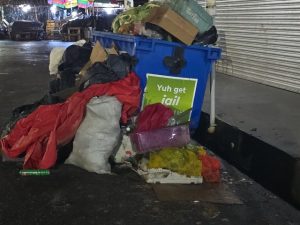
A walk through parts of commercial Georgetown revealed overflowing garbage receptacles; the only aspect being possibly attractive is the fact that they are relatively new as they were recently donated by the Central Government.
Donating garbage bins or declaring in lofty-sounding speeches about a Georgetown revitalisation/rehabilitation plan sprinkled with a few community meetings, packed in some instances with non-residents/constituents (not non-nationals) merely for the cameras, will not cut it.
The city (didn’t want to use the rhyming ‘s’ word) stinks to high hell. It seems no one seems to care except for possible vote-getting and playing one against the other. The time for political games by all political parties with the residents and users of Georgetown must stop and stop immediately.
Things have gotten so fished up in this city that one cannot help but recall the basket of uncooked fish that was left to rot and stink for days on the Main Street pavement in the vicinity of the National Library. The only tolerant beings were worms and large swarm of huge flies.
As it stands now, solid waste is sadly confined and limited to the collection of domestic and commercial waste. In between the occasional cosmetic national clean-up exercises, nothing is done to remove large piles of garbage that continue to grow higher with each passing day. Case in point, the Bourda Cemetery is a garbage dump with tonnes of waste of all types bracing the fence. Unfortunately, the Christmas vendors, eager to ‘catch deh haan’ for the season resorted to place tarpaulins and other sheet-like material along the fence before hanging brand new, fashionable clothing for sale.
Across the road, Bourda Market is surrounded by high frothing, smelly drains that overflow into the market during heavy rainfall. Similarly, most drains in Georgetown are clogged with silt and garbage. Now, you may think this essay is straying off point with the mention of drainage. No! Solid waste and drainage are intertwined if the city is to rectify both problems.
As it stands right now, those responsible for waste collection are not clearing the street side bins regularly. This is causing the bins to overflow and the waste eventually ending up in drains. When the garbage collectors arrive, they only empty the bins, leaving behind the waste in the drains.
Similarly, there is absolutely no coordination between those who seldom clean trenches and drains, and weed parapets and others responsible for waste collection. Often, piles or bags of waste are waiting for days to be picked up. Heavy winds and rain eventually deposit the waste back into the drains and trenches. Sometimes, public events are held and there is no plan for waste collection. The one that stands out as an example is the waste that is left behind along Main Street as booth holders dismantle and take away their furniture and remaining stocks that were on display at the Christmas Village. Waste is strewn along the avenue, garbage bins are filled to more than their capacity, solid waste is packed up in parts of the drains, wooden pallets are abandoned, drink bottles and food boxes are all over.
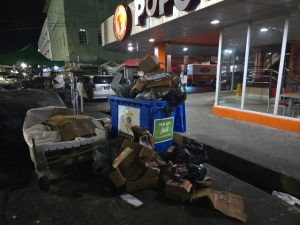
Georgetown street dwellers, estimated at just over 120, are also contributing to the nasty condition of the town. They rummage garbage bins. leave the waste outside to scatter which eventually end up in drains. In other instances, they consume food that is donated by charitable persons on a daily or nightly basis and then they merely throw the food boxes and cups around the place. One just has to check outside Guyana Stores or Bourda Market.
There are even uniformed members of the Guyana Police Force who are litterbugs. About two years ago, a policewoman dumped an empty plastic water bottle in the alleyway on Camp Street between North Road and Robb Street. Her divisional commander was called immediately and informed. As recently as last week, a policewoman in one of the Christmas season temporary police huts on New Market and Waterloo streets was seen disposing garbage on the parapet about two feet away from the hut. She also disposed of wastepaper through one of the spaces in the hut.
For starters, the Central Government must leverage its influence and boardroom voting power at the various levels of decision-making to overhaul the solid waste mechanisms at the local and central level to the benefit of Georgetown. In so doing, the new mechanism must explore the integration or closer working relationship between the solid waste and drainage sections.
The time is long gone to blame the public for the condition of the city for a number of reasons. If attitudes cannot change voluntarily, then start charging them; if bins are not being cleared and the place looks nasty, it’s not the people’s fault. Members of the public are using the bins. Those responsible for clearing them are not doing their jobs effectively and efficiently.
A proposed 17-point plan for a sustainably clean Georgetown is reproduced here:
- Cleaning of alleyways on a quarterly basis
- Desilting of drains in residential areas on a quarterly basis
- Desilting of drains in commercial areas on a monthly basis
- Cleaning of drains of rubbish (bottles, plastics, food boxes and other solid waste) thrice weekly
- Removing of solid waste from trenches and canals twice monthly
- Removing of vagrants/street dwellers because they empty bins or eat donated food and leave the food boxes all of which go into the drainage system.
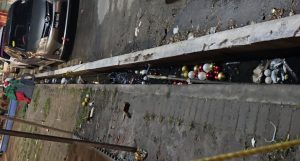
A drain on Main Street with garbage left behind by persons who participated in the Christmas Village. (January 4, 2026) - Coordinating between those who clean the drains, alleyways and canals and those who should be collecting the waste. Otherwise, they are left on the parapet to be taken up by the wind or rain for going back into the drainage system
- Rangers riding and walking around the city to spot piles of garbage or the need to remove big or large items (eg freezers, stoves) from the trenches or canals. The rangers will then have to call the cleaners and collectors
- Installating of cameras at certain garbage dumping hot spots to catch offenders
- Enforcing of all litter laws (not as a means of taking bribes)
- Using pumps and other modern technologies to clean drains. The sole means of manual bucket, spade and shovel results in an incomplete job
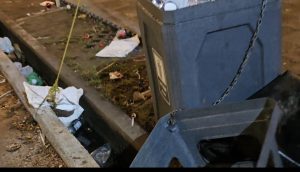
Garbage from the packed to capacity bin in the drain on Main Street as the Christmas Village winds down and vendors leave. (January 4, 2026) - Strictly monitoring by the government of drainage contracts to ensure the jobs are done to the highest standards
- Incentivising property owners that keep their parapet and drains clean
- Constructing high-rise parking lots for paid parking to generate revenue to help maintain Georgetown
- Maximising use of the dry season to deep-clean all drains, alleyways, trenches and canals. It will be cheaper to do it then because the workers can actually see what has to be removed with less chance of the waste washing back into the system
- Inspecting and verifying of quality of works
- Daily emptying of street-side bins.