

Last Updated on Wednesday, 20 August 2025, 18:31 by Writer
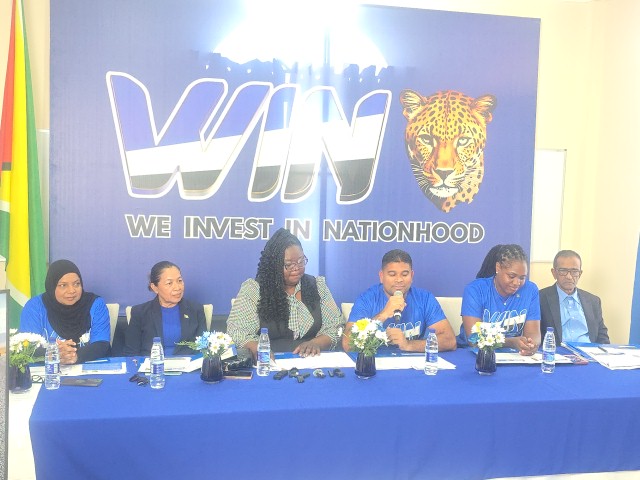
The Carter Center is concerned that local commercial banks are going overboard in complying with United States Treasury Department sanctions imposed on leader of the We Invest in Nationhood (WIN) political party, Azruddin Mohamed, and so are violating his right to be elected and the right to political participation.
“The Carter Center is concerned that banks may be over-complying with U.S. sanctions, which undermines political participation and electoral integrity by discouraging people from participating fully in the political process,” the Atlanta-based organisation said in a statement ahead of the September 1 general and regional elections.
Informed that following the approval of WIN’s list of candidates on July 25, 2025 when approximately 40 of WIN’s candidates, party members, and their associates had their personal bank accounts closed, the Carter Center urged the private sector not to take any action that would violate the democratic rights. “The private sector has an important role to play in safeguarding democratic rights and freedoms and, as such, must ensure decisions do not discriminate against individuals for exercising those rights,” the Carter Center said.
Reportedly, the Center said several candidates also have been dismissed by private-sector employers for appearing on WIN’s list. Although the banks have not provided a detailed public explanation of their actions, the Center said they are reportedly concerned about secondary sanctions and their banking relationships with the U.S. financial system.
Ruling People’s Progressive Party (PPP) General Secretary, Bharrat Jagdeo reacted, saying that banks had closed numerous accounts even based only on financial, legal, regulatory or reputational risks. “You’re telling the banks how to operate. This is a political institution – the Carter Center and even OFAC (Office of Foreign Assets Control) did not say that. OFAC said the banks have to deal with their own procedures as financial institutions,” he said.
Demerara Bank Limited had cited directly the need to mitigate risks in keeping with Anti-Money Laundering legislation and de-risking guidelines for correspondent banks. “Anybody, who has a relationship that poses a compliance risk with the bank, we have an obligation under the AML (Anti-Money Laundering) legislation to take action and de-risk and that comes with international correspondent bank guidelines,” DBL Chief Executive Officer Dowlat Parbhu had said.
The Guyana Association of Bankers Inc (GABI), without alluding to specific actions taken by member-banks, had said they were guided by strict regulatory obligations, including Anti-Money Laundering (AML) and Countering the Financing of Terrorism (CFT) requirements, as well as global risk management practices. “These standards are critical to preserving financial system integrity, protecting depositors, and ensuring continued access to international financial markets, GABI had said.
Against that background, the Carter Center said while it recognizes the banking sector’s caution, the relevant Financial Action Task Force (FATF) and OFAC standards and guidelines recommend a “risk-based” approach to such matters and discourages overcompliance with practices such as blanket account closures (“de-risking”). The Center said the relevant practice indicates that the risk of secondary sanctions arises when there is a prohibited transaction or other significant dealing with a sanctioned person. Mere political association, without evidence of such transactions or facilitation, does not constitute the proper basis for termination of accounts.
The Center said “equitable treatment of candidates and political parties during elections, and the maintenance of an open and transparent campaign environment, are critical to ensuring the integrity of democratic elections and the right of every citizen to be elected. This right is a universal one and requires that states ensure that their citizens have the opportunity to run for elected office, free from unreasonable restrictions.”
In June 2024, the U.S. government sanctioned WIN presidential candidate Azruddin Mohamed, his father Nazar Mohamed, several of their businesses, and Guyanese government official Mae Thomas Jr. for public corruption. The U.S.’s OFAC blocked Mohamed’s assets in the U.S. financial system, and aimed to prevent transactions of money, goods, and services that would benefit Mohamed or the others within the U.S. financial system.
Airline Travel
Meanwhile, Mr Mohamed on Tuesday alleged that Air Services Limited (ASL) refused to transport WIN General Secretary Odessa Primus and Ms Dawn Hastings to Region One (Barima-Waini) for a political rally. “I got a call this (Tuesday) morning that they won’t be allowed on the flights. I don’t know why,” he told reporters. However, ASL lawyer Motie Singh told Demerara Waves Online News said the domestic carrier could not discriminate against anyone as that would be a violation of law governing consumer affairs irrespective of their status. “No, no, no! We are not blocking anybody. We cannot block anyone,” he said.
Touching on that issue in its pre-election statement, the Carter Center said it was concerned that Mr Mohamed had been denied interior airline service for campaign flights and reports that the party in some instances has been denied use of local public areas for campaign meetings. “These campaign issues raise concerns about equal application of the rights of freedom of association,” the Center added.
Head of the Aircraft Owners Association of Guyana Captain Learie Barclay told Demerara Waves Online News that that body had not discussed the issue of the WIN presidential candidate and his party members flying on domestic carriers. “The association has not countenanced, discussed, made any decisions; this matter has not come up at the association level,” he said.
Mr Barclay added that individual carriers were making their own decisions as they see fit.