
Last Updated on Wednesday, 23 April 2025, 20:37 by Writer
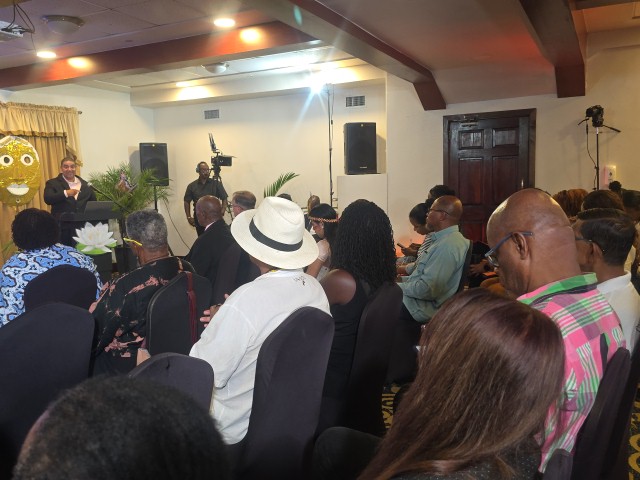
The United Nations Educational, Scientific and Cultural Organisation (UNESCO) on Wednesday strongly signaled that Guyana should ratify the 2003 Convention for the Safeguarding of the Intangible Cultural Heritage.
UNESCO says such heritage includes traditions or living expressions inherited from our ancestors and passed on to our descendants, such as oral traditions, performing arts, social practices, rituals, festive events, knowledge and practices concerning nature and the universe or the knowledge and skills to produce traditional crafts.
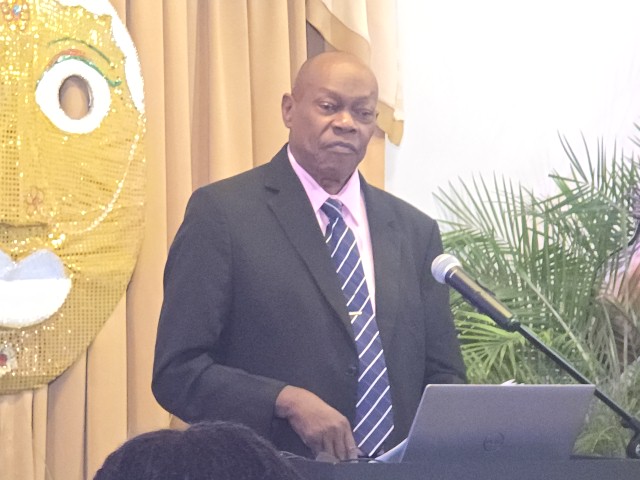
Addressing the opening of a workshop on the convention, Head of the Culture Programme at UNESCO’s Caribbean office in Jamaica, Yuri Peskhov, said if Guyana does so, “it would be a critical step forward in acknowledging the importance of safeguarding its precious heritage on the national level.”
He said that if that is done, Guyana would benefit from the advancement of national sustainable development.
Mr Peshkov said workshop participants should be able to understand the convention and why UNESCO member states should ratify that international law.
“A profound knowledge and understanding of the convention and its concepts and measures, and mechanisms is pivotal for (its) successful ratification and future implementation,” he added.
UNESCO and the Merundoi Inc committee collaborated to hold the workshop.
Workshop Facilitator on the Convention, David Brown said, despite Guyana’s rich and diverse cultural heritage he had nine years ago observed a lack of cohesion and channels of communication among state agencies, major groups, non-governmental organisations and the media in the process of safeguarding Guyana’s intangible cultural heritage.
“You did find that there were groups that were preserving, I see, but they weren’t communicating, they weren’t speaking to each other. They didn’t have a cohesive whole. That’s not unique to Guyana,” he said.
In 2016, Mr Brown had conducted a needs assessment on safeguarding Guyana’s intangible cultural heritage.
During that mission, he had visited government ministries, departments and agencies that are responsible for preserving, researching, documenting and disseminating information on all of Guyana’s cultural elements that also include languages and cuisine.
Back then, Mr Brown said he had found the need for a national cultural policy and a body that would oversee and facilitate the synergies to safeguard the intangible cultural elements.
The expert on the UNESCO Convention for the Safeguarding of the Intangible Cultural Heritage said if Guyana ratifies that binding document, benefits would include funding from the the Intangible Cultural Heritage Fund for preservation of those aspects nationally and internationally through continuity, transmission, development and scientific study.
Other expectations are the strengthening of local and national identities, openness towards other cultures, shared strategies and support.
One hundred and eighty-two countries are now parties to the convention.