
Last Updated on Sunday, 16 February 2025, 20:33 by Written By Denis Chabrol
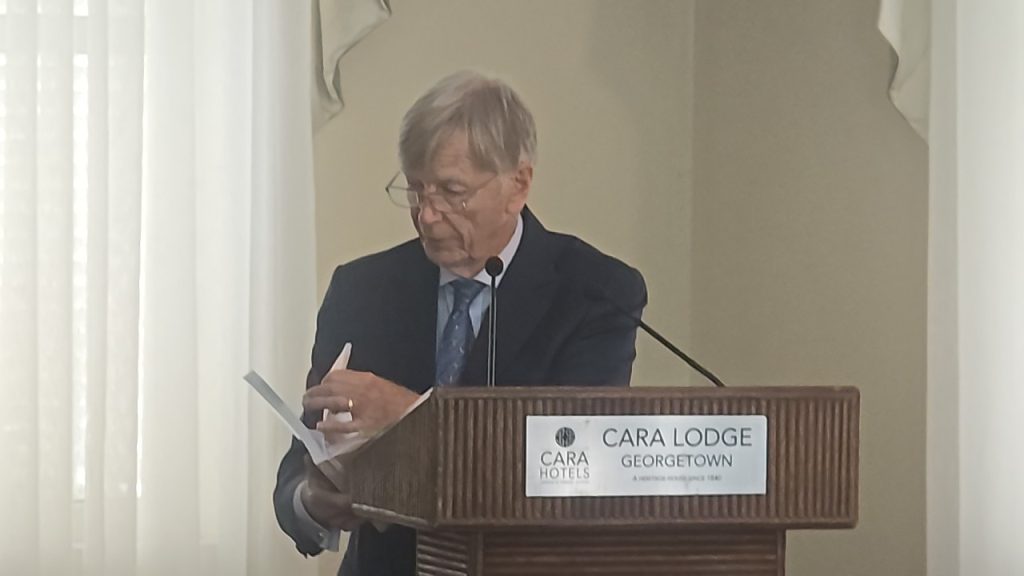
Retired United Kingdom (UK) Supreme Court Judge, Robert Carnwath, Lord Carnwath of Notting Hill has observed several provisions of Guyana’s Constitution that are relevant to environmental protection.
Delivering a lecture titled “Climate Change Litigation: A Global Perspective” under the aegis of the Commonwealth Lawyers Association to Guyanese lawyers and judges, he described Guyana’s legal safeguards as “strong environmental clauses in your constitution which seem to be a model of its kind because it’s not just about rights, it’s about duty.”
“You have very strong environmental protections…that can be a very effective tool for the courts in dealing with the problem of the environment and, in particular, climate change,” he said.
Quoting directly from the Constitution, he cited Clause 25 which states that “Every citizen has a duty to participate in activities designed to improve the environment and protect the health of the nation.” Justice Carnwath, in relation to that clause, remarked “that’s a good start”.
He also described as “strong stuff” Clause 26 which states that, “The well-being of a nation depends upon preserving clean air, fertile soil, pure water and the rich diversity of plant, animals and ecosystems.”
Justice Carnwath also drew attention to Article 149 (j): “Everyone has the right to an environment that is not harmful to his or her health or well-being. The State shall protect the environment for the benefit of present and future generations, through reasonable legislative and other measures designed to – (a) prevent pollution and ecological degradation; (b) promote conservation, and (c) secure sustainable development and use of natural resources while promoting justifiable economic and social development.”
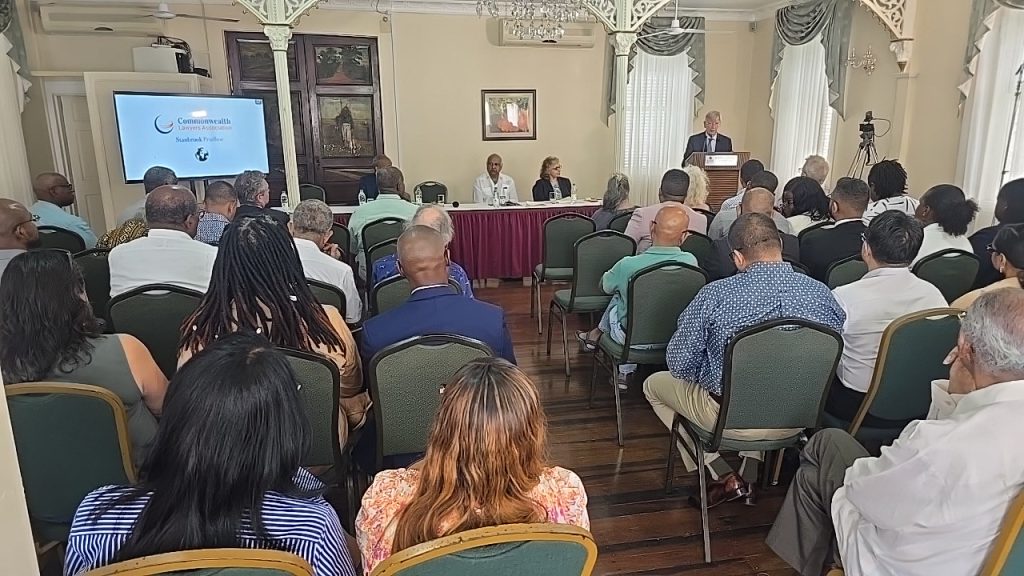
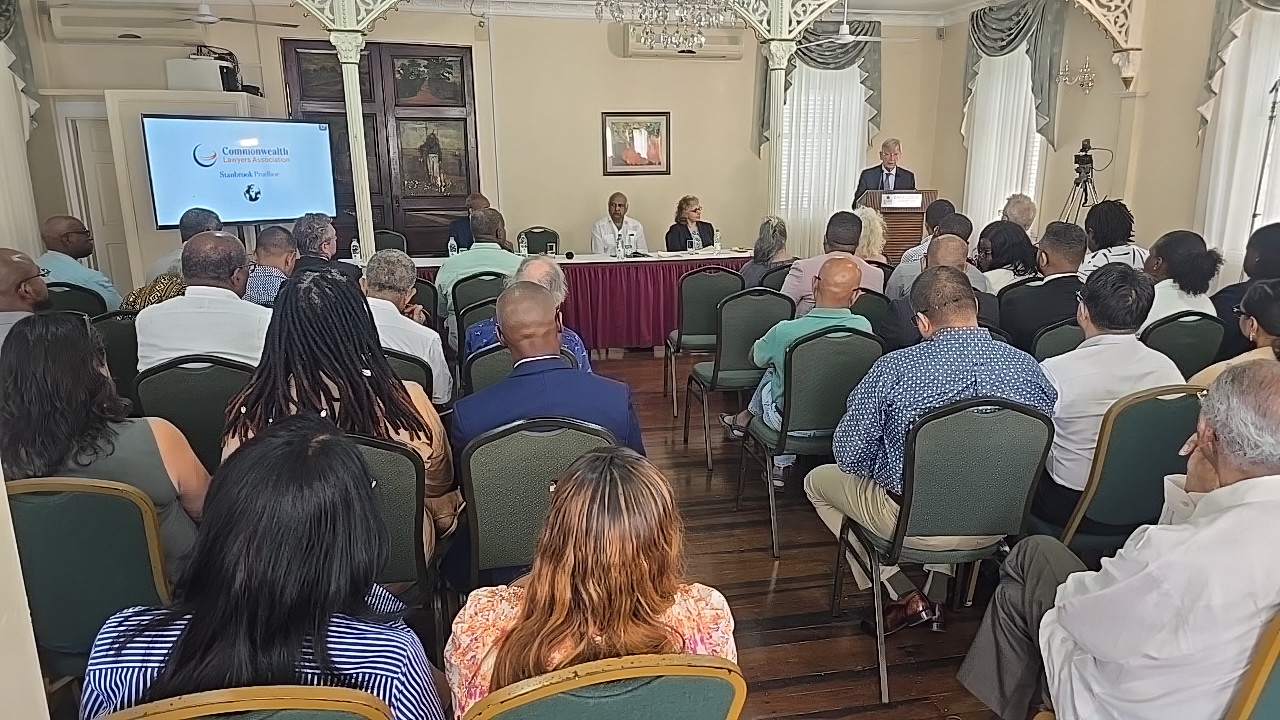
Justice Carnwath cited numerous court cases in other Commonwealth member—states as well as the United States and several European countries where references to their Constitutions and laws, a number of which were not specific or explicit on environmental change matters—had yielded decisions that recognised the impact of certain actions on climate change. “I hope to share that, in general, the courts around the world have been able to respond creatively and effectively to the challenges within their different legal systems,” he said in his presentation at the Cara Lodge.
Speaking with Demerara Waves Online News after his lecture that focussed on what judges “can and cannot do to help combat one of the biggest challenges now facing mankind”, he declined to say whether the provisions of Guyana’s Constitution that he cited were justiciable or enforceable. He said his lecture was aimed at demonstrating how similar provisions in other jurisdictions were applied in court decisions. “I’m not going to comment on that because I think it’s really for the judges here to work that out and what I tried to show is that in different countries in the world, the courts have been able to give effect to similar constitutional clauses as in the Colombia case I mentioned,” he said. The Colombia case was in reference to the Indigenous and afro-descendent communities living near the Atrato River in Colombia filing a “tutela” (amparo mechanism) against governmental authorities arguing that, in failing to prevent river pollution, they violated plaintiffs’ rights to life, health, water, food security, healthy environment, culture, and land property.
Lord Carnwath said Guyana’s Constitutional provisions to which he alluded “provides the tools” but ultimately judges would have to decide how they use them. “I think they’ve got some strong weapons to deal with environmental problems but I’m not going to tell them how to do it.”
International Lawyer, Melinda Janki, who is a winner of the Commonwealth Law Conference Rule of Law Award, told Demerara Waves Online News that indeed Article 149(J) is “justiciable” because it is one of the Fundamental Rights while Articles 25 and 36 are among the Principles upon which the State is supposed to operate. She said another Article requires that in making decisions, the Courts and members of the Executive must take those principles into account. “While the principles themselves are not justiciable, you can require ministers or the President (of Guyana) to show, for example, that in making a decision, he or she has taken those principles into account,” she said.
Ms Janki said the President and ministers must take into consideration Article 36 that deals with the well-being of the nation in making every decision.
She noted that the Caribbean Court of Justice (CCJ), in handing down a decision involving now deceased Guyanese activist Ramon Gaskin, had stated that where a citizen acts in good faith to protect the environment, courts should not award costs against such a litigant. “These principles are really important because they tell us who we are and how we engage with one another even though they are not strictly justiciable in court,” said Ms Janki who has been a lawyer in a number of environmental cases.