
Last Updated on Friday, 31 January 2025, 15:43 by Writer
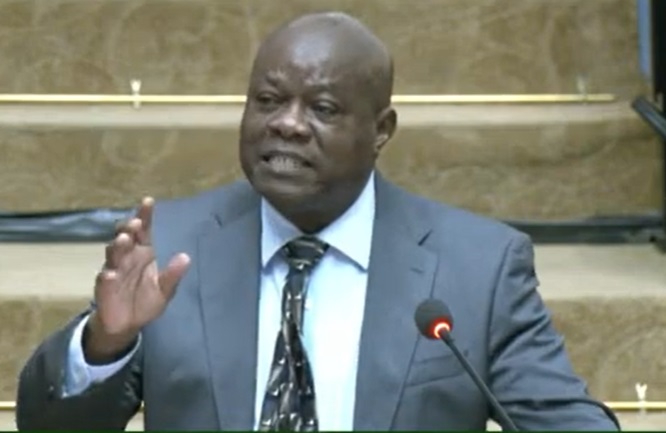
Opposition Leader Aubrey Norton on Thursday wrapped up the 2025 National Budget debate for the APNU+AFC benches in the National Assembly, promising to explore the feasibility of bridging the Essequibo River and constructing new roads and a railway system as part of a large-scale transportation infrastructure plan aimed at opening up new lands for housing, agriculture and trade.
According to Mr Norton, a PNCR-led coalition would commission a study on the best way to approach that, and build out such mixed-use transportation infrastructure urgently.
Touting again a “People-Centered Development Strategy”, he told the House that the coalition’s plan, if it clinches power at general and regional elections later this year, is to resurface the Linden-Soesdyke Highway to the highest standards, explore the construction of a natural-gas powered light railway system to link communities with Georgetown and Lethem. “A mixed-use rail network, which is powered by our own natural gas reserves, shows great promise as both passengers and those transporting goods can benefit, while the cost of transportation would be slashed,” he said.
Mr Norton’s People’s National Congress Reform (PNCR)-led coalition is also promising to build a comprehensive Inter-Regional Highway (IRH) System of paved highways linking Linden to New Amsterdam, Linden to Lethem, and other key towns. “Imagine goods from the hinterland farms moving seamlessly into urban markets within hours, thereby creating wealth, employment, and opportunity in every region,” he said.
Also on the drawing board is a coast-to-hinterland network—connecting Bartica to Upper Mazaruni, Essequibo Coast to Cuyuni, and the Northwest District—which will be part of the IRH. He envisaged a vibrant economic corridor where hinterland communities are no longer geographically isolated but are integrally connected to the national dynamic.
The Opposition Leader said the transportation infrastructure plan also includes bridging the Essequibo River at multiple points, with connected roadways, to improve connectivity. He said those bridges and roads would knit Guyana together “like never before” and transform the quality of life of residents. “We will end this ad hoc approach of building roads that are not part of a well-thought-out national road network.
He added that the establishment of those road networks would generate jobs in the agriculture, tourism, mining, logistics, forestry, and construction industries, among others, boosting Guyana’s economy while helping our nation mitigate climate change risks. He said that would also facilitate the transport of goods from Brazil for export, generating billions in revenue annually.
“This will contribute to our desire to develop new industries. It is time we develop robust infrastructure that links our country from one end to the other, and in government, we will lead the way on this front,” he said.
The incumbent People’s Progressive Party has also been mulling the construction of a light rail system and the construction of a road from Linden to Lethem to facilitate trade with neighbouring Brazil as a shorter route to the Atlantic Ocean for goods manufactured in Roraima State.
Also on the transportation front, Mr Norton announced that a new coalition government would consider the reestablishment of the state-owned Guyana Airways Corporation (GAC) which was grounded in 2001 due to severe financial turbulence. GAC had operated a fleet of planes that had served the interior communities and international destinations.