
Last Updated on Friday, 4 September 2026, 10:50 by Written By Denis Chabrol
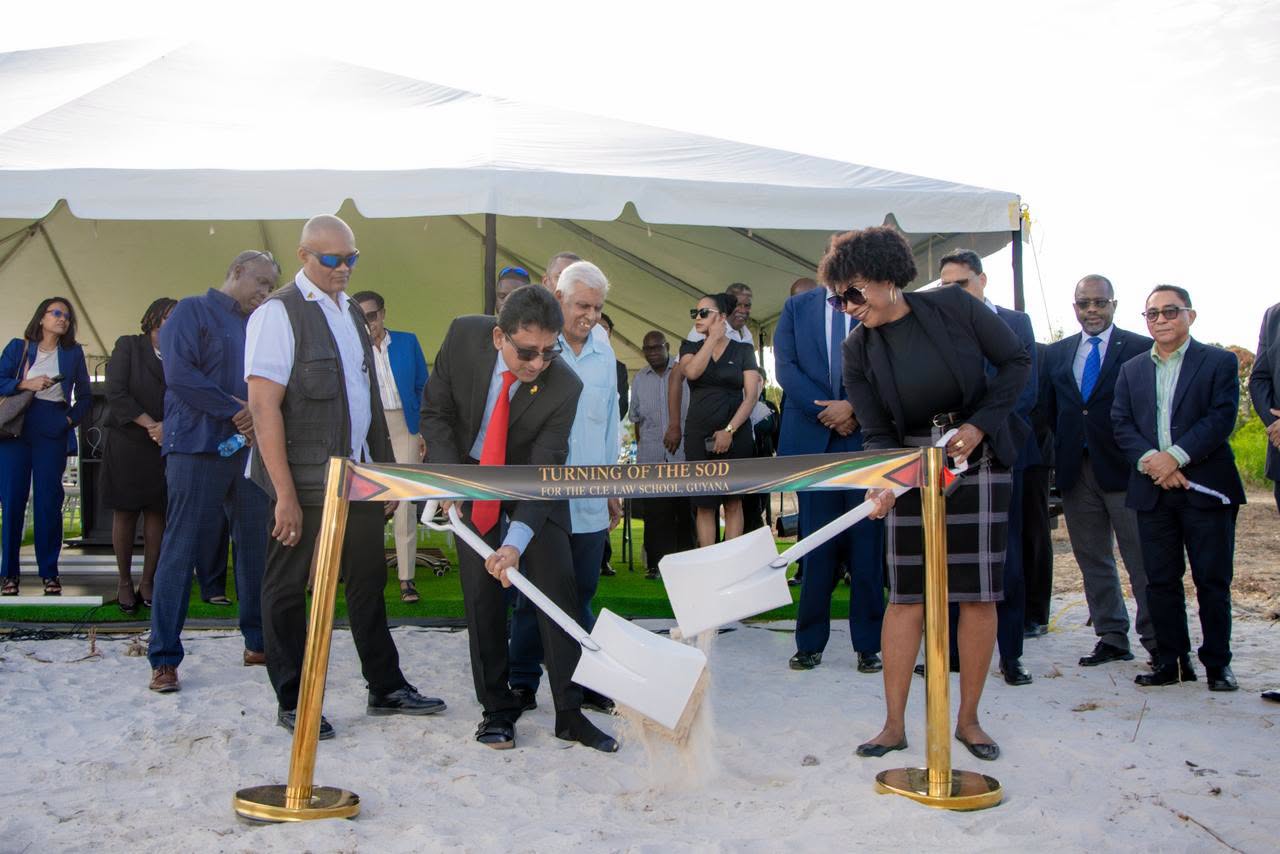
The Caribbean Council of Legal Education’s (CLE) fourth regional law school, which will be built in Guyana, will not be for Guyanese students only, Attorney General Anil Nandlall said at the sod-turning ceremony on Thursday.
“We were very careful in our negotiations not to ever create the impression that this is going to be an insular institution. It’s not a Guyanese institution. While it will be located in Guyana, it is a regional institution to serve the people of the region and to be administered by the regional council administering legal education,” he said at the sod-turning ceremony at the sprawling eight-acre plot of land at the University of Guyana’s Turkeyen Campus, Greater Georgetown.
He told Demerara Waves Online News that the cost of establishing the law school would not be known until the design had been completed by one of the 15 bidders and approved by government.
The Guyana-based law school is expected to cater for more than 120 students, Mr Nandlall said.
He also told the event in the presence of Chairman of the CLE Liesel Weekes that a study showed that a fourth CLE-run law school would be viable.
He said the evidence shows that the greatest demand for legal education is in the southern Caribbean.
Already he said, the Norman Manley Law School in Jamaica and the Hugh Wooding Law School in Trinidad have been turning away prospective students.
“It is against that backdrop that this law school emerges,” he said.
The Attorney General suggested that the greatest demand for legal education was in the southern Caribbean, noting that the idea for a Guyana law school was first floated by then Guyana President Cheddi Jagan in 1996.
“The bulk of the population of the Caribbean lies in the southern Caribbean and the demand has always been profound in the southern Caribbean so the time is long overdue for there to be a law school in the southern Caribbean,” he said.
Currently, the southern Caribbean is being served by the Hugh Wooding Law School in Trinidad.
CLE Chairman Liesel Weekes said Guyana passed all aspects of a feasibility study for the new law school to be built here.
She said the focus was determining whether or not a law school in Guyana would be viable, feasible and sustainable in the long term.
After meetings in September 2024 and September 2025, she said the feasibility study was presented at the CLE’s 2025 meeting which was greeted with satisfaction that Guyana “ticked all the boxes, and satisfied the Council without a doubt that this school was going to be viable, it was going to be sustainable, and it was long in coming.”
Mr Nandlall hailed the work of well-known Chartered Accountant and UG Law Department lecturer Christopher Ram for collecting and examining data to establish to the CLE that a law school in Guyana would make “economic and financial sense”.
He said that work entailed examining current demand, an audit of all the students who were in the different jurisdictions, including Guyana, and were awaiting entry into the law school.
Then Guyana Attorney General Bernard De Santos had first tabled the idea before the CLE in 1996, amid great difficulties by University of Guyana law degree graduates in gaining entry to the Hugh Wooding Law School.
Twenty-five spots had been available for only Guyanese who graduated from the University of the West Indies Cave Hill Campus.