

Last Updated on Monday, 11 May 2026, 21:26 by Writer
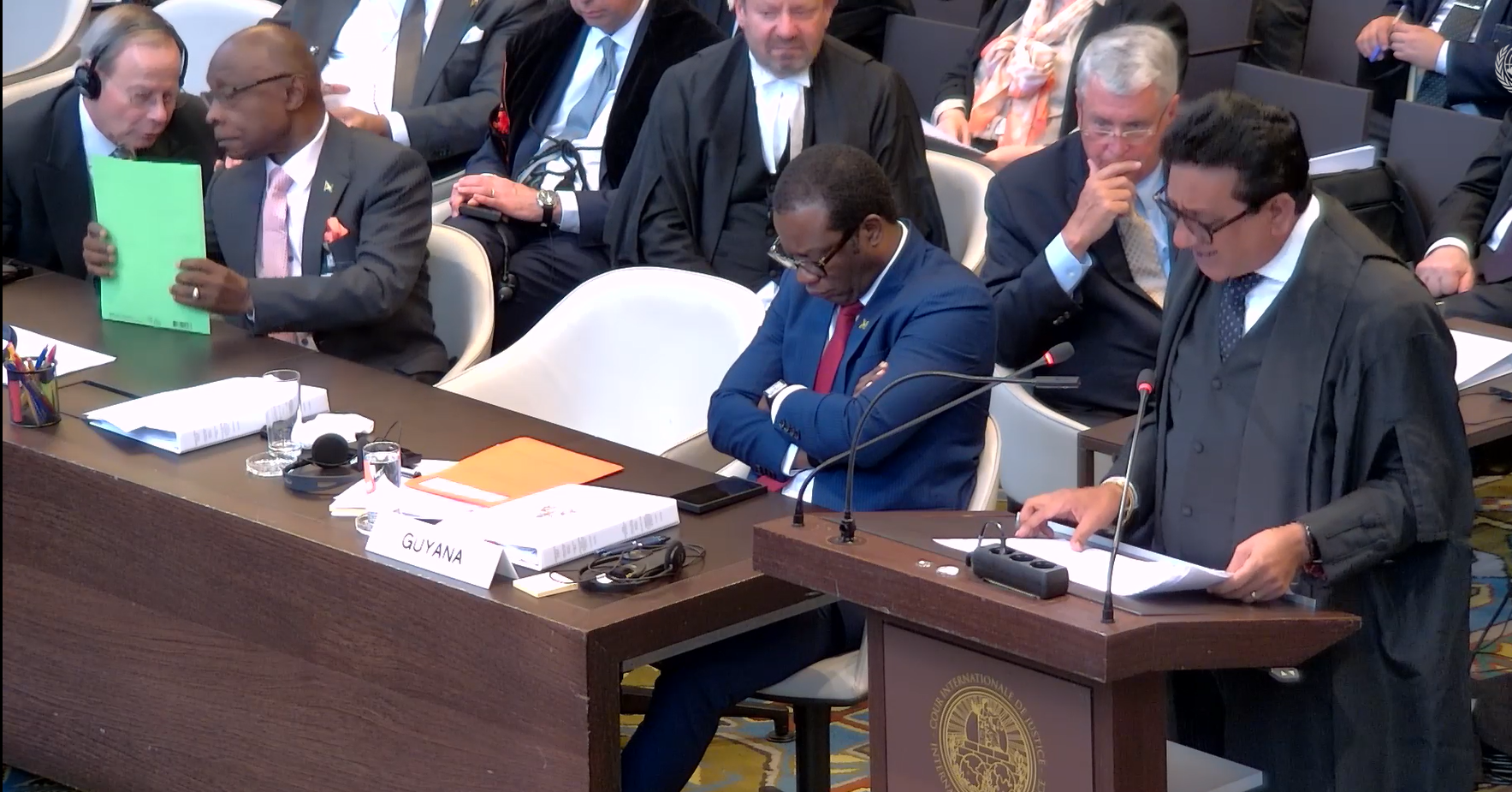
Attorney General, Anil Nandlall on Monday slammed Venezuela for disrespecting the International Court of Justice (ICJ) by saying it will refuse to abide by a ruling on the border controversy with Venezuela.
He warned that Venezuela would not be allowed to breach its most solemn obligations under the United Nations Charter, the Charter of the Organization of American States, and general international law.
The Attorney General said statements by Venezuela’s representatives at those hearings that they do not accept the ICJ’s jurisdiction and would not abide by its rulings would amount to the flouting of international law.
“It will not be allowed by the international community of States to defy the most fundamental rules of international law, which demand a world order based on the rule of law. No doubt, that rules-based order is being tested now. Therefore, it is more important than ever, that it be preserved and strengthened,” he said.
Reacting to Venezuela’s interim president Delcy Rodriguez’s position that her country would not recognise the ICJ’s ruling even if it invalidates the 1899 Arbitral Tribunal Award of the land boundary with Guyana, Mr Nandlall hoped that Venezuela’s “disrespect” for international law would be short-lived.
“It is our fervent hope that Venezuela’s expression of disrespect for the Court, and for international law, reflects the emotions that often accompany litigation of this kind.
We hope, that after the passions recede, and responsible government officials reflect, they will conclude, as we have done, that both States are best served by an end to this longstanding conflict, and that the only way to secure a just and lasting peace, and an enduring friendship, is by respect for and compliance with, the Court’s final Judgment, whatever it may be,” he said in a statement after Venezuela wrapped up its oral arguments on the merits of the case.
Ms Rodriguez told the ICJ that the 1966 Geneva Agreement was the only means to settle the border controversy through bilateral negotiations.
She recommended a bilateral meeting organised by regional stakeholders, saying that would be far more productive and effective in achieving that goal.
“No judgment by this court on the territorial controversy will provide a definitive solution acceptable both parties. On the contrary, it will exacerbate the differences between the parties, and will lead the parties to entrench themselves in their respective positions, distancing them from the practical, satisfactory and mutually acceptable settlement to which they committed in 1966 by signing the Geneva agreement,” she said.
Contrary to Venezuela’s repeated assertions, Guyana maintains that the Geneva Agreement provided for mediation under the Good Officer process and, if that failed, referral by the United Nations Secretary General for a judicial settlement.
After more than 50 years, Guyana in 2018 filed the case to the ICJ after it was referred there by the UN Secretary General.
Guyana’s representatives, in their arguments on the merits of the case, relied on historical documents, maps and other facts to support its case that the 1897 Treaty that established the tribunal and the decision of the tribunal were all accepted by Venezuela.
Guyana also said that for more than 60 years, Venezuela had accepted the 1899 boundary, having also participated in its demarcation.
Discover more from Demerara Waves Online News- Guyana
Subscribe to get the latest posts sent to your email.