


Last Updated on Sunday, 22 March 2026, 22:26 by Written By Denis Chabrol
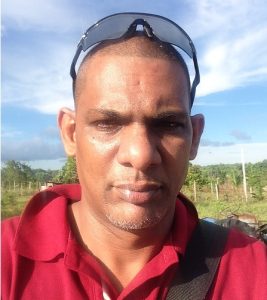
Guyanese ethnomusicologist, Rohan Sagar has contributed a chapter to the prestigious Palgrave Encyclopedia of Cultural Heritage and Conflict, focussing on the specific use of digital technologies to decode and preserve the wide and varied cultural forms of Caribbean music and other material facing a variety of threats.
‘By repositioning archives as living, collaborative spaces and foregrounding Caribbean epistemologies, the chapter advances a decolonial model of cultural preservation that promotes memory justice, educational transformation, and equitable digital futures in the Caribbean region,” states the abstract.
Mr Sagar said the focus of this chapter is on how to utilise digital tools for the benefit of education and cultural sustainability.
Mr Sagar said Palgrave invited him to contribute a chapter, having read about his works elsewhere.
He said his work had stimulated a lot of interest in academia. He said the chapter was published after three iterations that focussed on the problem and the justification for his methodology and whether it would be implementable. ” So, yeah, there was no major back and forth,” he remarked.
In that regard, he said examples are embedded in the article to better inform readers about how the system of data science works.
In emphasising that ChatGPT was not being advocated, he said his data science methodology could identify key characters, revealing the names of the characters, the number of times they appear in the text, and context and relationship to themes in the material.
“Here in this project that is now being published by the Encyclopedia, we are not advocating AI. We are advocating the uses of data science, which helps with learning coding, learning basic mathematical functions, logics, because you need to apply or to write a code that can reproduce for you the results that you want,” he told Demerara Waves Online News shortly after receiving confirmation from Palgrave that his more than 1,500 word chapter was published.
He distinguished data science methodology from artificial intelligence on the basis that the former allows the researcher to see gaps and weaknesses that could not have been identified previously.
As a result, he said it also opens the doors to a new world of scholarship.
Mr Sagar said digital tools in the classroom would allow children to examine and analyse graphs, giving them an opportunity to dig deeper in the textbooks that are currently being used in classrooms.
Reacting to the fact that his work has been published in The Palgrave Encyclopedia of Cultural Heritage and Conflict, Mr Sagar was delighted about his achievement at the end of a rigorous process of testing, verification and validity of the data that was included in the article before it was returned successfully.
“Well, first of all, we have to understand that a process like this is not very easy. It goes through a series of tests, first of all, for content. It’s quite obvious that the editors would have sent it to experts in data science to see what is being advocated for in the article. It’s actually, you know, it’s authentic,” he added.
He said at times his work no longer feels hard, but taking solace in the fact that if he does not do it, it will never get done. “When you see the results coming back and you’re left in a state of perplexity, whether to be happy, whether to celebrate. “I think it is something that I don’t know if I could say I should be happy or should be proud because this thing has been years and years of hard work., very, very hard work,” he said.
Mr Sagar, who was up to recently Assistant Editor at the now closed Stabroek News newspaper, said the computational ethnomusicology is a “novel concept”. However, there would not be huge public excitement that he had published a chapter in a major encyclopaedia.
Looking ahead, the ethnomusicologist hoped that the Caribbean Examinations Council (CXC) Board would take the lead in light of that regional body sounding warnings about the state of education in the Caribbean.
With greater awareness of his work in The Palgrave Encyclopedia of Cultural Heritage and Conflict, he hoped that CXC and governments across the region would express an interest. He said he was reluctant to reach out to the Guyana government because “there have been so many rejections in this whole process.”
“If there is one lack of motivation, it’s reaching out to governmental policymakers, because, you know, it seems as though forward thinking or outside of the box thinking is not greatly appreciated, and, you know, specifically to Guyana,” he said.
However, at a CARICOM level or in the small states, he hoped that the response would be different even if it is to start a Caribbean wide conversation.
Discover more from Demerara Waves Online News- Guyana
Subscribe to get the latest posts sent to your email.