

Last Updated on Friday, 30 January 2026, 16:55 by Writer
ExxonMobil is considering exploration in the Stabroek Block nearer the border with Venezuela if there would be less military presence there, citing recent changes in that neighbouring Spanish-speaking nation, a top company official said Friday.
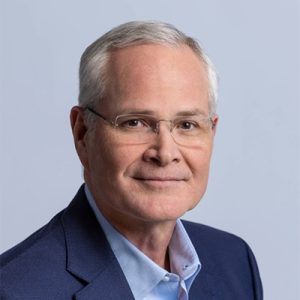
“Obviously, with the developments in Venezuela, perhaps we’ll see an opportunity, with less naval patrols, that’ll make it a little more friendly environment. So we’ll see how that goes, but we’ve got plenty of work ahead of us here,” ExxonMobil’s Chief Executive Officer, Darren Woods told the company’s 2025 fourth quarter earnings call.
Last year, United States (US) Secretary of State Marco Rubio had warned Venezuela against taking any military action against Guyana or ExxonMobil’s assets in the Stabroek Block.
Since then, the US earlier this month captured President Nicolás Maduro and his wife and took them to the US where they were arraigned on narco-trafficking and weapons charges.
Interim President Delcy Rodriguez has been quite compliant with US government requests and this week the legislature amended laws to make Venezuela once again attractive to oil sector investors.
The Venezuelan navy had over the years chased out two seismic research vessels from Atlantic waters off the Essequibo Region. The first occurred in 2013 when the MV Teknik Perdana was detained while doing work in the Roraima Block for the United States-based Anadarko Petroleum. This was followed by a similar incident in 2018 involving the MV Ramform Tethys vessel, which belongs to Norwegian company Petroleum Geo-Services (PGS), that was doing work for ExxonMobil.
Responding to a question from a representative of the investment banking company, Morgan Stanley, the ExxonMobil CEO said despite the force majeure – suspension of activities because of security risks – he was very hopeful of being able to begin work there.
He also indicated that ExxonMobil was preparing its plans eventually to explore for hydrocarbons in that area. “In the short term and in the longer term, we’ll get into that additional acreage and see what the opportunity looks like. We’re pretty optimistic. I think one of the advantages of force majeure is it pauses the clock, and so we will have an opportunity to do what we need to do in that portion of the block when it’s available to us,” Mr Woods said.
“We still think there’s opportunity in that space to explore in the block that we can currently access,” he added.
Looking ahead, he described the eventual ruling by the International Court of Justice (ICJ) on the validity of the 1899 Arbitral Tribunal Award that settled the land boundary between Guyana and Venezuela as a “critical milestone” for deciding on the company’s future work in the Stabroek Block.
“The portion of the block that’s under force majeure as a result of the border dispute remains there, and I think, from my perspective, one of the unlocks with respect to that region will be the ruling that comes out of the International Court of Justice, that’s the process that Guyana has been going through with Venezuela to align on the border, to resolve the border dispute,” he said.
With the exploration licence for the Stabroek Block scheduled to expire in late 2027, the ExxonMobil CEO said the company was studying its seismic data and learning from the development wells to identify additional targets and drill.
He said the company would have to relinquish “pieces” of the Stabroek Block based on a very well-informed understanding of the geology and the opportunity it sets.
In Guyana, where “we continue to deliver results never before seen in our industry and have set new standards for operational excellence,” Mr Woods said the company was now producing roughly 875,000 barrels per day,
He said altogether, ExxonMobil’s first four floating production storage and offloading vessels (FPSOs) were now producing 100,000 barrels a day above the investment basis, reflecting operational performance to date.