

Last Updated on Saturday, 26 September 2026, 1:26 by Writer
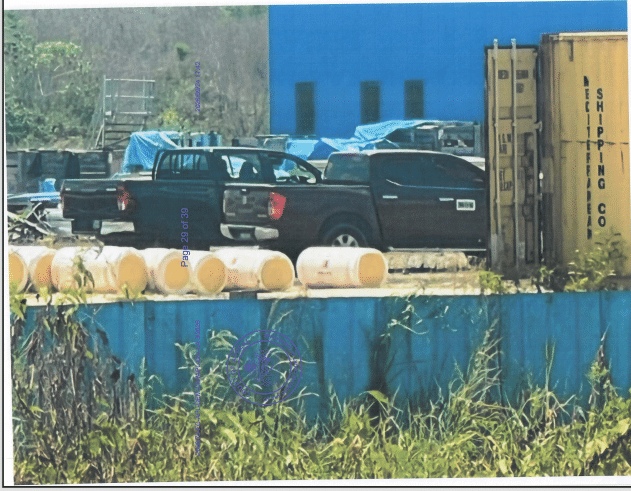
The Austrian healthcare infrastructure firm, VAMED Engineering GmbH, has asked the Guyana Court of Appeal to overturn a Full Court appeal decision that has already allowed the Guyana government to access the sites of two multi-million dollar hospitals and continue works pending arbitration proceedings.
The Ministry of Health and VAMED are heading to arbitration over the company’s claim for EUR45.3 million it says is overdue for certified “substantial works” including at least EUR19.5, and variations, indexation, additional works and other contractual entitlements on the construction of the two hospitals.
The company had said the government’s engineer has separately estimated the administration’s indebtedness to VAMED at about EUR37.94 million
Backed by an affidavit of a VAMED employee Aaron Heward Mills, the company says that since the Full Court decision, the Ministry of Health has moved onto the Georgetown Paediatric and Maternal Hospital (GMPH) and New Amsterdam Hospital Campus (“NAHC”) sites and has begun removing, opening, and interfering with the company’s property, including 52 containers valued at over EUR 32 million, heavy-duty power cranes, generators, construction equipment, and materials, causing ongoing and irreparable harm to the Applicant.
“The harm being suffered by VAMED is ongoing and irreparable. The Ministry of Health’s actions in moving onto the sites and removing, opening, and interfering with VAMED’s property are causing immediate and continuing damage to VAMED’s property and interests. Once the property is removed, dispersed or damaged, it cannot be restored to its original condition or location,” states Mr Mills.
Attorney-at-Law Nigel Hughes said the Full Court presided over by Chief Justice Navindra Singh and Justice Zamilla Ally-Seepaul, were wrong in holding orally that trial judge Renita Singh, having refused conservatory orders, could not then make preservation orders directing the State to take certain acts of preservation and restraining it from doing certain acts.
“The preservation orders were distinct in nature and purpose from the conservatory orders that were refused; they were protective measures to preserve property pending arbitration, not injunctions against the State,” he said.
VAMED is also seeking a stay of execution of the Full Court’s order dated September 22, 2026.
Justice Singh made the preservation orders on August 6, 2026.
Mr Hughes said the trial judge issued the preservation orders for the Ministry of Health to preserve the Georgetown Paediatric and Maternal Hospital (GMPH) and the New Amsterdam Hospital Campus (NAHC) sites, the 52 containers and equipment on the GMPH site and not to open nor interfere with them, and all contractor’s documents, property designs, plan and intellectual property.
The court had also ordered that VAMED Engineering preserve the 52 containers and equipment on the GMPH site and not to open or interfere with them, and the company’s security personnel only are allowed access to the GMPH site only for the sole purpose of securing the 52 containers and equipment.
VAMED also argues that the Full Court erred in law by allowing the appeal against the preservation orders which were made in keeping with the court’s inherent jurisdiction and powers preserve property and the Arbitration Act 2024.
The company says the Full Court failed to give adequate weight to the fact that the trial judge’s preservation orders were interim measures expressly authorised by the Arbitration Act 2024, which vests the Court with jurisdiction to grant interim measures in support of arbitral proceedings.
Mr Hughes also says the Full Court erred in failing to distinguish between injunctive relief (prohibited against the State under the State Liability and Proceedings Act and preservation orders which do not constitute injunctions but are protective measures under the Court’s inherent jurisdiction and the Arbitration Act.
VAMED says the Full Court decision effectively leaves it without any interim protection for its property and assets pending the constitution of the arbitral tribunal, contrary to the legislative intent of the Arbitration Act 2024 which expressly contemplates that parties to arbitration agreements may seek, and the Court may grant, interim measures of protection.
The Full Court reasoned that they are inconsistent with the trial judge’s own findings.
“Their legal foundation was inadequately established and their substantive effect was not properly considered.”
The Court held that section 16 of the State Liability and Proceedings Act prohibits injunctions against the State in proceedings of this kind.
That prohibition could not be circumvented by describing orders regulating the State’s conduct as preservation orders or by relying on the Civil Procedure Rules, the Attorney General’s Chambers said.
The Full Court also found that the orders lacked the necessary statutory basis under the Arbitration Act 2024 and conflicted with the trial judge’s own findings that there was no urgency and that damages were an adequate remedy.
Concerning the payment dispute, the health ministry had said government had repeatedly documented concerns regarding delays in execution, failure to meet agreed milestones, inadequate mobilisation of resources, and the contractor’s inability to maintain the pace necessary for timely completion.
“These matters formed the basis of extensive contractual correspondence over many months,” the ministry had said in a statement.