
Last Updated on Saturday, 13 June 2026, 14:34 by Denis Chabrol
 Tamùkke, a grassroots female-rights and empowerment organisation, says Guyana’s GY$1.588 trillion dollar national budget for this year does not demonstrate any effort at addressing ingrained disparities.
This is one of the major observations in the organisation’s Feminist Budget Analysis (FBA) titled “An Intersectional Feminist Desk Analysis of Guyana’s 2026 National Budget: Health, Environment and Equity” Tamùkke says the FBA was done by Economic Analysts Jayda Overton and Sequoia Peniston who worked on this document and provided a great deal of insight into the budget through a feminist lens.
“Yet as Tamùkke’s analysis makes clear, increased spending does not automatically produce equitable outcomes, with allocations remaining largely gender-neutral in design and implementation. While resources are expanding, they are not systematically directed toward addressing structural inequality,” the organisation says.
The organisation says the analysis arrives at a pivotal moment in Guyana’s development, as the nation navigates the promises and pressures of rapid oil-driven economic growth
Tamùkke says the FBA analyses Guyana’s fiscal priorities through an intersectional feminist lens, interrogating not only how much is being spent, but who benefits, who is left out, and whose labour remains uncounted.
For instance, this analysis finds that women in hinterland and rural communities still face compounded barriers to healthcare and reproductive services. It also highlights that Lesbian, Bisexual and Trans+ women have to contend with documented exclusion from public health systems, while Indigenous communities bear the environmental costs of mining without equivalent protection.
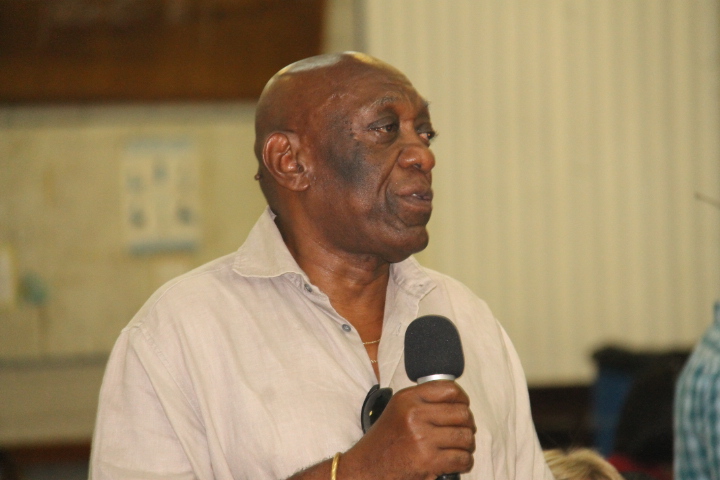
Additionally, the analysis examined issues at a community level. In Parabara, South Rupununi for example, testing found that all sampled Indigenous residents had elevated mercury levels — with some of the highest concentrations recorded among women — illustrating how the environmental consequences of extractive development fall disproportionately on marginalized communities. “Budgets are political documents, and they reflect the government’s choices about whose needs are treated as urgent and whose needs are treated as secondary,” says Akola Thompson, Tamùkke’s Managing Director. “A feminist perspective makes those choices now more visible,” Ms Thompson is quoted as saying in a news release.
The organisation says the FBA also maps three structural gaps that future national planning must confront. The first is a distributional gap, where hinterland regions continue to face long travel distances, high transportation costs, and limited access to specialised care, despite overall spending growth. Tamùkke says the second is a prevention gap, where investment in hospital infrastructure and emergency response consistently outpaces investment in community-based care, reproductive health services and environmental monitoring — shifting the burden of risk management onto households, and disproportionately onto women through unpaid care work. The third is an inclusion gap, where Indigenous communities, LGBTQ+ persons and persons with disabilities remain largely invisible within expenditure structures. “The gaps are visible within recent realities,” Tamùkke says.
The FBA highlights a few and points out that even as the Medical Termination of Pregnancy Act provides a legal framework for abortion access, services remain geographically limited and inaccessible in most hinterland areas — demonstrating that legal rights alone do not guarantee equitable access. The analysis also finds that LBT+ women in Guyana face significant barriers to sexual health knowledge, cervical cancer screening and bodily autonomy, compounded by the absence of Comprehensive Sexuality Education in national programming. “Our analysis found that economic transformation is outpacing social transformation,” Tamùkke’s Managing Director said, “and without a feminist analysis, that gap has no name and no corrective.”
Tamùkke stresses that the FBA is not a critique of the government’s fiscal efforts, but a planning tool for future direction. “By identifying precisely where and how fiscal expansion is failing to reach marginalized populations, it provides a concrete basis for more targeted, accountable and equitable budget design going forward,” Thompson said.
The FBA’s key recommendations are the establishment of a Gender-Responsive Budgeting Unit within the Ministry of Finance by 2027; expansion of abortion services beyond Regions 4, 6 and 9; implementation of routine mercury testing in mining communities; national rollout of Comprehensive Sexuality Education; and the development of accessible disaster shelters and community-based climate adaptation projects for Indigenous communities. “These are not abstract proposals — they respond directly to documented gaps and the immeasurable impacts they have on women, girls and gender-diverse people across Guyana,” Thompson pointed out.
Tamùkke urges the government to seize this extraordinary fiscal moment. “Our goal is to make apparent the limited gender lens within the National Budget, and to advocate for stronger gender programming and spending to effectively meet the needs of vulnerable communities,” Thompson said. With petroleum revenues having expanded fiscal space dramatically — from GYD$1.146 trillion in 2024 to GYD$1.558 trillion in 2026 — affordability is no longer the constraint. The central question, as the FBA concludes, is not whether Guyana can afford inclusive and intersectional informed budgeting, but whether it can afford not to pursue it. Integrating inclusive, intersectional budgeting into national planning cycles is not only an equity imperative — it is the foundation for protecting the future of all Guyanese people amidst rapid economic transformation.
Discover more from Demerara Waves Online News- Guyana
Subscribe to get the latest posts sent to your email.