

Last Updated on Wednesday, 12 August 2026, 17:06 by Writer
Reproduced from the Trinidad Express
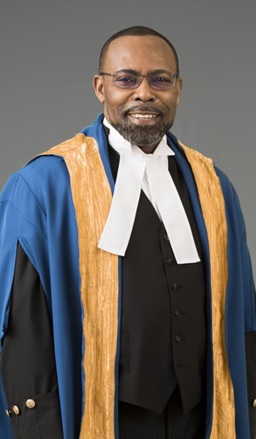
The Regional Judicial and Legal Services Commission (RJLSC) has acknowledged allegations concerning Caribbean Court of Justice (CCJ) President Justice Winston Anderson and says a “transparent and independent review” will be undertaken into the matter.
This even as a former RJLSC member and senior counsel yesterday suggested that an investigation should take place.
The allegations were first raised in an exclusive Sunday Express report earlier this week.
They ranged from claims of imposing a judicial dress code to accusations of “panel fixing” and attempts to influence the outcome of cases.
A majority of the court’s judges also accused Justice Anderson of running the regional court in an “authoritarian” and “dictatorial” manner.
The allegations were raised in an exchange of e-mails in June and July of this year between the presiding judges of the CCJ which was obtained by the Express.
The RJLSC is a dedicated commission established under the agreement establishing the CCJ, bringing together legal professionals, public service leaders, and civil society representatives, according to its website.
The commission notes that one of its functions includes the exercise of disciplinary control over judges of the court, other than the president, and over officials and employees of the court.
It says it also has responsibility for the making of regulations to govern the appointment, discipline, termination of appointment and other terms and conditions of service and employment for judges, other than the president, and officials and employees of the court.
The commission did not say yesterday if he would be part of its review.
In a statement to CCN yesterday, the RJLSC stated, “The Commission recognises the seriousness of these matters and the importance of addressing them in a manner that protects public trust and confidence in the Court and the broader administration of justice throughout the Caribbean.
“As a result, the RJLSC believes that these concerns are best addressed through the established internal governance mechanisms of the Court and the Commission, and through a transparent and independent review undertaken in the best interest of the Region.”
The RJLSC also indicated it was responsible for the appointment of the judges and staff members of the CCJ and set their work terms, allowances, oversaw disciplinary action, and protected the court from political interference.
The RJLSC said it was open to addressing internal complaints within the CCJ.
“The Commission maintains an ‘open door policy’ for all members of staff and Judges, to address concerns and seek resolution on any matter relating to the execution of their functions and overall wellbeing.
“In the twenty-three years since the establishment of the Commission, the RJLSC has enjoyed fruitful working relationships with the Court. In these two decades, Commissioners have operated independently, without interference or influence—neither from the Court nor external actors.”
It added, “The Commissioners remain confident in this storied history of autonomy enjoyed under the leadership of all of the Court’s Presidents as Chairs of the Commission, past and present. At the same time, it emphasises that no conclusions should be drawn about the allegations until they have been examined fairly and objectively.”
However, Senior Counsel Martin Daly, a former member of the RJLSC, who weighed in on the commission’s response, suggested an investigation was required.
“The release is meandering and wordy, but the RJLSC has nevertheless reaffirmed its autonomy and responsibility to ensuring the effective and independent administration of the CCJ.
“The matters alleged in the Express reports have the potential to seriously undermine the independence and effectiveness of the court. The commission should therefore have no difficulty in getting on with an investigation of the allegations.”
Daly added, “I find the reference to ‘the open door policy’ for all members of staff and judges to address concerns and seek resolution of any matter relating to the execution of their functions’ an intriguing statement.
“Is it a veiled invitation to the aggrieved judges to hasten to lodge formal complaints? I ask how helpful is such a statement? How does that posture advance the public interest?”
Daly said these matters needed to be investigated by the RJLSC because they appear to involve administrative decisions relating to the functioning of the court.
“It is to be emphasised that there is an important line between administrative decisions and judicial decisions. The RJLSC cannot investigate the exercise of the judicial powers of the president or any member of the court, and it must accordingly carefully define the remit of its investigation,” he said.
Daly said it was critical for Justice Anderson, chairman of the RJLSC, to step aside from any formal investigation into the matter.
“The president of the court is chairman of the RJLSC, but he must, of course, recuse himself from participating in an investigation of administrative decisions made by him. It is unfortunate that the practice of appointing a deputy chairman of the commission was not sustained.
“However, among the body of commissioners, there are members whose experience makes several of them suitable to head a competent and impartial investigation by the commission. This is not a matter for the heads of government at this stage.”