
Last Updated on Wednesday, 5 August 2026, 17:53 by Writer
By: Dexter O. Fraser
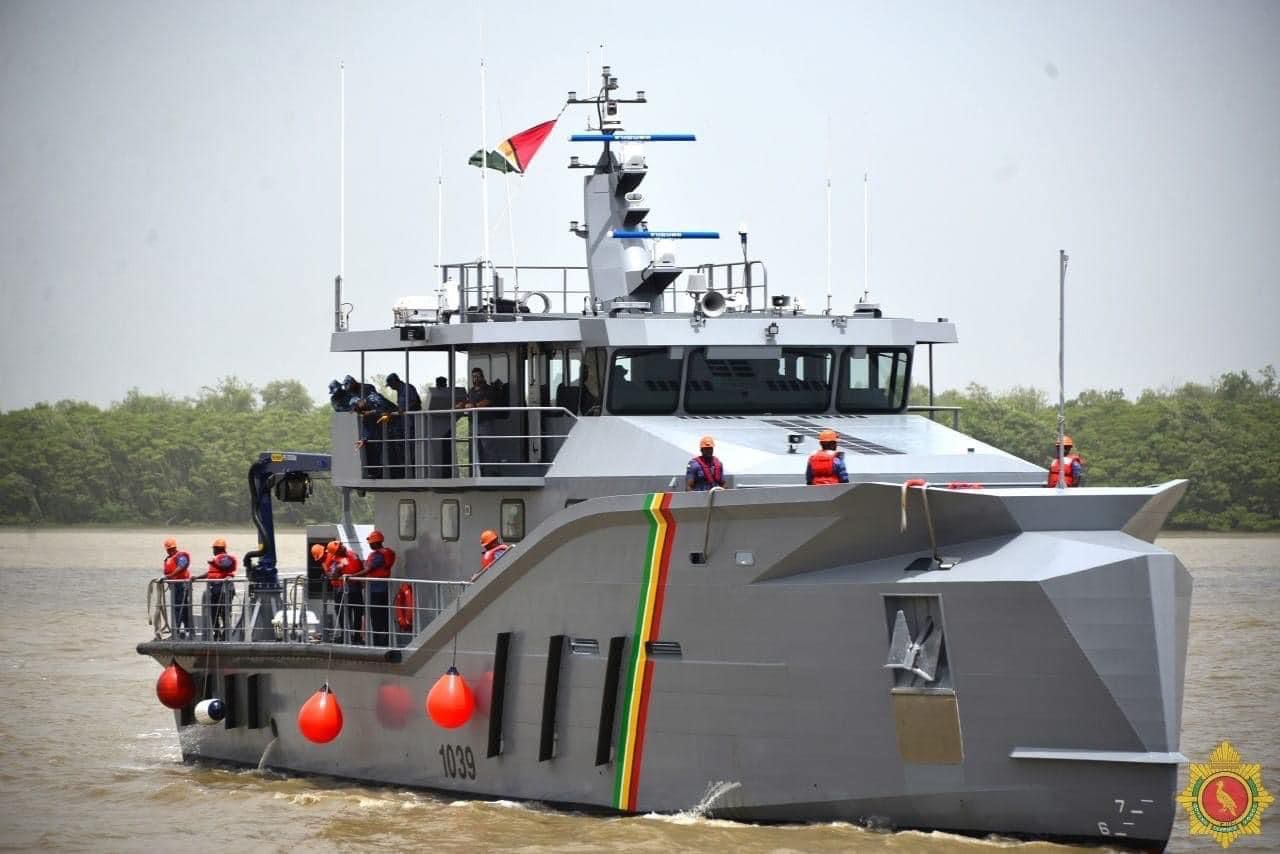
Kevin Price wept in the dock. The forty-year-old captain of the MV Barima stood before Chief Magistrate Judy Latchman on July 28, charged with seventy-two counts of murder, and told the court he did not understand why he was there. He said what Region One already knew: that the eighty-seven-year-old ferry had known defects long before it left Georgetown for Port Kaituma on July 18. Seven miles offshore, the vessel that killed at least seventy-three people and left dozens more unaccounted for still lies on the Atlantic seabed near Iron Punt, while the government tells families that bringing in more foreign divers “will not change the situation” and that the wreck is “likely to remain there as is.”
That juxtaposition is the whole scandal in miniature. A serving officer of the Transport and Harbours Department is in prison awaiting a murder trial over a disaster whose physical evidence, the hull, the load, the machinery, the very things a marine casualty investigation exists to examine, has not been recovered and may never be. Guyana has criminalised individuals before it has finished measuring the wreck.
The law it chose not to use
Guyana already has a statute purpose-built for exactly this event. The Guyana Shipping Act, Chapter 49:01, does not leave marine disasters to political improvisation. Part XVIII, sections 427 to 432, establishes a sequential mechanism: a preliminary inquiry into a shipping casualty, followed, where warranted, by a formal investigation with its own procedure and its own power over a master’s certificate. Section 442 separately empowers inquiries into deaths arising from a marine casualty. That machinery sat unused while a presidential Commission of Inquiry was convened instead under the Commissions of Inquiry Act, Chapter 19:03, a different statute entirely.
There is nothing wrong with a Commission of Inquiry. What is wrong is what preceded it: a common-law murder charge laid before the Commission had taken a day of evidence and before the vessel, the primary exhibit in any competent casualty investigation, had been recovered or fully surveyed. The charge now proceeds under a second piece of reform, unused until now: the Criminal Law Procedure (Paper Committals) Act 2024, which has been in force since April 2025 and abolished oral preliminary inquiries for indictable offences, including murder. The accused’s committal will be decided on paper statements and documents reviewed by a magistrate, with witness testimony available only if the defence requests it and the court agrees. A prosecution this serious, built on a wreck nobody has fully examined, is headed towards the one procedural track that does not require its evidence to be tested aloud before a magistrate.
Section 292 of the Shipping Act requires notice of any defect affecting seaworthiness; sections 336 to 341 criminalise sending an unseaworthy ship to sea; section 266 penalises carrying excess passengers; and section 399 creates specific passenger-ship offences. Each is a purpose-built charge for the failures survivors have described: a dead radar, an inoperable anchor, life rafts expired since 2022, and one engine down. None requires proving what murder requires: malice aforethought, an intention to kill. The Director of Public Prosecutions, Shalimar Hack, defended the murder charges by citing UK, Commonwealth, and European Court of Human Rights case law, while, in the same breath, acknowledging that the vessel’s safety systems were defective. A defective ship is a finding about the ship. It is not evidence of intent to kill seventy-two named people. Defence attorneys Nigel Hughes and Darren Wade have already said as much publicly.
A refloated, abandoned, not resourced
It is not true that no attempt was made to raise the Barima. Guyana Defence Force divers, with teams from Trinidad and Tobago, Brazil, and France, spent days fitting 1,500-ton buoyancy airbags to reposition and refloat it. The effort stalled: divers became too ill, and the vessel wouldn’t right itself. Instead of a proper salvage, the government circulated a draft declaration asking relatives to agree the wreck “remain undisturbed in its present resting place” as a memorial. Opposition Leader Azruddin Mohamed, who offered to fund an independent salvage, says the government hasn’t exhausted engineering options. Law says the harbour authority can remove a wreck if it’s a safety issue, and salvage provisions exist to prevent improvisation when a vessel sinks. Asking families to sign off on leaving it is not compassion, but the government declining its legal duty.
Whose experts, and whose politics
The Commission the President convened comprises serious people: Justice Godfrey Phillip Smith of Belize, Captain Hamada Fouda of the Maritime Authority of Jamaica, Trinidadian admiralty attorney Nyree Dawn Alfonso, retired Rear Admiral Hayden Pritchard, and Polish naval architect Dr Andrzej Jasionowski. But composition is not consultation, and it is no substitute for the country’s own maritime bar. Guyana has a lawyer with an LLM in maritime law from the International Maritime Law Institute sitting in its own Parliament: Amanza Walton-Desir, leader of the Forward Guyana Movement. Days before the Commission was named, she was already urging the government to seek international assistance to meet International Maritime Organisation standards.
She was not named to the panel, nor was she consulted on its terms. Both opposition groups, APNU and WIN, rejected the process as unilateral, demanding that Minister Edghill and Minister Indar be kept off the investigation panel into a disaster their ministries once handled. Indar’s changing stance on the vessel’s overload allegations highlights problems of bias, given he will help decide the investigation. The government’s choice to seek abroad expertise while ignoring qualified local voices suggests deliberate oversight.
The tonnage that does not add up
On July 19, Edghill told grieving families the Barima was not overloaded, citing a licensed capacity of 284 tonnes of cargo against a manifest showing 268 tonnes aboard. Mohamed later pointed out the error: 284 tonnes is close to the vessel’s gross tonnage, a volumetric registration figure; the number that actually matters for overloading is deadweight, the real load limit of passengers, cargo, fuel, water, and stores combined, which the government’s own figures put at 198 tons. Measured against that figure, not the one Edghill cited, the 268 tonnes aboard were seventy tons over capacity. A day later, Edghill himself conceded the passenger count was wrong. Section 290 of the Shipping Act requires ships to carry stability information for exactly this reason: so loading is judged against verified figures, not press-conference arithmetic corrected a day later.
What this adds up to
Political scientist Christopher Hood has a name for what Guyana’s government has done since July 18: blame avoidance. Push responsibility down the chain to the most replaceable people: a captain, a mate, a loading officer, while the minister who set manning, maintenance, and manifest policy remains in place. Manage the appearance of accountability: a five-member international Commission, announced with fanfare, built without consulting the one Guyanese lawyer qualified to sit on it. And avoid the hard decision entirely, handing grieving families a statutory salvage duty as a “choice” rather than exhausting the engineering options the law expects of you. None of that proves corruption in the legal sense, and I will not pretend it does. What it proves, on facts supplied by the government’s own officials, is a recognisable pattern, not a series of accidents, and it is that pattern, not any single fact, that forces the question of corruption and gross negligence onto the table. Seventy-three families are owed more than a captain’s tears in a courtroom while the evidence that might explain what happened to their relatives sinks another inch into the Atlantic floor.
Editor’s note: The MV Barima tragedy remains before both the courts and a Commission of Inquiry. Nothing in this article should be read as a comment on the guilt or innocence of any accused person. It is a comment on process, on the statutes and conventions the State itself has enacted or ratified, and on why they were bypassed.
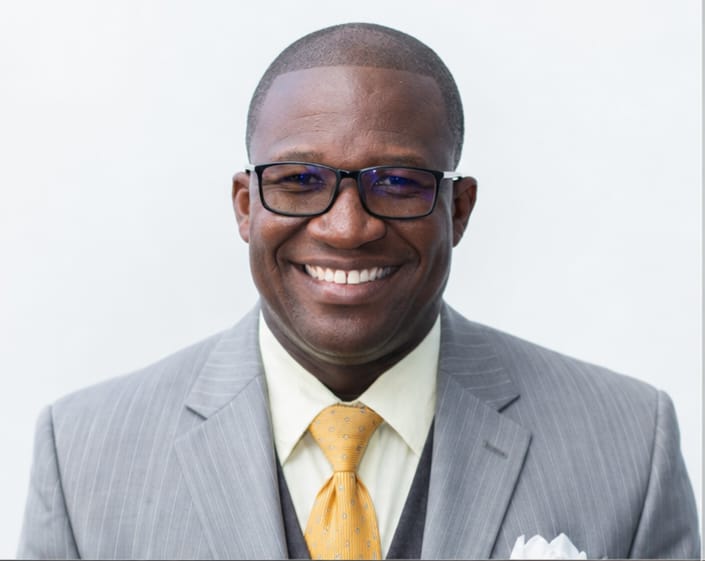
Dexter Orin Fraser is a strategic thinker, management professional, researcher, and writer, passionate about leadership, governance, economic development, and technological transformation supported by a combination of military, business, and academic experience with a bold commitment to turning knowledge, innovation, and strategic thinking into practical solutions that create lasting impact.