
Last Updated on Tuesday, 27 October 2026, 2:52 by Written By Denis Chabrol
Brazil is expected to insist that Venezuela obeys the International Court of Justice (ICJ) ruling on the validity of the 1899 Arbitral Tribunal Guyana-Venezuela land boundary award when it is handed down in the coming months and push back against any effort to find a negotiated settlement, according to two Latin American and Caribbean professors.
Insisting that the Hague-headquartered ICJ does not have jurisdiction in the matter, Venezuela earlier this year said it would not recognise that court’s decision and maintained the only lasting solution to the border dispute over the Essequibo Region is one emerging out of negotiations based on its own interpretation of the 1966 Geneva Agreement. Prior to hearing the substantive case, the ICJ had ruled that it had jurisdiction.
Amid speculation in some quarters that the US might back Venezuela’s call for negotiations and push Guyana in that direction after the ICJ ruling, despite its long-held position that it recognises Guyana’s current borders and respects international law, International Relations Professor Mark Kirton expects that Brazil will insist that Venezuela accepts the ICJ’s ruling. He also expects Brazil, South Americas largest economic and military power, to rebuff any effort at forcing Guyana to the negotiating table.
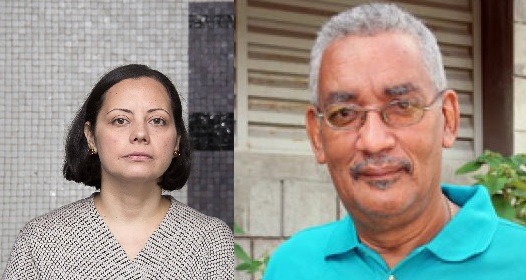
“It can be argued that Brazil will fully support efforts at compliance with the ICJ ruling . However, given that country’s consistent stance on issues of sovereignty, any externally – influenced moves to bring about negotiations on the border controversy after the judgment of the ICJ may not be supported by Brazil, since there can be implications, including the redrawing if that country’s borders as a result of any such action,” said Dr Kirton, Director of the Centre For International And Border Studies – Guyana in an an analysis of the outcome of Sunday’s run-off election that saw Brazil’s leftist President Luis Inacio ‘Lula’ Da Silva retaining power in a closely fought election with right-wing Flavio Bolsonaro who had received US President Donald Trump’s backing.
Professor Kirton urged a careful assessment of Brazil’s elections by the Caribbean and in particular Guyana. He reflected that Brazil has consistently articulated its position on the inviolability of borders which have been settled juridically and has demonstrated unwavering support for the maintenance of the sovereignty of all states and more particularly , the settlement of the Guyana-Venezuela border controversy in accordance with international law and the mechanisms provided by the United Nations through the ICJ’s adjudication.
US-based Venezuelan Political Science Professor, Dr Alexandra Panzarelli told Demerara Waves Online News that
with the the ICJ expected to deliver its ruling in the coming months, any US effort to encourage negotiations between Venezuela and Guyana could be constructive, provided those talks focus on implementing the Court’s decision rather than reopening the question of sovereignty. She also said Brazil has a strong interest in seeing international law respected along its northern border, and she would expect the Brazilian President to support diplomacy that builds on the court’s ruling rather than undermines it.
“I think Lula’s victory is good news for a peaceful resolution of the Essequibo dispute. Unlike Flávio Bolsonaro, who has close ties to Trump and might have followed Washington’s lead on regional issues, Lula is more likely to pursue an independent diplomatic approach. He also has a long record of negotiation and regional mediation and has maintained communication channels with both Caracas and Georgetown. Brazil, which provides the main established road connection between the two countries, has made clear that it will not allow its territory to be used for military action,” she said.
Dr Panzarelli also argued that Brazil can play an important role as a regional diplomatic actor, helping ensure that any settlement is grounded in international law and South American and Caribbean diplomacy rather than external pressure. “Preserving the status quo is not enough. What the region needs is a peaceful and lasting resolution that both Venezuela and Guyana can accept and respect over time,” she said.
Aside from the more than 100-year old border controversy over the 159,500 square kilometre Essequibo Region, Professor Kirton said Lula’s electoral success would pave the way for Guyana to eventually play an important role in the alliance of Brazil, Russia India and China (BRIC). He said Brazil’s foreign policy commitment to multilateralism, environmental protection , sustained reduction in Amazon deforestation, regional security and South American integration would undoubtedly continue to be major areas of policy focus as President Lula enters his fourth presidential term. “As a consistent and reliable neighbour and partner, committed to the region’s continuing status as a zone of peace Lula’s victory provides the opportunity for Guyana to consolidate its alliance with South America’s leading state and further strengthen links with the BRIC in the region, a country supportive of efforts at sustainable development of the states of the Global South,” he said.
Dr Kirton also said Lula’s electoral victory came in an era and geopolitical environment in which seven elections in Latin America since 2025 have seen right-wing presidential candidates emerge victorious and several Latin American states are now closely aligned to the US policy agenda. “Lula’s victory constrains the expansion of US influence in the region and Bolsonaro’s electoral loss denies the US the addition of a critical right – wing ally in the largest South American economy. The Lula ‘comeback’ victory also presents Brazil with a new strategic position to push back against US political and economic demands which confront several regional states,” he added.