
Last Updated on Thursday, 22 October 2026, 12:18 by Written By Denis Chabrol
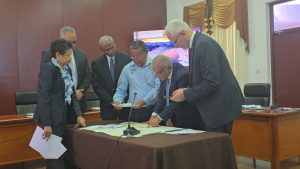 The Maritime Administration’s (MARAD) Maritime Rescue Coordination Centre (MRCC) would next week commission a sophisticated communication system to receive distress messages from satellites rather than relying on the Cheddi Jagan International Airport’s Control Tower to relay them and communicate with other stakeholders during emergencies, MRCC head retired captain John Flores said Thursday.
“As a matter of fact, they will not be transmitting to us. We’ll be receiving signal directly from the satellite at the end of next week. So there’s no need for them to transmit after next week once it’s commissioned,” said Mr Flores, a former Guyana Defence Force (GDF) Coast Guard Commander.
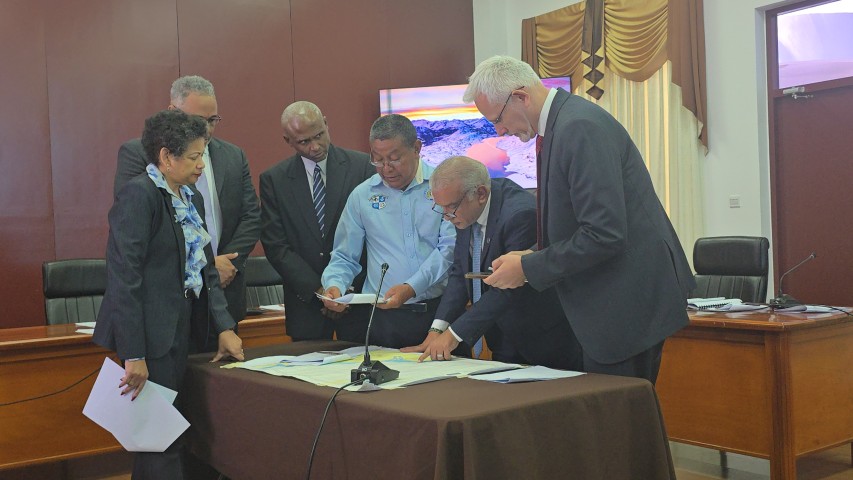
He told the Commission of Inquiry (COI) into the capsizing of the MV Barima ferry that the MRCC relied on cellular phones, Starlink internet, police and communication with nearby vessels and the Lighthouse during the search and rescue operation in response to the tragedy on July 18.
Mr Flores said the strengthening of the communication system that would include High Frequency radios and satellite receivers was not as a result of the MV Barima disaster. “It’s actually triggered by the audit,” he said.
A number of witnesses at the COI have so far been questioned about the reliance on Very High Frequency (VHF) radios, cellular phones, WhatsApp and computer, and the absence of VHF to aviation communications.
Mr Flores explained that the contract was awarded in March 2025 to build technical components of the radios to the standard of the International Aeronautical and Maritime Search and Rescue Manual (IAMSR) and International Maritime Organisation (IMO).
He said the radios and other components have already been imported to Guyana, and the next steps will be familiarisation and training on equipment. He said the MRCC already has staff trained in to operate the Global Maritime Distress and Safety System (GMDSS).
Mr Flores said government plans to establish sub-MRCCs along the coast.
Asked by COI commissioner Retired Rear Admiral Hayden Pritchard whether there was a document on communication improvements,Mr Flores directed the COI to the MARAD Director-General Stephen Thomas who might have such nformation in a broader plane.
The IMO’s State Audit of Guyana in 2018 states that the maritime administration had not communicated to IMO the Information on available SAR (Search And Rescue) facilities and arrangements and had not developed any plans for cooperation between the national SAR services and passenger ships calling regularly at the ports under the jurisdiction of the State.
The summary of assessment of documentary evidence states that additional information and evidence were sought, and response received to verify completion of the implementation of corrective actions.
The audit report says the requested additional information and evidence were not provided and so, no progress could be made in verification of the status of implementation of corrective action.
The MRCC Head said he would not usually have contact information for crew members and passengers aboard government ferries.