
Last Updated on Wednesday, 14 October 2026, 11:42 by Written By Denis Chabrol
The emergency beacon aboard the now sunken MV Barima was not registered with a global satellite system that aids with search and rescue tracking, a top air navigation official told the MV Barima Commission of Inquiry on Monday.
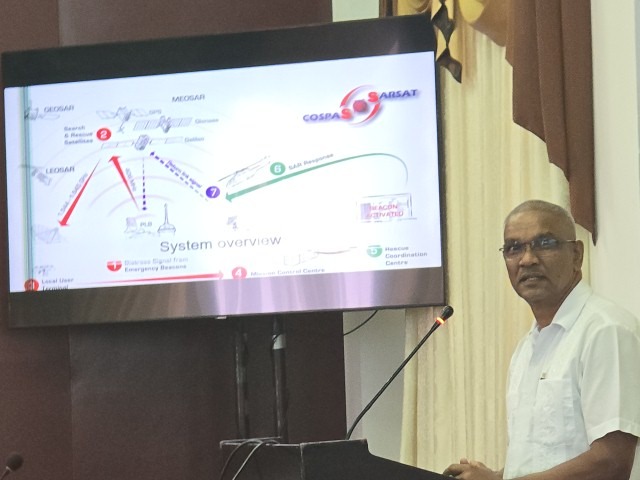
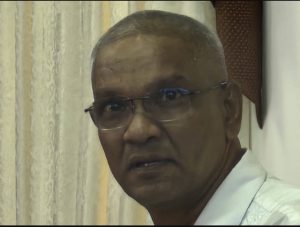
After director of air navigation services Rickford Samaroo at the ministry of aviation explained how the system works, he was asked whether the MV Barima’s emergency beacon was registered with the satellite system. “From our side, it wasn’t registered,” he said when asked by Trinidad and Tobago maritime law expert, Nyree Alfonso.
He earlier explained that a registered beacon would include the name of the vessel, contact information and next of kin.
Mr Samaroo said he only became aware of the name of the vessel hours later on July 20, 2026.
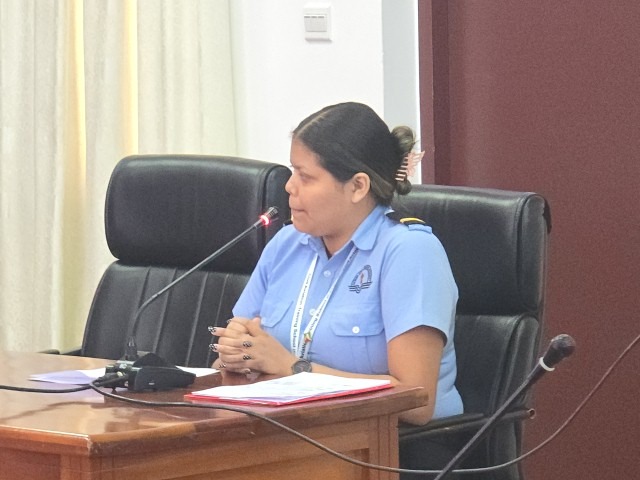
Aeronautical information service officer of the Guyana Civil Aviation Authority said she was on duty at the Cheddi Jagan International Airport’s Control Tower when she heard a constant beeping at 10:43 PM on July 19, 2026. She said she then printed a related message.
Ms Valenzuela said due to the absence of registration information, she could not contact anyone such as the owner in relation to the beacon.
Ms Valenzuela presented WhatsApp messages she sent the locatiin coordinates of the vessel to the Guyana Defence Force Coast Guard operations at 10:51 PM and they responded at 10:52 PM. She said she subsequently several other messages to the GDF Coast Guard, Lighthouse and officer-in-charge of the Coast Guard,Commander Shamshudeen.
Ms Valenzuela said that at 11:13 PM she was informed by the Coast Guard that a vessel was “heading out” to the location, and at 11:14 PM she sent an email to Coast Guard providing them with the HEX ID information
The MV Barima sank late in the night of July 19 off the Essequibo Coast while enroute from Georgetown to Port Kaituma. At least 100 of the 179 passengers and crew died.
The Control Tower at the Cheddi Jagan International Airport is the point-of-contact for air and maritime emergency reports.
Mr Samaroo told the inquiry that he was contacted at about 1 AM by the Director-General of the GCAA Retired Egbert Field informing him that there was a maritime emergency and permission had been granted for two Roraima Aircraft to be deployed to the area. However, he said the tower personnel had already been made aware of the approval for the aircraft to be airborne.
He said he called back the tower at about 4 AM and was informed that the vessel was located.
Except if it is an aviation emergency, Mr Samaroo said he was not required to be informed immediately.
At 11:13 she said she was informed by the Coast Guard was “heading out” to the location and at 11:14 sent email to Coast Guard providing them with the HEX ID information At 11:23 PM, she said Mr Shanshudeen acknowledged receipt.
Trinidad and Tobago Retired Rear Admiral Hayden A Pritchard asked Ms Valenzuela about her qualifications and training. She said working on that night when the emergency signal was received, “it wasnt hard but I had multiple things to do.”
Other than WhatsApp, phone and email, she said there was no other means of communicating with the Coast Guard by passing on distress alerts.
Responding to Mr Pritchard, she had no idea of how a search and rescue coordination would be done involving aircraft and maritime vessels.