

Last Updated on Monday, 31 August 2026, 23:44 by Writer
By Mark Kirton, Director of the Centre for International and Border Studies – Guyana
On October 4 this year, 120 million Brazilians go to the polls in an election which will see the incumbent President Luiz Ignácio ‘Lula’ Da Silva seeking election as Brazil’s president for an unprecedented fourth time. His major rival is Senator Flávio Bolsonaro, son of former President Jair Bolsonaro, and the elections take place at a period in Latin America when since 2025, there have been changes in government in Bolivia, Chile, Costa Rica, Honduras, Peru, and most recently in Colombia, while the government in Ecuador was reelected. In the case of Venezuela, elections were held in 2024, but by early 2026, in the midst of rapidly changing geopolitical dynamics, still unfolding in the region,President Maduro was captured and taken to stand trial in the US, with acting President Delcy Rodríguez currently heading the country’s administration. There is the view that a rightward political shift, coupled with the emboldenment of conservative forces in the region after the election of US President Trump, have contributed significantly to these changes. On the other hand, it has been posited that voter concerns about rising crime, public safety and security and failing economies have been the major drivers of political change as promises of robust action on crime reduction and campaign commitments on economic reform triggered an anti-incumbent wave in the region.
In Brazil, however, one observes that while the rightward shift is evident and a highly competitive presidential race clearly visible, there are complex factors which have been identified which have so far, to some extent, favoured the incumbent President Lula. Issues such new policies to support debt relief as well as tax reduction for low-income earners and the introduction of a platform promoting the maintenance of national sovereignty, especially sovereign control of natural resources, have come from Lula’s Workers Party (PT). There have also been increases in patriotic and anti-interference sentiments in the midst of international pressure and new tariffs by the US, and these have become major campaign issues for President Lula and his team.
On the other hand, Bolsonaro, like several other Latin American presidential candidates in recent elections, has focused on a hardline approach to crime and violence in Brazil, a call to support and rally around the Bolsonaro family ‘brand’ as well as a focus on the expansion of trade and commercial collaboration globally.
The recent election simulation (Reuters News August 17), indicates that in the first round simulation, Lula would receive 41% of the votes, with Bolsonaro receiving 36% of the votes. Under Brazilian law, if no candidate receives 50% of the votes cast, a runoff election is held between the two candidates with the most votes. Reuters runoff scenario currently places Lula at 47% of the votes and Bolsonaro with 44% of the votes.
Undoubtedly, elections in the neighbouring state, a reliable ally which has consistently supported the inviolability of borders which have been settled juridically, and a powerful regional actor which has acted as a counterweight to potential Venezuelan aggression, must be of interest to Guyana. In the first place, Brazil, as the leading nation- state in South America, can play an important role in ensuring compliance with the judgment of the International Court of Justice (ICJ) when the adjudication process is completed and also play a leading role in the maintenance of the region as a zone of peace.
In relation to security in northern South America, Brazil’s continued engagement with the small states, will be critical as the porous borders of Guyana will continue to attract increasing levels of transnational organized crime, drug and arms smuggling and trafficking in persons.
Recent increases in irregular migration into Guyana have also heightened the need for enhanced collaboration with Brazil as both countries seek to develop comprehensive migration management systems.
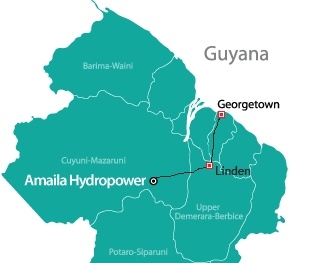
As Guyana and CARICOM states face increasing prices for imports as well as supply chain challenges, diversification in trade and supply mechanisms must also be prioritized and Brazil offers an important opportunity for greater trade engagement. The ongoing construction of the Linden-Lethem road link with Brazil can also open new opportunities for increased trade between the two countries and can position Guyana as the major gateway for Caricom-South America trade and economic relations.
Brazil has also been in the forefront in the movement for greater collaboration among South American states, especially during the three Lula administrations, and in the post-election period, Guyana must critically consider strategic regional positioning in the region, including full membership of MERCOSUR, the South American Common Market, conduct an assessment of the merits of an energy corridor in the Guiana Shield, assess the need for a comprehensive South American migration management system as well as robustly pursue investment and joint-venture opportunities in agro-processing, and other areas of potential mutual benefit.
There is the view that Brazil has cautiously approached the widening and deepening of its relations with the smaller South American states and has been described as a ‘reluctant hegemon’ (Seunkel, Borges), focusing on its use of soft power, instead of any effort at coercive regional dominance and these have led to perceptions of indifference and, at times, a concern about an ‘engagement deficit’, a view shared by some citizens in smaller regional states. like Guyana. Brazilian analysts have traditionally argued, on the other hand, that the country’s focus has always remained on building consensus, and development pathways, especially through regional integration arrangements such as the South Common Market (MERCOSUR) and the Community of Latin American and Caribbean States (CELAC), and in the process avoiding any use of hard power or coercion.
In the current geopolitical environment, and with the increasing levels of multipolarity on display globally, one can contend that Guyana, in the context of an approach based on strategic autonomy, must consider an enhancement of its collaborative engagement with Brazil by building on common interests including issues related to climate change, the environment, Amazonian development, border security, the rights of indigenous peoples and poverty reduction, among other issues which can lead to convergences and joint approaches.
Brazil, has been a champion for countries of the Global South, the BRIC in our neighbourhood, and a staunch advocate for multilateralism and peace building under successive Lula administrations. Coupled with policies related to the protection of the Amazon rainforest and regional stability, re-election of Lula, a leader who has almost singularly shaped Brazil’s international identity in recent times, presents several positive features for future engagement.
One cannot, however, discount the rightward shift in the Brazilian electorate, in spite of Lula’s personal charismatic appeal and working-class orientation. Lula’s government faces a formidable disapproval rating, with Datafolha (August 18-20) polls indicating 47% approval and 50% disapproval for Lula’s Workers’ Party ( PT), even though Quaest (August 2026) polls indicate Flavio Bolsonaro’s disapproval rating at 54%.
Further, the government of Jair Bolsonaro, father of the current presidential candidate, pursued a policy of close bilateral engagement with the United States and a strong association with international right-wing populism, features currently being replicated by Flávio Bolsonaro and these features cannot be underestimated. An assessment of the current trends in Latin American election results indicates a definite link to these elements but, as noted previously, are also linked to a disenchantment with anti-crime and economic policies of incumbent governments.
Irrespective of the elections outcomes in Brazil, Guyana must upgrade its strategic engagements with that regional powerhouse on all fronts including economic and trade relations, energy, border and citizen security. We must continue to recognize, that, as a country we can choose our friends but not our neighbours and that a reliable and trusted neighbour must not be placed on the back burner of our policy priorities.