

Last Updated on Friday, 24 July 2026, 22:25 by Writer
Although Guyana said it was not importing goods produced by forced labour, the United States (US) on Thursday said it was imposing a 12.5 percent tariff on almost all of Guyana’s exports.
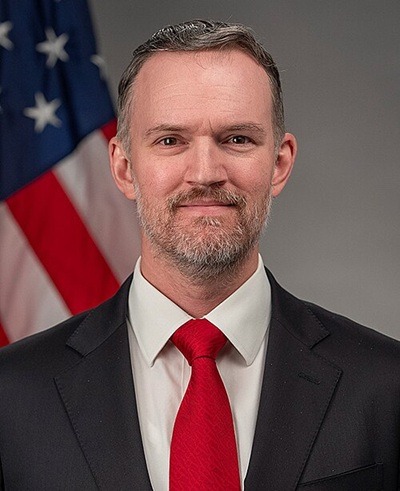
While the US said that trading partners that have failed to adopt a forced labor import prohibition will have a 12.5 percent tariff rate, Permanent Secretary of the Ministry of Foreign Affairs Sharon Roopchand-Edwards told a United States Trade Representative (USTR) public hearing that allegations of forced labor must be addressed through lawful, evidence-based investigations.
“To date, the Government of Guyana is not aware of evidence demonstrating that goods produced through forced labour are being manufactured in, imported into, or exported from Guyana,” she said.
US Trade Representative Jamieson Greer listed Guyana among 60 countries whose exports to the US would be subjected to higher tariffs for their “failure to impose and effectively enforce a prohibition on the importation of goods produced with forced labor.”
Thursday’s action came after the USTR office’s investigations, which included two rounds of public hearings, more than 2,100 public comments, and engagement with our trading partners to remedy these longstanding concerns.
“President Trump recognizes that decades of moral suasion have not eradicated forced labor from global supply chains. The United States has had a forced labor import ban for nearly a century, and rigorously enforces it; it’s well past time for our trading partners to do the same,” Ambassador Greer was quoted as saying in a USTR statement.
“Today’s action will begin to correct what is both a human rights abuse and distortive trade practice to improve the welfare of workers everywhere. I am encouraged by the trading partners who have moved quickly to adopt forced labor import prohibitions, and look forward to ensuring their effective enforcement.”
USTR says it received, reviewed, and analyzed over 1,600 written comments on the proposed responsive action.
From July 7 to 9, USTR also held public hearings regarding proposed responsive action in the investigations, at which over 100 witnesses provided testimony and responded to questions.
The permanent secretary of Guyana’s foreign ministry said like the US, Guyana is firmly committed to protecting fundamental labour rights and eliminating forced labor.
She said Guyana maintains a comprehensive legal and institutional framework to prevent and prohibit forced labor.
She begged the US to reconsider the proposed tariffs and promised to cooperate with the US on “specific and verified cases of forced labour.”
Ms Roopchand-Edwards said Guyana would welcome the support of capacity-building, information-sharing, and best practices to strengthen detection and enforcement mechanisms.
She backed up her position with statistics from the Ministry of Labour showing that as of June 2026, more than 2,000 inspections across economic sectors were conducted without finding substantiated evidence of forced labor.
The Guyana Revenue Authority (GRA), she said, was similarly unaware of imports produced through forced labor entering Guyana.
Where credible evidence exists, she said, Guyana’s Customs Act provides authority to prohibit the importations of goods. “When it is conclusively determined that imported goods were produced using forced labour, the responsible minister has powers to prohibit importation.
Ms Roopchand-Edwards added that forced labor is prohibited under Guyana’s constitution and national legislation, including the Combating of Trafficking in Persons Act, and reinforced through Guyana’s obligation under International Labour Organisation (ILO) conventions 29 and 105.
She boasted that US exports have grown strongly over the past 20 years and American firms maintain a significant presence across Guyana’s economy, particularly in the energy sector.
“These facts demonstrate that U.S. commerce is 21 neither restricted nor burdened in the Guyanese market,” she said.
She said Guyana and the United States are also engaged in discussions towards an agreement on reciprocal trade, including matters related to forced labored goods.
She cautioned against imposing tariff penalties.