
Last Updated on Saturday, 31 October 2026, 13:13 by Written By Denis Chabrol
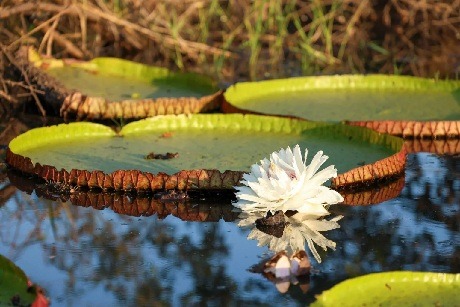
More than 170 years after its first arrival, Guyana’s national flower, the Victoria Amazonica, will once again journey to the United Kingdom to take pride of place at the Royal Botanic Gardens, Kew, through a collaboration with Guyana’s Protected Areas Commission, the British High Commission said Saturday
The historic Waterlily House, completed in 1852 specifically to display the species, is undergoing restoration and will reopen in 2027.
His Majesty King Charles III joined students from across Guyana in exploring the taxonomy, cultivation and history of Victoria waterlilies. He also had the opportunity to learn about waterlily seeds for the renewed cultivation of the species in the United Kingdom. The activity formed part of an environmental youth engagement held at the Promenade Gardens during His Majesty’s State Visit.
British High Commissioner Joseph Fisher, said “The UK is pleased to support this collaboration between the Royal Botanic Gardens, Kew, and Guyana’s Protected Areas Commission. Bringing together scientific expertise and local knowledge offers an opportunity to deepen our collective understanding of Guyana’s remarkable biodiversity, support its conservation and inspire the next generation. This project builds on our longstanding botanical connections and looks ahead to what we can achieve together through research, education and knowledge exchange.”
Carlos Magdalena, Scientific & Botanical Research Horticulturist from Kew, together with Andrew Amin, Head of Guyana’s Botanical Gardens, undertook an exploratory expedition to the North Rupununi Wetlands in Guyana’s south-western Rupununi region near the Brazilian border earlier in the week to locate the national flower, collect specimens that will be taken to Kew for planting, and hear about the Indigenous stories tied to the national treasure.
Reflecting on the expedition, Carlos said: “Visiting the Rupununi River and savannah offered a remarkable insight into Guyana’s diverse ecosystems and wildlife. I hope this trip lays the foundations for multidisciplinary collaboration to better understand and protect this biodiversity. Local action can make a global difference, and I look forward to exploring the opportunities ahead.”
The seed and seedling collections would aim to re-establish the original Victoria amazonica lineage cultivated in Kew’s Waterlily House, supporting ornamental horticulture, storytelling and education.
“The Protected Areas Commission is pleased to be part of a new chapter in the story of Victoria amazonica, which travelled from Guyana to inspire Britain’s waterlily houses and the design of the Crystal Palace. We hope this moment with children at Promenade Gardens marks the start of closer partnerships with Kew and other botanical gardens to celebrate and care for Guyana’s botanical heritage,” said Damian Fernandes, Advisor to the PAC.
The Ministry of Agriculture, the Centre for Study of Biological Diversity, the Environmental Protection Agency, and Melanie Mc Turk from Karanambu Lodge all played a key role in the expedition and in supporting the species’ journey to the UK. Their contributions are an important part of the continuing story.
Proposed workshops and knowledge exchange between the Royal Botanic Gardens, Kew, and the Protected Areas Commission would build on this expedition, strengthening local skills in botanical identification and cultivation and supporting the conservation of Guyana’s botanical heritage.