
Last Updated on Friday, 30 October 2026, 22:43 by Written By Denis Chabrol
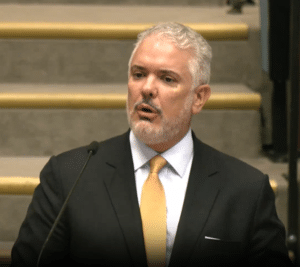
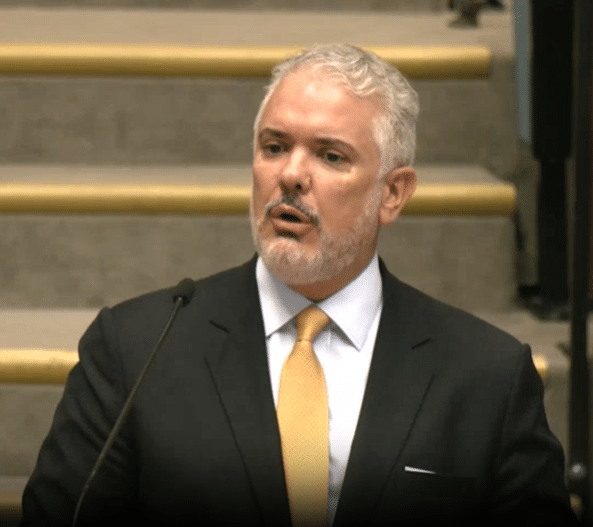
The Global Biodiversity Alliance (GBA), boasting increased membership since it was launched 16 months ago, has developed a multi-pronged strategy to mobilise US$200 billion annually from international financial markets and other sources, former Colombian President Ivan Duque said Thursday in Guyana.
“The money is located in the world private sector. It’s located in financial markets and different ways of using assets,” he said.
Addressing the second GBA summit at the Arthur Chung Conference Centre (ACCC), Liliendaal, Greater Georgetown, he told delegates and special invitees, he conceded that bilateral donors do not have sufficient money and philanthropic organisations could not mobilise all the cash that is needed for biodiversity.
He also recommended that the biodiversity be classified through the unified and standardised system of taxonomies as a Key Performance Indicator (KPI) through evaluation and traceability.
Mr Duque, who served as Colombia’s president from 2018 to 2022, said the KPIs could be used to ask multilateral financial institutions like the Inter-American Development Bank (IDB), World Bank, International Finance Corporation, and the Development Bank of Latin America and the Caribbean. Why don’t we ask from the same multilaterals to deploy capital for investment projects in what we should call regenerative infrastructure that is based also on conservation,” he said. He hoped that revenue from that stream could see local governments access resources at a much cheaper rate. We will be also putting more capital where it is much needed,” he added.
Also recommended is the debt swapping of KPIs for debt, an “intelligent way of deploying capital” fir their specific understanding of those indicators.
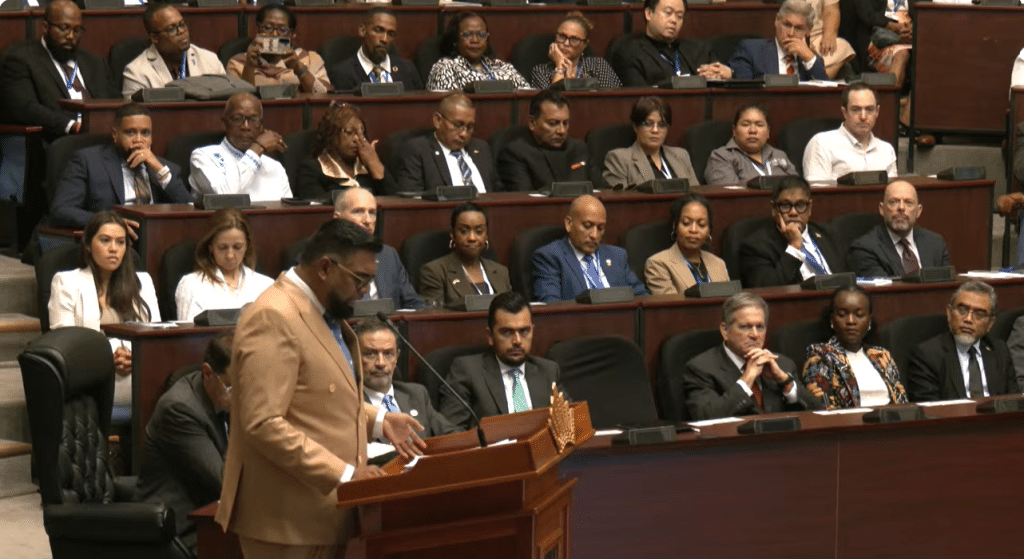
Mr Duque said if the GBA needs Indigenous communities, companies from the global south, and non-governmental organisations to focus on those results they also need the capacity to have outcomes-based financing or impact bonds, in which private investors invest in social and environmental programmes that are associated with conservation. “The impact bonds can be a mechanism to raise resources,” he said.
Guyana’s President Irfaan Ali called on the private sectors of GBA member countries to come together and create an investment vehicle where they could have biodiversity resorts across each destination, and model one brand with common values, common regulation and a common platform. “This is a massive private sector opportunity that we can explore together, bringing opportunity to the villages, the communities, and to our country at a different scale,” he said.
He charged the more than 300 overseas registered delegates ,who include global researchers and thinkers, to “advance practical ways” to mobilise investment, create economic opportunities, protect biodiversity and make conservation an internal part of economic planning and development. He said the GBA started with 17 founding members and today its membership is 147 including Panama, United Arab Emirates, Colombia, Antigua and Barbuda, India and France.
Dr Ali said one way to make it easier for capital to flow into activities that protect biodiversity and generate sustainable economic returns is for countries and policymakers to agree that any investment that seeks to advance the cause of biodiversity or protect biodiversity is granted special tax and fiscal incentives. “We can write that into a common agenda that all of us embrace together, so that we have one platform, one agenda, one set of incentives, one set of regulations that we all pursue together,” he said.
He said the GBA needed to unlock finance and investment for biodiversity by moving beyond identifying financing gaps to develop mechanisms that actually mobilise capital. He challenged the biodiversity-rich countries, to work with the secretariat in developing projects to be financed.