
Last Updated on Thursday, 24 September 2026, 10:35 by Written By Denis Chabrol
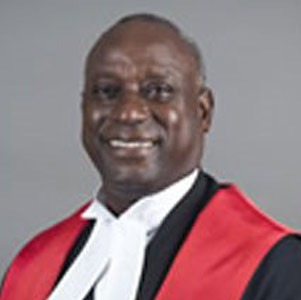
A widely respected Guyana-born Caribbean jurist on Wednesday told the Commonwealth Magistrates and Judges Association (CMJA) Annual Conference that the United States’ (U.S.) decision to bar Guyanese judge Gino Persaud from transiting Florida enroute to Jamaica has serious implications for the independence of the judiciary.
Justice Courtney Abel, who is a former Belize High Court judge and Head of the University of Guyana’s Department of Law, told the conference, that last Saturday’s prevention of Justice Persaud from boarding a flight because his visa was under review raises a number of questions that go to the heart of judicial independence.
“When an unexplained exercise of foreign executive power materially affects a serving judge after politically sensitive decisions, at what point does a private immigration matter become a public question of judicial independence?
The question is larger than Justice Persaud. It concerns the judge who comes next. What message does the unexplained closing of one gate send to every judge who must later approach another?” Mr Abel told a conference session on the topic “Current tensions between judicial independence and the rule of law.”

Justice Persaud has not commented on his ordeal.
Attorney General Anil Nandlall Tuesday night referred to city businessman Nazar Mohamed saying that government was upset with Justice Persaud’s decision against the Guyana Revenue Authority concerning alleged tax evasion by Mr Azruddin Mohamed on a Lamborghini that he had imported several years ago.
Mr Mohamed, a political opponent of the governing People’s Progressive Party Civic and now Guyana’s Opposition Leader, and his father, Nazar “Shell” Mohamed, are sanctioned by the United States for alleged tax evasion on gold exports through the U.S.
They are also fighting a U.S. extradition request to face trial in a Florida federal court on an 11-count grand jury indictment, including for alleged wire fraud, mail fraud and money laundering.
For Justice Abel, he regards the U.S. visa review as a form of punishment of the Guyanese judge.
“The United States has not publicly called the measure a sanction. Yet an unexplained restriction imposed by a foreign power upon a serving judge, preventing him from travelling, operates as a sanction in practical effect. A sanction need not announce its name,” said Mr Abel, a former president of both the Organisation of Eastern Caribbean States Bar Association and the Organisation of Commonwealth Caribbean Bar Association.
Mr Abel reasoned that the visa review seemed to be at the confluence of Justice Persaud’s decision of “politically sensitive cases” including the tax matters involving the Mohameds.
He said though the U.S. and the Guyana governments have not admitted that the judge’s decision had anything to do with the visa review, there are chronology, context and concern.
U.S. Ambassador to Guyana Nicole Theriot on Wednesday told reporters that “under review” means that the US government in Washington DC “received some information” from a source that would cause the administration to reconsider whether that person is eligible for a visa.
Asked whether the U.S. embassy had any role to play in the matter, she remarked that “on occasion, we will submit that information but in the case that I think you’re talking about, we were not aware.”
Mr Abel said while there is not yet proof, and suspicion is not evidence, he also said silence is not an answer.
“The context is more charged still. Members of the Mohamed family have been sanctioned by the United States and are the subjects of American extradition proceedings. The action affecting the judge therefore lies at the meeting point of domestic politics, judicial decision-making and American executive power,” said Mr Abel who has practiced law in Anguilla and St Kitts.
In his presentation titled “Who Writes the Judgement? The Airport Gate. The Acting Appointment. The Algorithm”, he said he had served as a foreign judge in a small jurisdiction and learned that pressure seldom arrives wearing a name badge.
He said power does not always command but arranges the atmosphere by prolonging an acting appointment until expectation and insecurity merge, criticise a judgement without confronting its reasons, unsettle relationships with staff, alter security arrangements, leaving the judge to wonder who protects, who observes and who reports.
He said, too, that such a situation may include no direction and no threat but the judge remains in office, salary paid, courtroom opens and the appearance of independence survives.
In apparent reference to Justice Persaud’s experience, he said “The airport gate reveals another vulnerability. A judge in a small postcolonial state lives within an unequal international order. The state may face sanctions, diplomatic pressure or economic consequences. The judge may have to travel through a larger state and submit to immigration decisions for which no explanation needs be given.”
He said each encounter may be lawful, each question may be routine and judges do not acquire diplomatic immunity by purchasing an airline ticket.
However, he added that context, timing and silence matters.
“A constitution may protect a judge from the executive at home. Who protects the judge from the collateral power of an executive abroad?” he also queried.
The Lamborghini purchase was cited in the U.S. grand jury’s 11-count indictment against the Mohameds.
In terms of the Lamborghini purchase and exportation to Guyana, the U.S. grand jury says Azruddin Mohamed directed an unnamed individual to acquire a Lamborghini from California that cost approximately US$680,000 for his benefit, caused the shipment of the Lamborghini via private and commercial interstate carrier from Miami to Guyana, directed Individual 1 to create an invoice to make it falsely appear that the Lamborghini cost US$75,300 when, in truth and in fact, the Lamborghini cost approximately US$680,000, and caused the false invoice to be presented to the GRA and thereby avoided over one million dollars in taxes to that agency.
The GRA has since appealed Justice Persaud’s decision.
Discover more from Demerara Waves Online News- Guyana
Subscribe to get the latest posts sent to your email.