

Last Updated on Monday, 19 October 2026, 21:04 by Written By Denis Chabrol
The Maritime Administration (MARAD) Chief Engineer, Christopher Clarke, who has been working at that regulatory agency for 20 years, said the regulatory agency does not issue licences to engineers but they merely are promoted by letters of appointment.
“Basically, our qualifications is that when you go to the training, you’ll get letters from management saying that you’ve been to the training, and you’ll get confirmed as second engineer, you’ll get confirmed as third engineer,” he said. Similarly, MARAD maritime officer Tremel Argyle told the COI that he was an ordinary seaman prior to the MV Barima ferry incident and underwent training before he was promoted to his latest position. “Well, I did a course at a maritime, and I provided my documents to the department and they promoted me to that position,” he said.
The vessel sank on July 18 about after 10 PM about 10 miles off the Essequibo Coast with 179 passengers and crew members. Seventy-six persons were confirmed dead.
Mr Clarke said said during his period of training exchange he had done repairs to the MV Barima about 18 years ago. However, he could not say whether the work done on that vessel was preventative or corrective because it was 18 years ago and he and his colleagues were accompanied with supervisors. He also could not recall the location of the water tanks aboard the MV Barima
Mr Clarke said there was no Planned Maintenance System (PMS) for the MARAD vessels that specifies what has to be done. Seemingly unclear about the nature of the question, he nevertheless went on to explain that maintenance is done based on the working hours of the main engines after which oil and filter are changed.
The Chief Engineer said no safety drills are done aboard the vessels.
MARAD Captain Anthony Williams, who was confirmed as a captain in April 2026, said he transitioned two years ago from maintenance engineering when he sat an examination for the boat master’s grade three licence after which he pursued the boat master grade two (2025) licence.
Before his confirmation, he told the COI that he had manned pilot boats.
The MARAD captain, who said he was never trained in Search and Rescue (SAR), said he had previously participated in a search and rescue operation at Crab Falls, Region Seven (Cuyuni-Mazaruni) in 2012 when a boat accident occurred.
He declined to say the extent to which he was aware of the Douglas Sea Scale, a 10-point system, used to measure the roughness of the sea, and the speed of tidal currents. The captain said there was no source of information to assess the hydrological condition on the coast. He also could not say anything about the wind conditions on July 19, 2026, hours after the vessel capsized.
The former Second Engineer at the Transport and Harbour Department, who had been seconded to MARAD for the basic training during which time he had worked on the MV Barima in 2010, said he had performed corrective mechanical maintenance, before the engine and crane were changed. He also recalled working on the MV Torani and MV Lady Northcote.
“At that time, Barima was still a Blackstone engine, and most of the time was the engines used to be on the repair or the generator, so as to get things going,” he said.
He said at 12:20 AM on July 19, 2026, shore coxswain Mr Benjamin contacted him to request that the survey tug, MT Arau, be used to assist the MV Barima because it had encountered engine failure. He said subsequently informed him that the ferry capsized.
He said pilot vessels HAKIWA and HAIMA were also deployed to “go on a rescue mission” and they had already picked up persons from the water and taken them to Pomeroon. Mr Williams said his vessel did not pick up anyone.
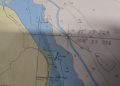
The MARAD captain said after he arrived at the location of the coordinates that were plotted on the Global Positioning System (GPS), items were seen floating. While we were headed to the location, there were items from the wreck that had started to float, such as the icebox, the gas bottles, book bags, clothes, shoes, everything. Some of the life rafts were floating. We had like two or three life rafts were floating,” he said.