

Last Updated on Thursday, 27 August 2026, 21:04 by Writer
The Guyana Human Rights Association (GHRA) on Tuesday urged the United Nations Development Programme (UNDP) and the European Union (EU) to seek the intervention of the United Nations (UN) and the Inter-American systems to protect the rights of Indigenous Amerindians at Chinese Landing where gold mining operations are on the verge of being expanded.
Minister of Natural Resources Vickram Bharrat told Demerara Waves Online News that “we are facilitating talks between the two parties.”
Calling the appeal “urgent” to help prevent the imminent destruction of indigenous life, lands and assets in Guyana, the GHRA wants the UN and Inter-American systems to contact the Guyana government to request it, most urgently, to ensure that the precautionary measures ordered by the Inter-American Commission of Human Rights are implemented immediately and to “stop private individuals from acting in dangerous disregard of the recommendations of the Inter-American Commission on Human Rights.”
The appeal is issued to the United Nations (UN) Secretary-General, UN High Commissioner for Human Rights, President of the UN General Assembly, President of the UN Security Council, President of the UN Permanent Forum on Indigenous Peoples, UN Special Rapporteur on the Rights of Indigenous Peoples, Secretary-General of the Organization of American States, Chairperson of the Inter-American Commission on Human Rights, President of the European Union and Guyana’s Permanent Representative to the United Nations.
“Indigenous communities in Guyana are urgently appealing to the international community to establish a monitoring arrangement in Guyana to watch over the implementation of international norms on indigenous rights in Guyana as a matter of the greatest urgency. Indigenous peoples are without protection, notwithstanding the existence on paper of a Commission on Indigenous Rights – which has never acted in protective mode,’ the GHRA said.
In support of the Indigenous peoples in Guyana, the GHRA asked for the urgent submission of a report on the situation to the UN Human Rights Council and the UN Security Council.
The GHRA pegged the “immediate urgency” of international help for the Indigenous Amerindians at Chinese Landing to the refusal of the Guyana government to obey the Inter-American Commission on Human Rights’ order issued on July 24, 2023, for interim measures of protection of the rights of Indigenous Peoples who are the owners of the lands and assets in question.
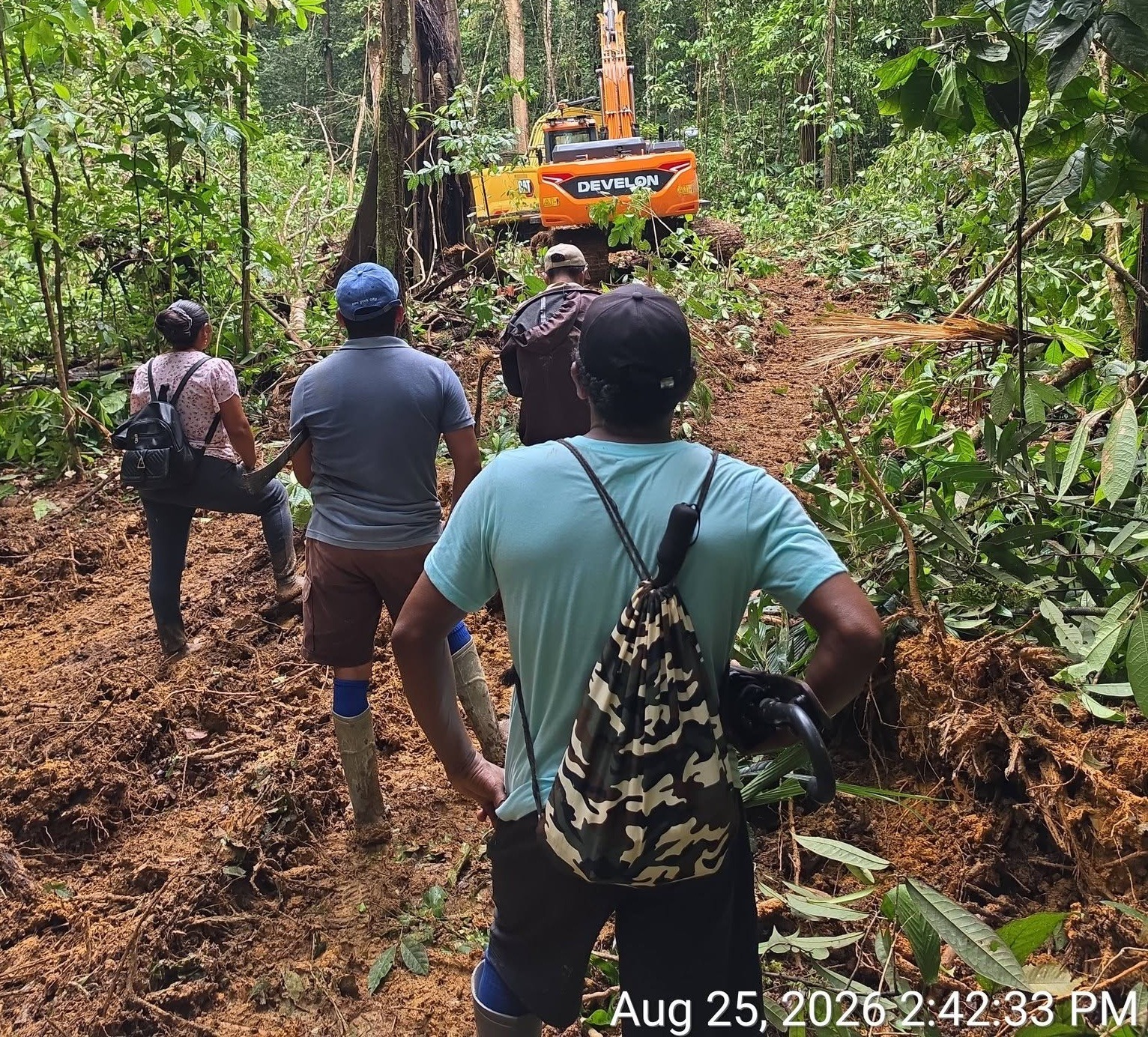
According to the association, not only has the Guyana government failed to act on these precautionary measures ordered by the Inter-American Commission, but also a private individual was right now in the process of moving heavy vehicles and equipment on the land to begin excavation and mining, overriding the plaintive protests of the indigenous peoples.
“The situation is fraught with danger for the Indigenous Peoples and their lands and properties. Indigenous Lives are at risk. And the Government of Guyana is a silent witness to these events, instead of providing protection to the Indigenous Peoples affected,” the GHRA also said.
The GHRA noted that Indigenous peoples in Guyana have historically been denied the protection of international norms such as the UN Declaration on the Rights of Indigenous Peoples.
Guyana’s laws are not in compliance with this vital Declaration.
Further, the association contends that Indigenous peoples in Guyana are constantly under assault when it comes to the exploitation and destruction of their lands and resources without their permission.
The Chinese Landing-Tassawini Village Council on Tuesday said that a barge was being discharged on titled land at Kariako.
The excavators that were blocked from entering Chinese Landing/Tassawin went up the river and offloaded on Kariako village lands.
Over the past several days, the council said residents there had been protesting the transport of many new pieces of mining equipment into their village lands by blocking the road into the Tassawin backdam.
The Council said that, in recent days, village residents had observed at least nine excavators, two bulldozers and dredge engines that were transported on several barges into the village, “all without the equipment owners providing notice to or receiving permission from the Village Council.”
The Council said that to the best of its knowledge, all of that equipment was registered to a named holder of several disputed mining blocks within their village title.
That decision-making elected body expressed alarm at the high rate of equipment being brought into the village because no consent, as required by the Amerindian Act and in accordance with their rights protected by the constitution, was given for the named miner having a mining operation.
The Village Council added that it was engaging in good-faith discussions with the miner to reach a temporary solution while the village’s court case is pending.
“We consider it inappropriate for (the named miner) to prepare for or carry on mining activities while these discussions are ongoing, as these actions undermine the legitimacy and fairness of the mediation process,” the council said.
After the Guyana Geology and Mines Commission (GGMC) mines officer on duty at Tassawin informed the Village Council that he was unable or unwilling to prevent the equipment from entering the mining blocks, the council said villagers opted to block the equipment from moving onto their lands.
“For this reason, village residents have chosen to physically prevent the equipment from moving further into our lands,” the Council said.
The council called on the Ministry of Natural Resources and GGMC to halt that miner’s operations “until the mediation processes is completed and the village has given our consent to these operations.”
The council said mining resumed in March and the village council was informed of that decision at the National Toshaos Conference held in July 2026.