

Last Updated on Thursday, 26 November 2026, 6:31 by .
By Denis Chabrol
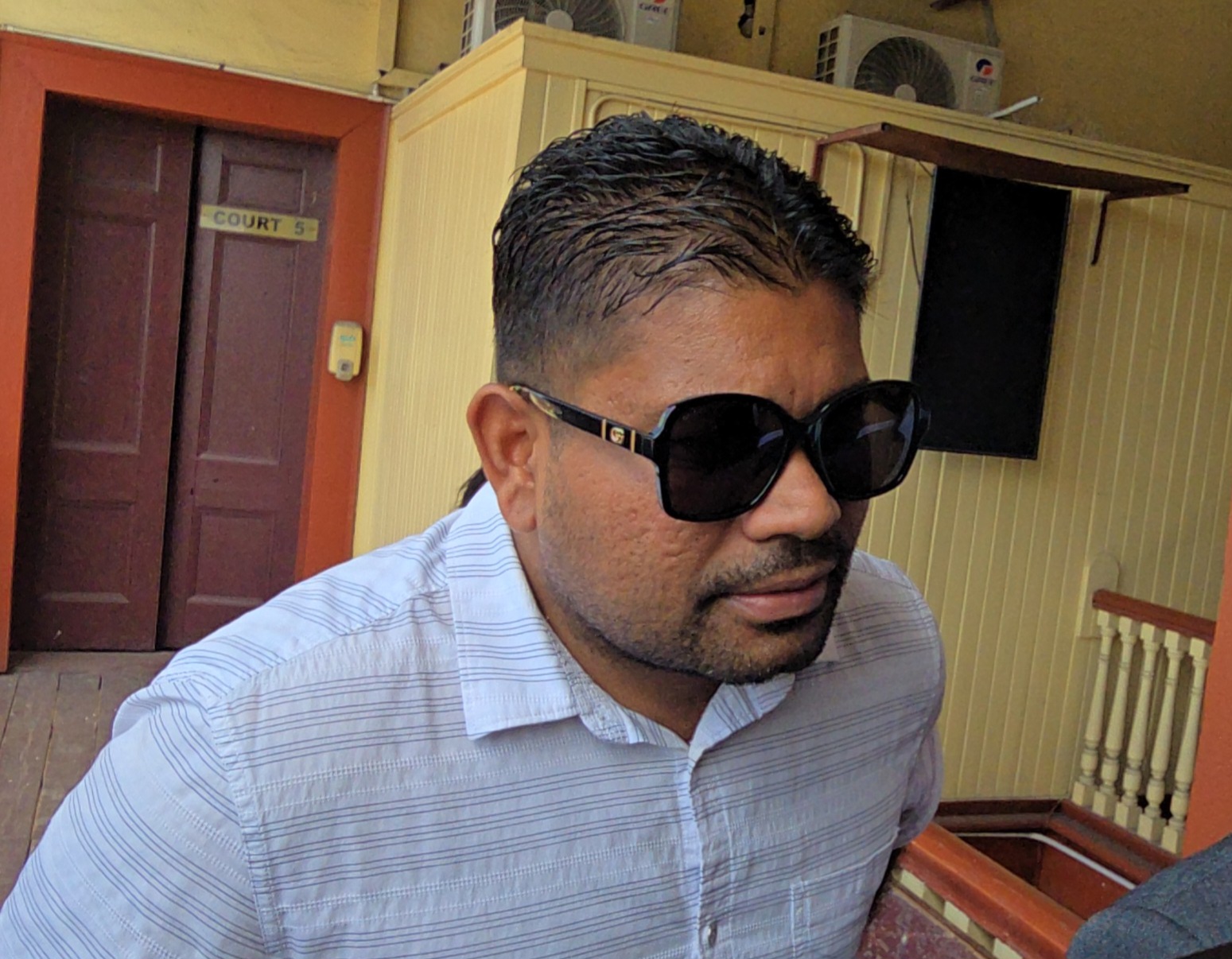
Opposition Leader Azruddin Mohamed has made yet another application to be released on bail after Sparendaam Magistrate Abigail Gibbs again refused to do so.
Through his lawyer Siand Dhurjon, Mr Mohamed cites constitutional violations as a result of his detention since October 30, 2026 for alleged breaches of the Cyber Crime Act in relation to the acquisition of police surveillance video about an alleged shooting that involved him and police intelligence chief Prem Narine.
Mr Mohamed said his fundamental rights not be deprived of his personal liberty unless authorized under law, and be presumed innocent under Art. 144 of the Constitution.
Mr Mohamed wants the High Court to declare that the conditions under which he has been detained amount to inhumane or degrading punishment or other treatment in contravention of the Constitution,
The application states there are no grounds under any law including under Bail Act for believing that he would interfere with witnesses, tamper with evidence, obstruct justice or commit a further qualifying offence.
The prosecution concedes that the applicant is not a flight risk, according to Mr Dhurjon.
The lawyer said where it is clear that the evidence of the charge is weak and likely to fail, bail ought to be granted.
He said the prosecution relied on pending firearm, ammunition and obstruction charges as a pattern of offending, and the footage and statements disclosed by the Deputy DPP on 6th November, 2026 in the court hearing those charges totally undermine the account on which that inference depended and render it a false premise.
“Nevertheless, the DPP continues to rely on those obviously false allegations in breach of its duty as minister of justice,” the lawyer states.
He added that the cybercrime charge identifies the Applicant as the alleged recipient of footage relating to a shooting incident in which he was either victim or culprit. The cyber crime charge states that the data relates to national security but Mr Dhurjon, on behalf of Mr Mohamed, said “it does not contain national security data such as the movement of army troops along the border or the movements of ministers in government or the locations of clandestine intelligence facilities.””
Mr Dhurjon again defended his client’s right to be in possession of the video recording, though the the cybercrime charge alleges that it was criminal, without lawful excuse or justification, for Police Constable Ryan Greene to furnish Mr Mohamed with what was effectively disclosure material which was due to him as a defendant in a case and/or public interest material as a citizen or as a member of Parliament unearthing serious police criminality.
The prosecution claims that Greene had no authorization to give the Applicant the footage but Mr Dhurjon said at best “this is a departmental or disciplinary breach if a superior rank, commander or legal representative of the police could have lawfully furnished same.”
The lawyer said the charge requires criminality in the sole act of the giving of the footage to Mr Mohamed. How the footage was obtained by the officer is immaterial as the Cybercrime Act indicates that irrespective of how the data was obtained, “only if same was given without lawful justification then can the offence be made out.”
“If one breaks in to the bank and steals banking data and gives the data to its lawfully entitled accountholder, no offence under Section 9 can be made,” he said.
The lawyer sys contained within the very particulars of the section nine charge is the negation of the necessary element of unlawful giving as the charge states that what was given was ‘footage in relation to a shooting incident’. Mr Dhurjon further contends that the prosecution’s own case as outlined before the magistrate is that the incident involved the defendant and is the subject of other charges in another court. It is undisputed that disclosure was ordered on the Police in that court.
On the charge of aiding and abetting misconduct of a public officer against the common law, Mr Dhurjon said Mr Mohamed denies paying for the footage, attending the Command Centre or receiving anything from Mr Greene.
He said Mr Greene’s out-of-court admission is not evidence of Mr Mohamed’s guilt merely because they were jointly charged. With Mr Greene now turning a State witness against Mr Mohamed, the lawyer said the policeman’s proposed testimony is separate, but no statement or supporting material had been disclosed and the terms of any arrangement with the prosecution remained unknown.
On aiding and abetting misconduct in public office by the policeman, the lawyer said those charges provide for imprisonment of no more than 1 year under the Criminal Law Offences Act. “Both cybercrime and misconduct charges are deemed non-serious under the relevant legislation the Bail Act.”
The lawyer said Mr Mohamed has no previous convictions, has complied with reporting and passport conditions in all other proceedings, and has not contacted Narine or his family since the no-contact condition was imposed.
Mr Dhurjon offered the court to impose conditions on bail if granted, saying any identified risk can be addressed by conditions tailored to assuage them and prohibitions on direct or indirect contact with Greene and other prosecution witnesses.
On the prosecution’s contention that there was a pattern of behaviour that should cause concern to the magistrate, alluding to the gun and obstruction charges, although those allegations were severely undermined by the subsequent disclosure materials. “A consideration of disclosure materials would show state criminality of shivering proportions which remain improperly concealed by the DPP in the cybercrime and misconduct proceedings,” he said.
Concerning the conditions at the Lusignan Prison where Mr Mohamed is being held in remand since October 30, the lawyer told the court in the bail application that since 30 October, his client has been held alone on his floor at Lusignan Prison, ordinarily confined to his cell for approximately 23 hours and 50 minutes a day, apart from limited visits.
“He has had little to no direct sunlight, minimal meaningful human contact and virtually no reading material. The cell is windowless, excessively hot, poorly ventilated and continuously lit, interfering with sleep. Smoke and fumes cause wheezing, headaches and nausea or malaise. On 19th November, when he reported difficulty breathing, he was refused temporary access to cooler air, even in handcuffs. The only medical attention given was a blood-pressure check through the cell door,” the court was told.
Mr Dhurjon said the the duration and cumulative physical and mental effects of these conditions exceed what is necessary for safe custody. He said the stated ‘high risk’ classification does not explain why near-total isolation or these cell conditions were necessary. The lawyer said restrictions on association exceed what Prison Rule 312(2) permits for untried prisoners, and the regime falls to be assessed against Mandela Rules 43-45 on constant lighting and prolonged solitary confinement and other applicable standards.
Meanwhile, the DPP has filed a separate application to the High Court for bail in the extradition case to be revoked until the hearing and determination of the United States’ (US) request for his extradition to face trial for alleged money laundering and other financial crimes linked to their gold trading business. His father, Nazar Mohamed, is also wanted by the US.
A bail application in the form of a judicial review of the Cybercrime Act by his mother, Bonita Mohamed, was dismissed by the High Court and is now the subject of an appeal.
Discover more from Demerara Waves Online News- Guyana
Subscribe to get the latest posts sent to your email.