
Last Updated on Tuesday, 18 August 2026, 21:10 by Writer
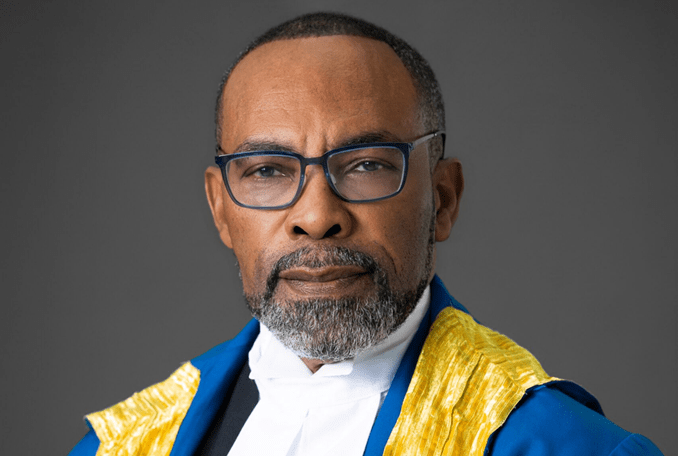
Lawyers for United States (US)-wanted billionaire gold dealers Azruddin Mohamed and his father Nazar “Shell” Mohamed have asked the Caribbean Court of Justice (CCJ) not to allow the president of that regional court, Winston Anderson, to take part in proceedings against them until allegations of bias are addressed.
Their lawyers—Roysdale Forde, Siand Dhurjon and Damien Da Silva—told the CCJ Registrar in a letter dated August 14, 2026, and copied to Attorney General Anil Nandlall and lawyers for the Minister of Home Affairs, Oneidge Walrond and the Chief Magistrate, Judy Latchman that the Mohameds were “deeply disturbed and distressed by the allegations and have formed the strong and reasonable view that they may not have received the fair hearing which is constitutionally guaranteed to them.”
The Mohameds, who are wanted by the US to face trial for alleged money laundering, wire fraud and mail fraud linked to their gold trading business, told the CCJ through their lawyers that if a set of documents and other material are not provided legal action would be taken.
Those documents are about the other CCJ judges’ alleged views contained in leaked internal correspondence to the Trinidad Express and Justice Anderson’s interaction last year with President Irfaan Ali and then Opposition Leader Aubrey Norton about the demitting of office by then acting Chancellor of the Judiciary Yonette Cummings-Edwards and hopefully the substantive appointments of Justice Roxane George-Wiltshire as Chancellor of the Judiciary and Justice Navindra Singh as Chief Justice.

“Given the exceptional urgency of these matters, we request that the information and materials sought be provided within seven (7) days of the date hereof, so that our clients may consider any necessary steps as may be required failing which our clients reserve the right to institute such proceedings and seek such relief as may be appropriate,” the lawyers said.
The lawyers said that in order to properly advise their clients so that he “could make an intelligent and informed decision on possible legal recourse and in the interests of fairness and the good administration of justice” they requested a “full and frank disclosure” of all information, emails, correspondence, documents and other materials which may be evidence or suggest any alleged impropriety by the president of the CCJ or any other CCJ judge.
They said that request extends, in particular, to all such material touching or concerning the consideration, deliberation, determination or disposition of any issue arising in the appeal of Nazar Mohamed and Azruddin Mohamed v Minister of Home Affairs, Attorney General and Magistrate Latchman on whether Ms Walrond’s issuance of an authority to proceed to the magistrate was politically motivated.
“Accordingly, and without prejudging the truth of Mr. Norton’s allegations, our clients respectfully request that Justice Anderson take no further part in any proceedings concerning our clients unless and until these matters have been fully addressed and resolved,” the lawyers said.
The extradition hearings are set to resume next month before Magistrate Latchman.
The opposition leader has already said that more appeals would be filed to the Trinidad-based regional court.
Attorneys Forde, Dhurjon and Da Silva are requesting the court to preserve all records capable of bearing upon these matters, including all communications and events relating to the proceedings concerning the Mohameds which form part of the reported correspondence, together with all correspondence, electronic communications, telephone records, diary entries, itineraries, and records of meetings or engagements involving Justice Anderson, Mr. Norton, the President of Guyana, the Attorney General, other representatives of the Government of Guyana, and the judicial officers concerned.
The lawyers reasoned that the allegations, now public, made by Mr. Norton, are extraordinarily serious because they concern the sitting President of the Court and they “allege a trespass into partisan political activity.”
“For these reasons, the Court cannot reasonably leave them unanswered while adjudicating upon politically sensitive Guyanese litigation,” they said.
Mr Azruddin Mohamed is Guyana’s opposition leader, his We Invest in Nationhood (WIN) political party having won 16 of the 29 opposition parliamentary seats in the September 1, 2025, general and regional elections.
The CCJ president, in a statement, regretted having engaged the Guyanese politicians concerning the need to end the more than 20-year non-appointment of a substantive chancellor of the judiciary and chief justice.
In doing so, he made it clear that his only interest was ensuring the constitutional independence of Guyana’s judiciary and he was not politically driven.
“Those considerations alone informed my actions and comments. They were not motivated by any political or other preference, personal interest, or any desire to intervene in the domestic affairs of Guyana beyond what I regarded as my responsibility as President of the final appellate court for that jurisdiction to ensure constitutional protection of the judiciary,” he said.
The lawyers, in their correspondence, have cited several excerpts from a number of judges about the handling of the Mohameds’ case that was decided upon on July 29.
The judges unanimously decided that the appellants had lost their case concerning the authority to proceed.
According to the leaked email, Justice Peter Jamadar had said, in part, that “the Mohamed vs MOHA, AG, and Magistrate extradition matter and what I experienced as an attempt to influence the opinions of colleagues that differed from yours in an authoritative manner (…) what I experienced was far beyond anything that I have ever experienced in all my years as a judicial officer sitting on appellate courts. Which experience, I may add, was also expressed by other colleagues who were present at this meeting.”
The letter to the CCJ also quoted from the Trinidad Express that Justice Eboe-Osuji also allegedly remarked: “Winston tried single-handedly to override judicial independence and longstanding CCJ conventions that guided how decisions are rendered when judges disagreed. In the Mohameds’ case, it was stunning to hear Winston pointedly inform us that he was going to announce a decision of the court at a time and in a manner in which a clear majority of his colleagues had very strongly communicated to him as inappropriate.”
Justice Anderson, in addressing concerns about the Mohameds’ case, said there were robust and candid exchanges among the judges during deliberations and preparation of the judgement, as with many other cases in appellate courts in the Commonwealth.
He said in the Mohameds case, the judges expressed differing views regarding aspects of the reasoning and the manner in which certain issues should be articulated in the final judgment.
In the end, he said there was “COMPLETE UNANIMITY” among all seven judges as to the disposition of the appeal.
“No Judge worthy of being on the CCJ Bench would ever allow himself or herself to be unduly influenced by any other Judge including the President,” the CCJ President said.